EdX

Psychedelics and The Mind (edX)

Psychedelics and The Mind (edX)

UC Berkeley Professor David Presti skillfully navigates the science, culture, and history of psychedelics for both the novice learner and the curious expert interested in fact-based learning surrounding visionary substances.

Class Deals by MOOC List - Click here and see EdX's Active Discounts, Deals, and Promo Codes.

Professor David Presti draws upon decades of teaching his top-ranked course at the University of California, Berkeley, to share with the edX community. Presti skillfully navigates the science, culture, and history of psychedelics for both the novice learner and the curious expert interested in fact-based learning surrounding visionary substances.
In this 8-module course we will explore:

  • the scientific world of psychedelic substances and the mind
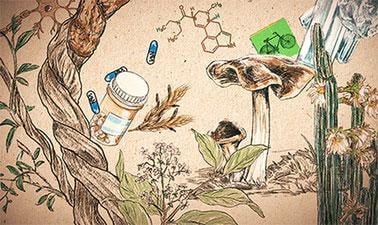
  • plant medicines and hallucinogenic compounds
  • opportunities to deepen your own understanding of mind

In becoming a more informed citizen vis-à-vis psychedelics, you will have an opportunity to become better acquainted with your own brain and nervous system, understand the science related to organisms and molecules having psychedelic properties, gain historical and contemporary context surrounding factors that influence public opinion and law, and appreciate something of the rapidly evolving contemporary clinical research with these materials. While human relationships with what are called psychedelics are very old, they may offer wellness opportunities for our modern day, as well as profound insights into the nature of mind and world.
This course features conversations with a community of experts in the field, including Raquel Bennett, Susana Bustos, Gül Dölen, Andrea Gomez, Ayize Jama-Everett, Bob Jesse, Dacher Keltner, Mariavittoria Mangini, Jennifer Mitchell, Michael Pollan, Sylvestre Quevedo, and Forrest Tahdooahnippah.
“Psychedelics and the Mind” was developed with generous support from the Steven & Alexandra Cohen Foundation.

What you'll learn

  • The chemical impact and/or influence of psychedelic compounds on the mind.
  • Trusted scientific and journalistic sources presenting fact-based research.
  • The growing culture of psychedelic use and the importance of harm reduction.
  • Key developments in psychedelics research.
  • The historical and contemporary role of psychedelics in society.

Syllabus

Module 1: Introduction to Psychedelics
Module 2: Foundational Concepts in the Neurobiology of Psychedelics
Module 3: LSD
Module 4: Psilocybin Mushrooms
Module 5: Sacred Cacti and Mescaline
Module 6: DMT, Ayahuasca, and Amazonian Snuffs
Module 7: MDMA
Module 8: Ketamine and Nitrous Oxide

Go to Class
MOOC List is learner-supported. When you buy through links on our site, we may earn an affiliate commission.

Related Courses

Soul Beliefs: Causes and Consequences - Unit 3: How Does It All End? (Coursera) Coursera
Rutgers University

Soul Beliefs: Causes and Consequences - Unit 3: How Does It All End? (Coursera)

Throughout history, the vast majority of people around the globe have believed they have, however defined, a “soul.” While the question of whether the soul exists cannot be answered by science, what we can study are the causes and consequences of various beliefs about the soul and its prospects of surviving the death of the body. Why are soul and afterlife beliefs so common in human history? Are there adaptive advantages to assuming souls exist?

Sep 28th 2026
5-12 Weeks
Introduction to Psychology (Coursera) Coursera
University of Toronto

Introduction to Psychology (Coursera)

This course highlights the most interesting experiments within the field of psychology, discussing the implications of those studies for our understanding of the human mind and human behavior. We will explore the brain and some of the cognitive abilities it supports like memory, learning, attention, perception and consciousness. We will examine human development - both in terms of growing up and growing old - and will discuss the manner in which the behavior of others affect our own thoughts and behavior.

Jul 6th 2026
5-12 Weeks
Managing Happiness (edX) EdX
HarvardX,Harvard University

Managing Happiness (edX)

Managing Happiness encourages you to explore the science of happiness, allowing you to find your truest self. Through cutting-edge survey tools, the best research, and trends in social science, neuroscience, and philosophy to help learners unlock the strategies to create a more purposeful life, full of long-lasting enjoyment and satisfaction.

Self Paced
Self-Paced
The Science and Practice of Yoga (edX) EdX
University of Texas at Arlington,UTArlingtonX

The Science and Practice of Yoga (edX)

Learn to practice yoga on and off the mat and bring mindfulness into your everyday life. Concerned about how the digital age is impacting your well-being? Looking for ways to find balance? This course takes the ancient practice of yoga and translates it into modern day science with practical applications.

No sessions available
5-12 Weeks
The Many Faces of Dementia (FutureLearn) FutureLearn
University College London

The Many Faces of Dementia (FutureLearn)

Gain a unique insight into dementia through the stories, symptoms and science behind four less common diagnoses. Explore key issues in dementia care and research, through four less common forms. Dementia is one of the foremost priorities in global health and is estimated to affect over 44 million people worldwide.

Self Paced
4 Weeks
Understanding Dementia (University of Tasmania) Other Providers
University of Tasmania

Understanding Dementia (University of Tasmania)

The Understanding Dementia MOOC was developed by the Wicking Dementia Research and Education Centre based in the College of Health and Medicine at the University of Tasmania. This world-leading online course is free, easily accessible and available to everyone with an interest in dementia. This course is free and runs twice a year in February and July.

Feb 7th 2023
5-12 Weeks
Foundations of Mindfulness (Coursera) Coursera
Rice University

Foundations of Mindfulness (Coursera)

This course provides a broad overview of the fundamental concepts, principles, and practices of mindfulness. With interactive exercises to help students explore their own attitudes, mental habits and behaviors, Foundations of Mindfulness offers a pathway for living with more freedom, authenticity and ease. Featured components of the course include experiential exercises, guided meditations, personal reflection and interactive discussions.

Jun 22nd 2026
4 Weeks
Thought Experiments: An introduction to philosophy (Coursera) Coursera
Erasmus University Rotterdam

Thought Experiments: An introduction to philosophy (Coursera)

Doing philosophy is like seeing a movie and wondering what will happen next, or what you would do in the same situation, or what’s real and what’s merely make-believe. You’re probably not aware of it, but since you already know how to see movies and use your imagination, you’re well on your way to becoming a good philosopher. The only thing you still need and want to develop though, is the ability to use your imagination in the philosophical way, and that’s exactly what you’ll learn in this MOOC.

Sep 21st 2026
5-12 Weeks
Sleep: Neurobiology, Medicine, and Society (Coursera) Coursera
University of Michigan

Sleep: Neurobiology, Medicine, and Society (Coursera)

The objective of this course is to give students the most up-to-date information on the biological, personal, and societal relevance of sleep. Personal relevance is emphasized by the fact that the single best predictor of daytime performance is the quality of the previous night's sleep. The brain actively generates sleep, and the first section of the course is an overview of the neurobiological basis of sleep control.

Sep 14th 2026
5-12 Weeks
Curanderismo: Traditional Healing of the Mind, Energy & Spirit (Coursera) Coursera
University of New Mexico

Curanderismo: Traditional Healing of the Mind, Energy & Spirit (Coursera)

As the third of four courses on Curanderismo, the art of Hispanic/Latino traditional medicine, this course focuses specifically on traditional healing of mind, energy and spirit. As an educational and cultural platform, this course will share a number of traditional body therapies. Trained traditional healers will share their knowledge of cleansings from different cultures such as spiritual, energetic and Tonalli Cleansing.

Sep 28th 2026
5-12 Weeks
Music as Biology: What We Like to Hear and Why (Coursera) Coursera
Duke University

Music as Biology: What We Like to Hear and Why (Coursera)

The course will explore the tone combinations that humans consider consonant or dissonant, the scales we use, and the emotions music elicits, all of which provide a rich set of data for exploring music and auditory aesthetics in a biological framework. Analyses of speech and musical databases are consistent with the idea that the chromatic scale (the set of tones used by humans to create music), consonance and dissonance, worldwide preferences for a few dozen scales from the billions that are possible, and the emotions elicited by music in different cultures all stem from the relative similarity of musical tonalities and the characteristics of voiced (tonal) speech.

Sep 21st 2026
5-12 Weeks