The History of Rocket Science (Coursera)

The History of Rocket Science (Coursera)

Modern rocket design started amidst World War II, pushing the boundaries of what rocketry was capable of. In The History of Rocket Science, you’ll gain a deeper understanding of this complicated history and discuss key advancements, like the creation of the V2 rocket. Examine the ramifications of the advancements of rocket science from a historical and societal perspective, going beyond the technological advancements during the war. This course also explores the Cold War, culminating in the United States’ creation of the Apollo 11 — the pivotal creation that landed the U.S. on the moon.

Class Deals by MOOC List - Click here and see Coursera's Active Discounts, Deals, and Promo Codes.

Round out the course by getting a first-hand look at space shuttles, space stations, space tourism, and how companies are opening up space exploration.
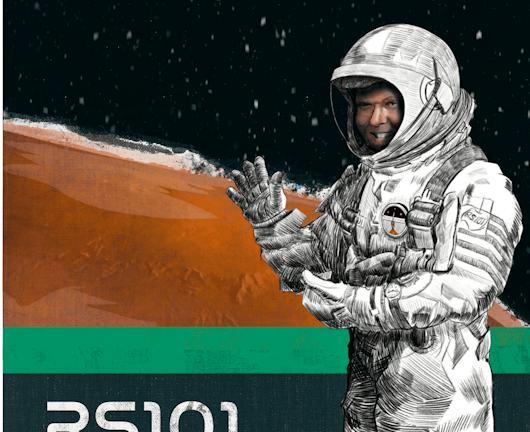
This course is part of the Rocket Science 101 Specialization.

What you'll learn

  • Describe the progression and the reasoning behind the US's Mercury, Gemini, and Apollo programs
  • Describe the costs and benefits of the space shuttle program, and why the US lost two shuttles
  • Describe how Germany developed rockets for warfare in WWII and how the US and USSR used this technology to develop their rocket programs

Syllabus

Week 1: The Advent of Modern Rockets
Welcome to the History of Rocket Science course and to Week 1: The Advent of Modern Rockets. This module will take you on a journey through the fascinating history of rocketry, beginning with the time before modern rockets existed and leading up to the post-WWII era. By the end of this module, you will be able to recognize what came before modern rockets, comprehend the cost of rocketry in WWII, and comprehend the development of rocket inventions in WWII in Germany. You will also be able to recognize how the US and USSR responded to post-WWII, setting a strong foundation for the rest of the course. Let's dive into the fascinating world of rocket science!

Week 2: The Space Race
Welcome to the second module of the History of Rocket Science course—Week 2: The Space Race. This module will take you on a thrilling journey through one of the most exciting periods in the history of rocketry—the space race. By the end of this module, you will be able to comprehend the political paradigm of the space race: communism vs. capitalism, recognize the USSR's early victories in the space race, identify the components of the US plan to get to the moon, and explain why the USSR plan failed to get to the moon. Join us as we relive the excitement and intrigue of the space race and gain a deeper understanding of the history of rocket science.

Week 3: The Space Shuttle Era
Welcome to the third module of the History of Rocket Science course—Week 3: The Space Shuttle Era. This module will explore the era of the Space Shuttle program, which marked a new phase in the history of space exploration. We will examine the evolution of the shuttle program and its impact on the exploration and utilization of space. The module will be divided into three parts, each focusing on a distinct aspect of the Space Shuttle era. The first part will cover Fast Airplanes, where we will explore the technological advancements that made high-speed aircraft and commercial space travel possible. The second part will focus on Space Stations, where we will examine the construction and operation of the International Space Station (ISS), which continues to be a vital platform for scientific research and technological development in space. Lastly, the third part will cover The Space Shuttle, where we will take a closer look at the cost and benefits of the shuttle program, including its role in deploying and repairing satellites, and its use in servicing the Hubble Space Telescope. Join us as we explore the exciting and innovative era of the Space Shuttle program and gain a deeper understanding of the history of rocket science.

Week 4: The Industrial Revolution
Welcome to the fourth and the last module of the History of Rocket Science course—Week 4: The Industrial Revolution. In this module, we will explore how the rocket industry has been transformed by the rise of commercial space companies and the emergence of new space technologies. By the end of this module, you will be able to identify the reasons for the development of small satellites, recognize the cost model of launch vehicles, identify what launch vehicle providers are doing to drive costs down, and comprehend the motivation to go to Mars and how we can get there. Join us as we explore the cutting-edge technologies and revolutionary ideas that are driving the Industrial Revolution in rocket science, and gain a deeper understanding of the future of space exploration.
Go to Class
MOOC List is learner-supported. When you buy through links on our site, we may earn an affiliate commission.

Related Courses

Diode - pn Junction and Metal Semiconductor Contact (Coursera) Coursera
University of Colorado Boulder

Diode - pn Junction and Metal Semiconductor Contact (Coursera)

This course presents in-depth discussion and analysis of pn junction and metal-semiconductor contacts including equilibrium behavior, current and capacitance responses under bias, breakdown, non-rectifying behavior, and surface effect. You'll work through sophisticated analysis and application to electronic devices.

Jun 14th 2026
4 Weeks
Getting There and Going Beyond (Coursera) Coursera
University of Colorado Boulder

Getting There and Going Beyond (Coursera)

Welcome to Course 2 - Getting There and Going Beyond. If you are here, you have successfully completed Course 1 (Our Place in the Cosmos) and are ready for more. There is so much more to learn in Course 2 with 40 learning objectives spread out over 5 weeks and 12 lessons. We will cover all the ways we explore space and near space from planes to rockets to satellites and humans.

Jun 8th 2026
5-12 Weeks
The Frozen Frontier: Monitoring the Greenland Ice Sheet from Space (FutureLearn) FutureLearn
European Space Agency

The Frozen Frontier: Monitoring the Greenland Ice Sheet from Space (FutureLearn)

Learn how the Greenland ice sheet is monitored from space and the ground, to understand our past, present and future climate. Made up of layers of compressed snow from over the last 100,000 years, the vast Greenland ice sheet acts as both a valuable record of our past climate and a bellwether for future climate change. This online course highlights how the Greenland ice sheet is monitored from space and the ground. You’ll look at the measurements made possible by Earth Observation (EO) satellites like Cryosat, the technologies and techniques involved, the data generated, and its uses and challenges.

No sessions available
3 Weeks
Sonido Espacial y 3D (edX) EdX
Universitat Politècnica de València,UPValenciaX

Sonido Espacial y 3D (edX)

En este curso el alumno estudiará los principales sistemas de reproducción de sonido espacial, como el 5.1, WFS o los sistemas binaurales. Oímos en tres dimensiones porque la evolución nos ha dotado de esta capacidad fundamental para desenvolvernos en nuestro entorno. El oído sustituye a la vista cuando las fuentes sonoras quedan fuera del alcance de esta o bien sirve para complementarla cuando están visibles.

Self Paced
Self-Paced
Explorer l’espace des humains: une introduction à la géographicité (edX) EdX
École Polytechnique Fédérale de Lausanne,EPFLx

Explorer l’espace des humains: une introduction à la géographicité (edX)

Explorer comment la géographie, la cartographie, l’urbanisation et la justice spatiale jouent un rôle dans la compréhension de l’espace des humains et des sociétés. Comment définir et comprendre la notion d’espace? Comment l’urbanisation, la mobilité, Internet et la mondialisation ont-ils influencé notre perception du temps et de l’espace? Ce cours a pour objectif de définir la notion d’espace en apportant des clés de lecture pour comprendre les sociétés qui nous entourent.

Self Paced
Self-Paced
Navigation through the ages (European Schoolnet Academy) European Schoolnet Academy
European Schoolnet

Navigation through the ages (European Schoolnet Academy)

Since early times, the observation of the sky has been a key cultural element and has played an important role in the way we live. In The Navigation through the Ages MOOC, we will explore the rich history of navigation, and journey together from ancient Greece, the fifteenth century European explorers and their missions of global discovery, to the importance of Europe's Galileo programme for the current needs of citizens (mobile devices, increased mobility, safety, security etc.).

Legacy Course
Self-Paced
Exploring Space Weather and 5E Instructional Model with NASA MMS Team (Canvas.net) Canvas Network
University of North Texas

Exploring Space Weather and 5E Instructional Model with NASA MMS Team (Canvas.net)

The purpose of this four-week learning exchange is to bring together organizations, teachers, students, and community stakeholders to assist elementary and middle school students choose a STEM career pathway by exploring topics and problems surrounding space weather through the lens of NASA's Multiscale Magnetosphere Mission.

Feb 9th 2015
4 Weeks
Monitoring Climate from Space (FutureLearn) FutureLearn
European Space Agency

Monitoring Climate from Space (FutureLearn)

Explore our planet from space and learn how Earth observation is used to monitor climate change, with this free online course. It is increasingly essential for us to study climate change across the planet at the highest level of detail possible. But how can we achieve such a comprehensive worldwide view?

No sessions available
5-12 Weeks
Tesoros de la Física y sus Descubridores I (Coursera) Coursera
Universidad de los Andes

Tesoros de la Física y sus Descubridores I (Coursera)

¿Sabes cómo vuelan los aviones, tan pesados y no se caen mientras vuelan? ¿Sabes que viajamos por el espacio sobre el planeta Tierra que se traslada y gira muy rápido y no lo percibimos? ¿O acaso, notas efectos de su movimiento? ¿Cuál es nuestro lugar en el universo? ¿Podemos viajar en el tiempo? ¡Preguntas, muchas preguntas! Con espíritu de descubridores nuestra curiosidad nos motiva a buscar respuestas, a explorar nuestro entorno, a entrar a lo desconocido y hallar nuevo conocimiento.

Jun 8th 2026
5-12 Weeks
AstroTech: The Science and Technology behind Astronomical Discovery (Coursera) Coursera
University of Edinburgh

AstroTech: The Science and Technology behind Astronomical Discovery (Coursera)

Modern astronomy has made some astonishing discoveries - how stars burn and how black holes form; galaxies from the edge of the universe and killer rocks right next door; where the elements come from and how the expanding universe is accelerating. But how do we know all that? The truth is that astronomy would be impossible without technology, and every advance in astronomy is really an advance in technology. But the technology by itself is not enough. We have to apply it critically with a knowledge of physics to unlock the secrets of the Universe.

Jun 1st 2026
5-12 Weeks