Higher Education for Sustainable Development Goals (POK)

Offered by Politecnico di Milano,
Higher Education for Sustainable Development Goals (POK)

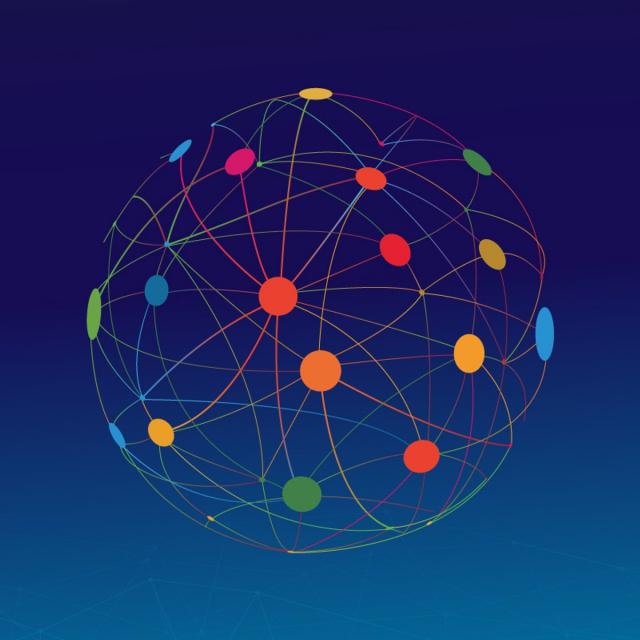
The course introduces the concept of Sustainable Development and the recent debate and policies promoted at the global level to face urgent environmental and societal challenges. 17 Sustainable Development Goals, the SDGs, aiming at addressing ambitious sustainability challenges by 2030, are presented across the course program. The course concludes with a call for action to accelerate and demonstrate the active commitment of the HE community.

The course introduces the concept of Sustainable Development and the recent debate and policies promoted at the global level to face urgent environmental and societal challenges. 17 Sustainable Development Goals, the SDGs, have been promoted by the United Nations in 2015 aiming at responding to those global challenges by 2030. We all are called to transform our world toward a sustainable future, combating most of the inequalities and reducing the environmental impact of our societies. No one has to be left behind in this race, hence we need innovative solutions to address most of the SDGs on time and achieve these ambitious targets.
It is evident that Higher Education plays a major role in this challenge and has a big responsibility in driving the change. Educating future society leaders to sustainability is a must and has to permeate all aspects of your future career and personal life. We want our students to be ambassadors for a sustainable development.

Let’s start by creating knowledge and awareness on sustainability, discovering the richness and interdisciplinary connections that can be established among several topics, at least among the 17 SDGs. In the first week, the course introduces the main concepts and aims at giving back the transversal links existing among the goals. Along the next five weeks, the SDGs are presented, grouped according the 5Ps principles: people, prosperity, planet, peace and partnerships. Beside introducing the main concepts and definitions, we will accompany the SDG with practical examples, from research outcomes to on campus applications. Hence, a comprehensive picture of all the challenges will help you getting a holistic vision of the global challenges and position yourself with your theoretical and professional competences acquired through your study plan as part of the broad society. You will understand your potential contribution and societal mission; in short, you can make the difference towards a sustainable future!
You can access the course absolutely free of charge and completely online.

Go to Class
MOOC List is learner-supported. When you buy through links on our site, we may earn an affiliate commission.

Related Courses

Energy, Environment, and Everyday Life (Coursera) Coursera
University of Illinois at Urbana-Champaign

Energy, Environment, and Everyday Life (Coursera)

This course teaches you everything you need to know about energy, the environment, and at least a number of things in everyday life. It starts by talking about energy itself and where it comes from. This includes how much we have, who has it, who uses it, and what that all means. The video clips are produced in a fast-paced multimedia format during which Professor Ruzic throws in fun and demonstrations. There are multiple-choice questions to check your understanding and some more in-depth exercises to guide you deeper into the subject.

Jun 8th 2026
5-12 Weeks
Embracing the Next Production Revolution for a new Africa Narrative (POK) Polimi OPEN KNOWLEDGE
Politecnico di Milano

Embracing the Next Production Revolution for a new Africa Narrative (POK)

A short introduction to the Next Production Revolution (NPR) paradigma as a means to achieve Sustainable Development Goals and unlock Africa’s potential to innovation. The course is part of a series of Sprint MOOCs addressing the Next Production Revolution (NPR) paradigma, as a new wave of technological innovation with disruptive implications in production processes, society and environmental concerns.

Available
4 Weeks
The strange paradox of the world energy question (POK) Polimi OPEN KNOWLEDGE
Politecnico di Milano

The strange paradox of the world energy question (POK)

A multidimensional and systemic thinking about the world energy challenge. A continuous flow of energy crosses our whole life. The food we eat, the car we drive, lights that illuminate our cities or the radio that plays our favorite songs, are all manifestations of energy. Our biological life can be explained in terms of energy and even our emotions and feelings to a certain extent.

Available
4 Weeks
Sharing Cities: Governance and Urban Sustainability (Coursera) Coursera
Lund University

Sharing Cities: Governance and Urban Sustainability (Coursera)

How can we govern the sharing economy in our cities? This course connects the sharing economy, cities, governance and urban sustainability to provide unique knowledge and insights into sharing cities. We utilize a diversity of leading examples of the emerging sharing economy in cities to bring this course to life. The sharing economy can contribute to social, environmental and economic sustainability, and sharing cities can unlock new opportunities and solve urban challenges by facilitating and applying the sharing economy in urban contexts. But it is imperative that the sharing economy is shaped and designed to advance urban sustainability.

Jun 8th 2026
5-12 Weeks
Solar Energy Systems Overview (Coursera) Coursera
University at Buffalo

Solar Energy Systems Overview (Coursera)

By the end of this course, learners will have acquired a broad understanding of the history and mechanics behind converting light into electricity, commonly known as photovoltaics (PV). They are empowered to recognize and describe elements of a PV system, enabling them to: compare the most common types of solar cells, sketch a solar PV system, and analyze differences between rooftop and ground mounting configurations.

Jun 8th 2026
3 Weeks
Teaching in University Science Laboratories (Developing Best Practice) (Coursera) Coursera
University of Amsterdam

Teaching in University Science Laboratories (Developing Best Practice) (Coursera)

This course is developed to improve the effectiveness of laboratory classes in higher education. It aims to support teachers to improve their teaching skills for active learning in university science laboratory courses. It will show you how laboratory sessions can differ with respect to their aim and expected learning outcomes, how to engage students for learning and how to cope with their different levels of pre-knowledge and experience and probe their understanding. Last but not least it will show how you could assess students in laboratory courses.

Jun 8th 2026
5-12 Weeks
Designing and Implementing Effective Entrepreneurship Policies (POK) Polimi OPEN KNOWLEDGE
Politecnico di Milano

Designing and Implementing Effective Entrepreneurship Policies (POK)

Description and analysis of the rationales, modalities, monitoring and evaluation of entrepreneurship policies. This course is targeted to policy makers, policy influencers, public servants and administrative officials who at various levels are interested in entrepreneurship dynamics and are responsible for the design and the implementation of related policies.

Available
4 Weeks
Sustainable Urban Water Systems (POK) Polimi OPEN KNOWLEDGE
Politecnico di Milano

Sustainable Urban Water Systems (POK)

Solutions for Sustainable Water Management in Resilient Smart Cities. The MOOC “Sustainable Urban Water Systems” aims to provide knowledge about modern and sustainable solutions for urban water management in water-sensitive cities. The focus is on stormwater control and water supply strategies for the mitigation of effects on the water cycles due to human settlements and climate change. In particular, the integration of Nature-based Solutions (NbS) into urban drainage systems, the use of alternative water resources, and the reduction of losses and waste, make cities more resilient and add benefits to both the environment and community.

Available now
3 Weeks
Arctic Change & the Nexus of Governance, Economics & Culture (Coursera) Coursera
University of Colorado Boulder

Arctic Change & the Nexus of Governance, Economics & Culture (Coursera)

In this course, you will learn how the changing Arctic environment is tied to the growing economic and strategic importance of the North. After setting the stage through a review of the peoples of the Arctic and how they are dealing with change, Arctic governance, economies national defense, attention turns to marine use of the Arctic, oil and gas exploration, mining, fisheries and tourism.

Jun 8th 2026
4 Weeks
Measuring the impact of the Energy Transition (POK) Polimi OPEN KNOWLEDGE
Politecnico di Milano

Measuring the impact of the Energy Transition (POK)

The Industrial Ecology approach for assessing the Sustainability of the Energy Transition. The aim of this MOOC is to provide a holistic but quantitative and multi-dimensional perspective on the energy transition underway today. Especially when dealing with cross sectoral linkages and circular economy, the instruments made available by the Industrial Ecology can represent a great support to researchers and practitioners and can be used to better inform policy makers.

Available
3 Weeks
Climate Change, Sustainability, and Global Public Health (Coursera) Coursera
University of Michigan

Climate Change, Sustainability, and Global Public Health (Coursera)

The third course of the Impacts of the Environment on Global Public Health specialization will introduce you to two major environmental health challenges facing the world today. The first is climate change –the preeminent threat to public health today, and a threat that will impact every human and ecosystem on the planet.

Jun 8th 2026
4 Weeks
Oil & Gas Industry Operations and Markets (Coursera) Coursera
Duke University

Oil & Gas Industry Operations and Markets (Coursera)

The oil and gas industry has an enormous impact on all aspects of daily life. Individuals, corporations, and national governments make financial and policy decisions based on the cost, use, and availability of these two natural resources. This two-week course looks at the two most fundamental aspects of the oil and gas industry, its operations and markets, each of which is addressed as a separate module in the course.

Jun 10th 2026
2 Weeks