A Guide to Healthcare Innovation: Principles and Practice (Coursera)

A Guide to Healthcare Innovation: Principles and Practice (Coursera)

This course reflects on global health challenges and the role of innovative solutions in addressing them. By engaging in this course, you will be able to describe the principles and key types of innovation in order to characterise the fundamental features of new models of care and technologies.

Class Deals by MOOC List - Click here and see Coursera's Active Discounts, Deals, and Promo Codes.

This course will review the basic features and principles of healthcare innovation. You'll be examining innovations developed to address global health challenges, ranging from simple low-cost technologies readily deployed in resource constrained settings to more complex combinations of organizational, business model and technology innovations. Throughout this course, you'll also consider how adoption and diffusion is influenced by social, economic and political factors and explore what is required to get an innovation in to practice, effectively, at scale.

What You Will Learn

  • Describe the principles and key types of innovation in order to characterise the fundamental features of new models of care or technologies.
  • Consider the key factors that influence the adoption and scaling up of different types of healthcare innovations

Course 1 of 3 in the Global Health Innovations Specialization.

Syllabus

WEEK 1
Innovation VS invention
You will learn the difference between innovation and invention and the steps involved in the process of innovation. You'll also be provided with an overview of the challenges in healthcare innovation, the difference between technology for health and health technology, and the ways an innovation can be categorised.

WEEK 2
Types of innovation - disruptive, frugal and reverse
You will learn about the different types of innovation that exist including disruptive, frugal and reverse innovation.

WEEK 3
Product development and commercialisation
You will learn about design thinking, what is involved in the design process, what is required to take a product to market, and the differences between key roles in a business (e.g. CEO vs COO).

WEEK 4
Getting an innovation into practice
You will learn about diffusion, the strengths and limitations of Rogers' framework explaining the S-curve, and factors that affect the diffusion of an innovation through Rogers' and Greenhalgh et al.'s frameworks.


Go to Class
MOOC List is learner-supported. When you buy through links on our site, we may earn an affiliate commission.

Related Courses

Epidemiology: The Basic Science of Public Health (Coursera) Coursera
University of North Carolina

Epidemiology: The Basic Science of Public Health (Coursera)

Often called “the cornerstone” of public health, epidemiology is the study of the distribution and determinants of diseases, health conditions, or events among populations and the application of that study to control health problems. By applying the concepts learned in this course to current public health problems and issues, students will understand the practice of epidemiology as it relates to real life and makes for a better appreciation of public health programs and policies. This course explores public health issues like cardiovascular and infectious diseases – both locally and globally – through the lens of epidemiology.

Oct 12th 2026
5-12 Weeks
Everyday Chinese Medicine (Coursera) Coursera
The Chinese University of Hong Kong

Everyday Chinese Medicine (Coursera)

This course aims to serve as an education platform on Chinese medicine (CM) for the general public. Our primary goal is to empower healthcare choices by promoting awareness and practical application on CM diagnostic and therapeutic approaches, as well as regulation on CM services and herbal products using international examples.

Oct 12th 2026
5-12 Weeks
Point of Care Testing for Sexually Transmitted Infections (Coursera) Coursera
Johns Hopkins University

Point of Care Testing for Sexually Transmitted Infections (Coursera)

What are sexually transmitted infections (STIs), and why do we care? What is point of care testing (POCT)? What do clinicians and patients want and need from the POCT for STIs? Point of care testing, or medical diagnostic testing done at the time of patient care, is an important tool for the treatment of sexually transmitted infections. This course looks at point of care testing for sexually transmitted infections from the perspective of the clinician, the patient, and the regulatory environment.

Oct 12th 2026
4 Weeks
Confronting Gender Based Violence: Global Lessons for Healthcare Workers (Coursera) Coursera
Johns Hopkins University

Confronting Gender Based Violence: Global Lessons for Healthcare Workers (Coursera)

This course introduces participants from the healthcare sector to gender based violence (GBV), including global epidemiology of GBV; health outcomes; seminal research; and clinical best practices for GBV prevention, support, and management. A core curriculum is supplemented by lectures that contextualize the content with specific examples and programs from around the world.

Oct 12th 2026
4 Weeks
Value-Based Care: Reimbursement Models (Coursera) Coursera
University of Houston

Value-Based Care: Reimbursement Models (Coursera)

This course is designed to help you build high-level knowledge of the current medical coding and payment mechanisms of most U.S. healthcare services, referred to as fee-for-service. You will explore why the fee-for-service model has contributed to higher costs in the U.S. healthcare system without clearly improving health outcomes. You will examine the importance of coding to reflect chronic conditions and other diagnoses accurately and how value-based care and payments utilize these measures and data. As you learn about a model to replace fee-for-service, you’ll encounter a range of payment options considered to be value-based that utilize a framework from the Health Care Payment Learning and Action Network (HCP-LAN). To build on those options, you will learn how risk-adjustment, quality scores, and patient satisfaction measures are critical parts of value-based care and payment contracts. In the summative assignment, you will demonstrate your knowledge by comparing fee-for-service and value-based contracts, using specific examples to explain and justify the importance of documentation and coding, and identifying ways that risk-adjustment and patient satisfaction are incorporated into value-based care contracts.

Oct 12th 2026
3 Weeks
Escalamiento exitoso e Innovación en los Negocios (Coursera) Coursera
Pontificia Universidad Católica de Chile

Escalamiento exitoso e Innovación en los Negocios (Coursera)

Este curso fue diseñado para apoyar a emprendedores y empresarios que se encuentran en la etapa de escalamiento de sus negocios, con el fin de prepararlos para enfrentar los desafíos de esta etapa y tomar las decisiones estratégicas adecuadas que conlleva. El curso permite profundizar en las áreas de estrategia, administración, personas, finanzas y marketing, entregando conceptos y herramientas que permitan a los empresarios ampliar su visión estratégica de negocios y su capacidad para generar e implementar planes de escalamiento eficazmente, impulsando mecanismos que sustenten la innovación y el crecimiento y adoptando buenas prácticas de gestión.

Oct 12th 2026
5-12 Weeks
Diagnóstico y tratamiento del dolor neuropático en atención primaria (Coursera) Coursera
Universidad de los Andes

Diagnóstico y tratamiento del dolor neuropático en atención primaria (Coursera)

Este curso busca fortalecer las habilidades diagnósticas de los profesionales de la salud frente al dolor neuropático y su adecuado tratamiento. El curso se divide en cuatro módulos, en cada uno podrás conocer el testimonio y el examen físico de una paciente real, con el fin de identificar de su propia experiencia lo que significa esta condición. En el primer módulo, dividido en dos lecciones, se presenta una perspectiva general sobre la definición y características, diagnóstico y tratamiento del dolor neuropático.

Oct 12th 2026
4 Weeks
Career 911: Your Future Job in Medicine and Healthcare (Coursera) Coursera
Northwestern University

Career 911: Your Future Job in Medicine and Healthcare (Coursera)

This course aims to help high school students, recent graduates, and those considering career transitions explore health care career options and learn strategies for entry into the health care workforce and health related fields. There are lots of amazing job opportunities in medicine and healthcare! Join us, as we share the strategies and secrets for getting those jobs.

Oct 12th 2026
5-12 Weeks
Engaging in Strategic Management in Healthcare Organizations (Coursera) Coursera
Northeastern University

Engaging in Strategic Management in Healthcare Organizations (Coursera)

This is the second part of a two-part Strategic Management for Healthcare Organizations course. The first course, "Intro to Strategic Management for Healthcare Organizations", focuses on business strategy. This second part presents and discusses analytical frameworks for making strategic decisions, drawing on different disciplines, including economics and management.

Oct 12th 2026
4 Weeks
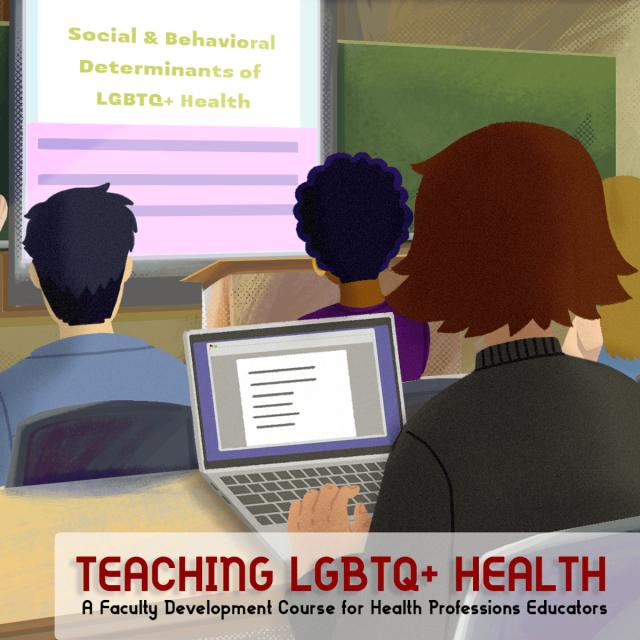
Teaching LGBTQ+ Health (Coursera) Coursera
Stanford University

Teaching LGBTQ+ Health (Coursera)

This curriculum is designed for faculty members and health professions educators. The course goals are to improve your knowledge, teaching skills, and attitudes pertaining to the provision of health care to LGBTQ+ patients.e.g. This is primarily aimed at first- and second-year undergraduates interested in engineering or science, along with high school students and professionals with an interest in programming.

Oct 12th 2026
2 Weeks