EdX

Glaucoma for the General Ophthalmologist: Basic Knowledge (edX)

Glaucoma for the General Ophthalmologist: Basic Knowledge (edX)

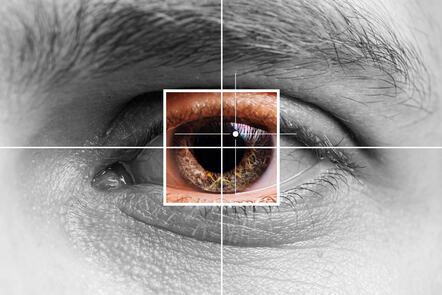
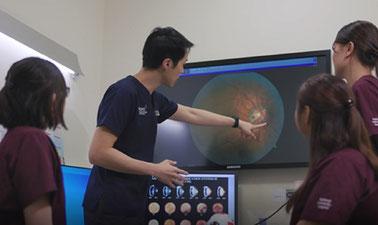
This course will explore a quick revision of the anatomy and pathophysiology of the eye in relation to glaucoma; appreciate the diagnostic criteria and principles of glaucoma management and to distinguish these from non-glaucoma presentations; and recognition.

Class Deals by MOOC List - Click here and see EdX's Active Discounts, Deals, and Promo Codes.

The Glauc-Go Course has been designed for eye specialists practicing general or comprehensive ophthalmology, in private or institutional practices, who are keen to update their understanding, knowledge, improve skills on glaucoma diagnosis and initiating medical therapy. The course is easily accessible online from the comfort of your clinics, offices or homes. The course content has been sub-divided into 3 modules with a short online quiz to allow participants to consolidate what they have learnt. The course aims to cover important topics such as distinguishing glaucoma from non-glaucoma presentations to help one confidently make the initial diagnosis and to ascertain the appropriate first line of therapy. Contemporary surgical options (including laser therapy) and pearls in the care of patients with low vision will be amongst the topics covered.

What you'll learn
‘Anatomy of the Eye/ Pathophysiology and the burden of glaucoma’ will be covered in week 1, where the following topics will be covered:

  • When is it not a glaucoma?
  • The case for/against Glaucoma Screening: - Current evidence - Tools
  • When to refer

At the end of this session, learners should be able to:

  • Revisit the current understanding of pathophysiology and burden of glaucoma
  • Confidently screen and diagnose Glaucoma
  • Initiate referrals to glaucoma specialists as appropriate

‘Diagnosis, clinical staging of glaucoma’ will be covered in week 2, where the following topics will be covered:

  • When to treat
  • Pearls in the use of imaging modalities clinically

At the end of this session, learners should be able to:

  • Appreciate the approach to the diagnosis of Glaucoma subtypes

‘Principles of glaucoma management’ will be covered in week 3, where the following topics will be covered:

  • Subtypes
  • Cataract and glaucoma
  • Current options

At the end of this session, learners should be able to:

  • Recognise Glaucoma emergencies
  • Appreciate the principles and differences in terms of management of Glaucoma subtypes

An ‘Interactive Session Self-Assessment’ component will be conducted in week 4 of the course to complete Module 1.

Syllabus

Module 1 will commence from Monday, 3 April 2023, 10 AM (SGP Time). Learners will be able to access the lessons in sequential order (eg. Lesson 1- Lesson 2- Lesson 3) at their own pace, but will not be permitted to access later lessons if they had not attended earlier ones (eg. You will not be able to access lesson 2 for example if you have not gone through lesson 1).
After all lessons have been attended, you will be able to access the Self-Assessment MCQ component, which must be passed satisfactorily in order to complete the module. The pass mark is 50%.
Module 2 will open on 8 May 2023, and Module 3 will open on 5 June 2023. Registrations for these modules will be open in due course.

Go to Class
MOOC List is learner-supported. When you buy through links on our site, we may earn an affiliate commission.

Related Courses

Lessons from Ebola: Preventing the Next Pandemic (edX) EdX
HarvardX,Harvard University

Lessons from Ebola: Preventing the Next Pandemic (edX)

Understanding the context for the Ebola outbreak: What went right, what went wrong, and how we can all do better. Like no other event in recent history, the 2014 Ebola outbreak has made clear the fragility of existing health systems. While responding to the current epidemic is critical, we also have an opportunity to learn lessons to prevent the next global health catastrophe, forge partnerships across borders and disciplines, and demonstrate our commitment to value all human lives.

Self Paced
Self-Paced
Seeing: How the Brain Creates the Visual World (FutureLearn) FutureLearn
National Yang Ming Chiao Tung University (NYCU)

Seeing: How the Brain Creates the Visual World (FutureLearn)

Gain insights into how we perceive sensory system input when it reaches our brains, and the factors affecting that process. Explore how our visual system and human psychology influence our world view. Our visual system is complicated; using our eyes and brains to convert external information into internal feelings and enabling us to see and interpret the world. On this four-week course from the National Chiao Tung University (NCTU), you’ll explore how our eyes and brains constitute the visual world for us and discover that seeing is not always believing.

Self Paced
4 Weeks
Pupillometry: The Eye as a Window Into the Mind (FutureLearn) FutureLearn
University of Oslo

Pupillometry: The Eye as a Window Into the Mind (FutureLearn)

Examine the science of pupillometry and explore the eye as a window into the mind with the University of Oslo. Discover the applications of pupillometry research. Whilst a fairly new research method within the sciences, pupillometry has wide ranging applications within psychology, neuroscience, and beyond. On this six-week course, you’ll explore both pupillometry and eye tracking methods in depth, before investigating some interesting and unusual applications of this far-reaching research method.

Self Paced
5-12 Weeks
Cellular Mechanisms of Brain Function (edX) EdX
École Polytechnique Fédérale de Lausanne,EPFLx

Cellular Mechanisms of Brain Function (edX)

This course aims for a mechanistic description of mammalian brain function at the level of individual nerve cells and their synaptic interactions. Brain and behavior are inextricably linked in neuroscience. The function of the brain is to govern behavior, and the aim of this course is to causally link biophysical mechanisms with simple behaviors studied in mice.

Self Paced
Self-Paced
Sport Safety: A Guide to Preventing Sudden Death in Sport (edX) EdX
HarvardX,Harvard University

Sport Safety: A Guide to Preventing Sudden Death in Sport (edX)

Learn how to make sports safer through evidence-based, practical approach. While the occurrence may be rare, catastrophic and fatal injuries from sports can have devastating impacts on those involved and community at large. These incidents can happen in athletes of all ages, from recreational to competitive settings. Stakeholders of organized sports (e.g., teachers, coaches, and clinical practitioners) must do their due diligence in protecting their athletes from inherent risks associated with sports participation. This course aims to provide an overview about methods to establish and implement safer sports environment by understanding ways to mitigate risks from the top three causes of sudden deaths in sports: sudden cardiac arrest, head and neck injuries, and exertional heat stroke.

Self Paced
Self-Paced
Salud mental del adolescente en cuidado primario (edX) EdX
The Pontificia Universidad Javeriana,JaverianaX

Salud mental del adolescente en cuidado primario (edX)

Conozca los fundamentos, conceptos y adquiera herramientas teórico prácticas para la evaluación, tratamiento y seguimiento de los adolescentes con problemas y trastornos mentales. La mayor parte de los trastornos mentales tienen su inicio antes de los 25 años, al igual que el consumo y abuso de sustancias psicoactivas, lo cual hace que esta etapa del curso de vida sea crucial para la promoción y la prevención.

Self Paced
Self-Paced
Advanced Cardiac Imaging: Cardiac Magnetic Resonance (CMR) (edX) EdX
University of Hong Kong,HKUx

Advanced Cardiac Imaging: Cardiac Magnetic Resonance (CMR) (edX)

First ever cardiac magnetic resonance (CMR) MOOC! Learn the CMR essentials through short videos, downloadable cases & web forums. Available in multiple languages & follows guidelines for level 1 requirements. This course is for radiologists, cardiologists, radiographers/ technologists and other health professionals who want to learn more about cardiovascular magnetic resonance imaging (CMR). Previous experience in CMR is not required.

Self Paced
Self-Paced
Essential Human Biology: Cells and Tissues (edX) EdX
University of Adelaide,AdelaideX

Essential Human Biology: Cells and Tissues (edX)

An introduction to the human body's most fundamental building blocks and their behaviours in health and disease. Are you preparing for a health-related career, or planning to study in the health sciences? Perhaps you're just keen to learn more about the wonders of the human body? Our bodies are amazing but complex biological machines. This course will provide you with an outstanding foundation of knowledge in human anatomy and physiology.

Self Paced
Self-Paced
PsyHealth worXs! Psychosocial Health Prevention and Work standards“ (edX) EdX
RWTH Aachen,RWTHx

PsyHealth worXs! Psychosocial Health Prevention and Work standards“ (edX)

The first MOOC to teach practitioners how to conduct a psychosocial risk assessment step by step. Do you want happy, healthy, and productive employees? Do you want to learn how you can manage psychosocial risks in your company? This is the course for you! Did you know that up to 50% of workers in the EU report to suffer from work-related stress? And about 80% of managers are concerned about psychosocial risks in their organisation. Moreover, it is actually mandated by EU law for employers to ensure the safety and health of their employees. However, only 30% of organisations have procedures in place to deal with psychosocial risks.

Oct 26th 2026
5-12 Weeks