Geohealth: Improving Public Health through Geographic Information (FutureLearn)

Offered by University of Twente,
Geohealth: Improving Public Health through Geographic Information (FutureLearn)

Explore how spatial data and geographic information systems (GIS) can be used to understand and improve public health. The environment in which we live and work can have a profound effect on our health – an effect that is explored by the emerging field of geohealth. This free online course will introduce you to new developments in geohealth, looking at the latest thinking and methods for using spatial data and geographic information systems (GIS) in health settings.

Class Deals by MOOC List - Click here and see FutureLearn's Active Discounts, Deals, and Promo Codes.

Understand geohealth techniques and best practice
The course consists of ten different topics, ranging from data collection techniques to spatial simulation, and aims to bridge the gap between scientific research and health professionals.
By the end of the course, you will understand how spatial data and geo-information techniques can contribute to solving public health problems, and be aware of best practice when using GIS in the health field.
Learn with health and geo-informatics specialists
The Geohealth course has been developed by three well-known institutions with experience in both the health domain and the field of geo-informatics:

  • Public Health Foundation of India helps to build institutional and systems capacity in India for strengthening education, training, research and policy development in the area of public health.
  • Royal Tropical Institute in Amsterdam aims to improve health and ensure equitable socio-economic development as much as intercultural cooperation with partners worldwide.
  • Faculty of ITC at the University of Twente is recognised worldwide for achievements in teaching, research and capacity development in the field of geo-information science and earth observation.

What topics will you cover?

  • Components of a GIS for health applications (spatial data, software, mapping, analysis techniques, people)
  • In depth topic on “Accessibility and Health Facility Planning”
  • Using Volunteered Geographic Information within the Health Domain
  • Spatio-temporal machine learning and data mining
  • Using Self-Organizing Maps to discover spatio-temporal patterns
  • Agent-Based modeling for health applications
  • Spatial dependence and variograms
  • Spatial Clustering and Smoothing
  • Universal Health Coverage

What will you achieve?
By the end of the course, you'll be able to...

  • Debate with other participants about recent developments within the field of GeoHealth
  • Reflect on components of the Geohealth system and the relevance of these components
  • Investigate several new analytical approaches with the GeoHealth domain
  • Contribute to the discussion on the relevance of several new analytical techniques
  • Explore scientific research in the Geohealth domain
Go to Class
MOOC List is learner-supported. When you buy through links on our site, we may earn an affiliate commission.

Related Courses

From Swab to Server: Testing, Sequencing, and Sharing During a Pandemic (FutureLearn) FutureLearn
Wellcome Connecting Science,COG-Train

From Swab to Server: Testing, Sequencing, and Sharing During a Pandemic (FutureLearn)

Discover the process of how swab samples become critical data that aid the knowledge and understanding of the spread of disease. Explore the journey from swabbing to processing data. Sampling and testing are key to understanding where a disease is spreading. In the COVID-19 pandemic, the number of samples taken, analysed, tracked, and shared have far surpassed any previous pandemic.

May 9th 2022
3 Weeks
COVID-19: Tackling the Novel Coronavirus (FutureLearn) FutureLearn
London School of Hygiene & Tropical Medicine,UK Public Health Rapid Support Team

COVID-19: Tackling the Novel Coronavirus (FutureLearn)

What is COVID-19 and how might the outbreak affect you? Find out more about coronavirus and explore its worldwide implications. Understand the emergence of COVID-19 and how we respond to it going forward. The world is paying close attention to the outbreak of novel coronavirus, following its emergence in December 2019 in Wuhan, China.

No sessions available
3 Weeks
Health in Humanitarian Crises (FutureLearn) FutureLearn
London School of Hygiene & Tropical Medicine

Health in Humanitarian Crises (FutureLearn)

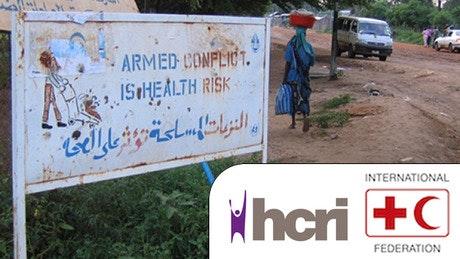
Discover the health needs of those affected by humanitarian crises, challenges of delivering healthcare, and what we must do next. Humanitarian crises due to armed conflict, natural disasters, disease outbreaks and other hazards are a major and growing contributor to ill-health and vulnerability worldwide, and their continuing effects on health and health systems can undermine decades of social development.

No sessions available
3 Weeks
The Impact of Climate Change on Public Health (FutureLearn) FutureLearn
EIT Health,EIT

The Impact of Climate Change on Public Health (FutureLearn)

Explore the impact of climate change on public health, and discover ways to influence behaviours and policies at all levels. Explore the direct and indirect ways that climate change affects health. This online course gives you the opportunity to explore the impact of climate change on public health. It shares knowledge of both the direct and indirect ways in which climate change is affecting health around the globe.

No sessions available
4 Weeks
Global Blindness: Planning and Managing Eye Care Services (FutureLearn) FutureLearn
London School of Hygiene & Tropical Medicine

Global Blindness: Planning and Managing Eye Care Services (FutureLearn)

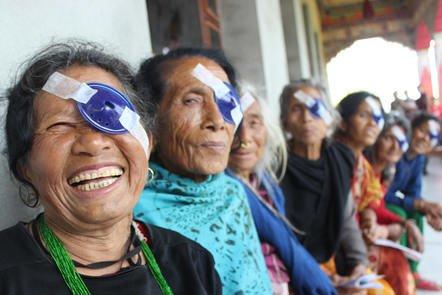
Understand global blindness and how to plan effective eye care with this online course for health professionals. Find out how to plan and manage eye care, to avoid blindness. Around the world, 285 million people are blind or visually impaired. 75% of this is avoidable and 90% is in low- and middle-income countries. In this online course we highlight the key facts about avoidable blindness and global initiatives to address it.

Available now
5-12 Weeks
COVID-19: Global Health Perspectives (FutureLearn) FutureLearn
University of Melbourne

COVID-19: Global Health Perspectives (FutureLearn)

Analyse how differing capacities of health systems, governments and communities have shaped responses to and impacts of COVID-19. Explore how countries can strengthen their health systems for future pandemics. The global response to COVID-19 has varied dramatically, but how prepared were different countries for this crisis, and what does pandemic preparedness require?

No sessions available
4 Weeks
Examining African Contributions to Global Health (FutureLearn) FutureLearn
University of Basel

Examining African Contributions to Global Health (FutureLearn)

Discover the achievements and impact made by African experts in global healthcare. Diversify your historical perspective by learning about the Global South. The history of science has largely been written from the perspective of the Global North. This has meant that the impact of the Global South has been neglected and undervalued. This five-week course from the University of Basel will uncover the innovation and excellence that Africa has brought to global health over time.

Feb 28th 2022
5-12 Weeks
Tackling Public Health Issues: Concepts and Evidence (FutureLearn) FutureLearn
University of Liverpool

Tackling Public Health Issues: Concepts and Evidence (FutureLearn)

Expand your understanding of the main concepts, challenges, and themes surrounding public health promotion. Discover how public health promotion can lead to improved population health. Public Health is a complex and dynamic field that focuses on improving population health through addressing the conditions that produce poor health and health inequalities.

May 16th 2022
4 Weeks
Formation en laboratoire pour les tests moléculaires COVID-19 (FutureLearn) FutureLearn
Foundation for Innovative New Diagnostics - FIND,African Society for Laboratory Medicine - ASLM

Formation en laboratoire pour les tests moléculaires COVID-19 (FutureLearn)

Apprenez à planifier et à établir des tests COVID-19 dans votre laboratoire pour garantir des résultats précis. Le monde étant ébranlé par la pandémie de COVID-19, la capacité de test est devenue un problème majeur. Une capacité de test adéquate pour le SARS-CoV-2 est cruciale pour stopper l’épidémie. Au cours de ce cours, vous apprendrez à planifier et à établir des tests COVID-19 dans votre laboratoire et à vous assurer que les résultats sont exacts, opportuns et ont un impact sur les soins aux patients et les décisions de santé publique.

No sessions available
1 Week