COVID-19 Critical Care: Understanding and Application (FutureLearn)

COVID-19 Critical Care: Understanding and Application (FutureLearn)

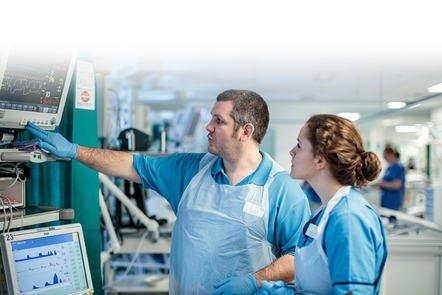
Learn the principles and practice of critical care to treat and care for critically ill patients during the COVID-19 pandemic. Learn to manage critical care patients whilst protecting yourself and your peers. “One of the essential qualities of the clinician is interest in humanity: the secret of the care of the patient is in caring for the patient” Francis W. Peabody, Harvard Medical School 1925. This 6-week course will teach you how to effectively care for critically ill patients during the COVID-19 pandemic.

Class Deals by MOOC List - Click here and see FutureLearn's Active Discounts, Deals, and Promo Codes.

Understanding critical care
You will learn the daily practice for frontline clinical staff supporting critical care patients with and without COVID-19, and how to apply ventilation and organ support principles to the care of a critically ill coronavirus patient.
Discover how to recognise, assess and manage deteriorating patients on the ward, and watch videos that demonstrate effective situation management in COVID-19 critical care.

Learn the fundamentals of COVID-19 and ventilation support
Next, we’ll provide information on a number of checklists, resources and guidelines being produced specifically for COVID-19 in order to assist healthcare teams with their clinical management and decision making.
In addition, we’ll provide an overview of the basic principles of Ventilation and Organ Support. It will cover the pathophysiology of sepsis and ARDS, mechanical ventilation, shock, sepsis and septic shock, acute kidney injury, and haemofiltration. This will support a range of staff members, including those new to critical care.

The importance of staff wellbeing
It is important to recognise that we need to care for ourselves in order to care for our patients, relatives and colleagues. The final part of the course explores how our emotions impact our well-being and provides you with resources to support you at this time.

What topics will you cover?
• Deteriorating Patient
• Daily Practice of Critical Care
• COVID-19 Specifics
• Ventilation and Organ Support
• Self-care and Staff Well-being

What will you achieve?
By the end of the course, you'll be able to...

  • Apply the current and evolving principles of Personal Protective Practices in the care of COVID-19 patients
  • Apply evidence-based principles of advanced organ support and monitoring to the COVID-19 critically ill patient
  • Apply evidence-based daily practices to care of the critically ill patient
  • Develop a range of specialised self-caring practices, including being present, self-kindness, compassionate listening, soles of the feet, walk a mile in their moccasins
  • Reflect critically on the complex elements required to achieve both self-awareness and self compassion in a high tension environment
Go to Class
MOOC List is learner-supported. When you buy through links on our site, we may earn an affiliate commission.

Related Courses

Food and Mood: Improving Mental Health Through Diet and Nutrition (FutureLearn) FutureLearn
Deakin University,Food & Mood Centre

Food and Mood: Improving Mental Health Through Diet and Nutrition (FutureLearn)

Explore the relationship between nutrition and brain health, why it matters, and how to work towards positive food changes. Learn how healthy dietary choices can improve your mental and brain health. Poor diet and poor mental health are the leading causes of mortality and morbidity worldwide. We now know that diet quality is a modifiable factor that is linked to mental and brain health across all stages of our lives. We will explore how our daily diets may affect our mental and brain health, including the role of our immune system and gut microbiome.

Jan 12th 2026
3 Weeks
Cancer and the Older Person: Improving Care, Outcomes and Experience (FutureLearn) FutureLearn
University of Melbourne,Victorian Comprehensive Cancer Centre

Cancer and the Older Person: Improving Care, Outcomes and Experience (FutureLearn)

Gain an introduction to modern strategies of geriatric oncology and support. This course will enhance your understanding of cancer care for geriatric patients and help you to build confidence and knowledge to care for older people who have been diagnosed with or are undergoing treatment for cancer.

Sep 2nd 2024
4 Weeks
Opioids and Surgery (FutureLearn) FutureLearn
University College London

Opioids and Surgery (FutureLearn)

Gain a practical approach to perioperative opioid stewardship to minimise harms from opioids prescribed at the time of surgery. On this three-week course, you’ll explore the key concepts of opioid stewardship. You’ll learn how to minimise the risks associated with opioid use around the time of surgery whilst allowing safe administration to patients who are most likely to benefit from them.

Jan 29th 2024
3 Weeks
Introduction to Emergency Planning and Preparedness (FutureLearn) FutureLearn
Coventry University

Introduction to Emergency Planning and Preparedness (FutureLearn)

Explore the emergency planning process and learn how to develop emergency plans and preparedness frameworks. When preparing a community for an incident, creating plans for identified risks and implementing mitigation measures is key. Responding to a fire is different than responding to a flood. Different actions and different resources are needed for each of these scenarios.

Jun 3rd 2024
2 Weeks
Infant Nutrition: from Breastfeeding to Baby's First Solids (FutureLearn) FutureLearn
Deakin University

Infant Nutrition: from Breastfeeding to Baby's First Solids (FutureLearn)

Learn what good infant nutrition looks like, how and what to feed a baby, and how to start weaning. Explore the principles of good nutrition in the first 12 months of a baby’s life. In this insightful course led by nutritional experts from Deakin University, you’ll trace the milestones in a baby’s first year of life to learn about the principles of good infant nutrition and how you can apply them. You’ll explore the nutritional requirements of young children, as well as why healthy food for babies is so essential.

Mar 16th 2026
2 Weeks
The School for Change Agents (FutureLearn) FutureLearn
NHS Leadership Academy,NHS Horizons

The School for Change Agents (FutureLearn)

Develop the skills to make a difference and create change in your organisation on this course targeted to health and care staff. Build the confidence needed to make change happen. Do you want to make a difference in your organisation? On this course, you will build the skills, confidence, and supportive community needed to create change in an evolving environment.

Nov 11th 2024
5-12 Weeks
Causes of Human Disease: Understanding Cardiovascular Disease (FutureLearn) FutureLearn
University of Leeds

Causes of Human Disease: Understanding Cardiovascular Disease (FutureLearn)

Explore normal cardiovascular function and risk factors associated with heart attack, stroke and other cardiovascular diseases. Cardiovascular diseases are the leading global cause of death. On this course, you’ll learn how the cardiovascular system functions and understand common cardiovascular diseases like heart attack and stroke, as well as the risk factors associated with them.

Sep 23rd 2024
2 Weeks
Nutrition: Eating to Live Well (FutureLearn) FutureLearn
Taipei Medical University

Nutrition: Eating to Live Well (FutureLearn)

Explore the importance of nutrition and learn how eating well can support humans to live longer, healthier lives. Discover the effect nutrition has on humans throughout their lives. Have you ever wondered how what you eat affects your health? Nutrition plays a key role in human health and disease prevention. On this course, you will explore the food health crisis of modern times, and learn how nutrition can help humans experience longer and healthier lives.

Apr 15th 2024
4 Weeks
Understanding Insulin (FutureLearn) FutureLearn
University of Southampton

Understanding Insulin (FutureLearn)

Learn more about all things insulin: from how it works, to insulin types, to side effects and guidance on how to prescribe safely. The current spend on diabetes care by the NHS is estimated to be £1.6 million pounds per hour. 80% of this is spent on managing diabetes complications, the risk of which can be significantly reduced through effective blood glucose control using insulin.

Jun 5th 2023
4 Weeks
Causes of Human Disease: Exploring Cancer and Genetic Disease (FutureLearn) FutureLearn
University of Leeds

Causes of Human Disease: Exploring Cancer and Genetic Disease (FutureLearn)

Explore how the unravelling of genetic code has led to a deeper understanding of genetic diseases and cancer. It’s widely known that some diseases run in families. The discovery of the structure of DNA and the unravelling of the genetic code has led to a deeper understanding of such diseases. We now know more about the genetic basis of cancer and how cancer cells are formed and reproduce. On this course you’ll explore the structure of DNA, its processes and learn how genetic disease results from DNA alterations.

Sep 23rd 2024
2 Weeks
Perioperative Medicine in Action (FutureLearn) FutureLearn
University College London

Perioperative Medicine in Action (FutureLearn)

Explore perioperative medicine and how you can improve care for the high risk surgical patient. Join this RCoA endorsed course. Too many patients die or suffer prolonged complications following surgery. Perioperative medicine is an emerging, multi-disciplinary approach, which tackles this issue, by optimising the care of high-risk surgical patients. It encompasses disciplines including anaesthetics, surgery, nursing, care of the elderly, physiotherapy and healthcare management.

Jul 1st 2024
4 Weeks