Fundamentals of Fluid Power (Coursera)

Fundamentals of Fluid Power (Coursera)

In this course, you will be introduced to the fundamental principles and analytical modeling of fluid power components, circuits, and systems. You will learn the benefits and limitations of fluid power compared with other power transmission technologies; the operation, use, and symbols of common hydraulic components; how to formulate and analyze models of hydraulic components and circuits; and how to design and predict the performance of fluid power circuits.

Class Deals by MOOC List - Click here and see Coursera's Active Discounts, Deals, and Promo Codes.

Fluid power has the highest power density of all conventional power-transmission technologies. Learn the benefits and limitations of fluid power, how to analyze fluid power components and circuits, and how to design and simulate fluid power circuits for applications. This course is supported by the National Science Foundation Engineering Research Center for Compact and Efficient Fluid Power, and is endorsed by the National Fluid Power Association, the leading industry trade group in fluid power.

Syllabus

WEEK 1
Fundamentals of Fluid Power
This week: An overview of the course, introduction to hydraulics and pneumatics, and introduction to fundamental concepts of fluid power through the cylinder.

WEEK 2
Components and Concepts: Part 1
This week: circuit diagrams, the written language of fluid power, and how fluid flows through conduits. We hope that you find the hydraulic circuits on the mowing machine as interesting as we did.

WEEK 3
Components and Concepts: Part 2
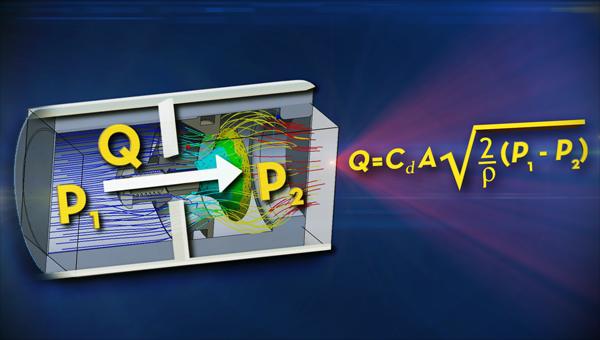
This will be a busy week diving into valves and pumps. We will discuss how basic valves function, how to use them in hydraulic circuits, and how to calculate pressure drop for a given flow rate, or vice versa. The videos will directly address the discussion on the forum about seeing hydraulic components working in real world circuits. In our discussion of pumps we will look at many different positive displacement pumps, exploring flow ripple and pump efficiency, look at the supporting components that form a hydraulic power supply, and see how we can make a transmission with a hydraulic pump and a motor. We are now into the heart of this course; we hope you enjoy seeing the components come together into useful circuits.

WEEK 4
Predicting Performance Through Simulation
This week is entirely devoted to you learning how to use Simscape Fluids (formerly SimHydraulics), the fluid power simulation application that we use in the course. The lecture provides an introduction to computer-based, object-oriented simulation, and goes through a demo of using Simscape Fluids. The homework assignment contains the real work because this is where you will learn to use Simscape Fluids. The homework ends with an open-ended problem that encourages you to branch out on your own and create and run simulations based on examples listed in the course Simscape Fluids resource page or on any other fluid power system that interests you. We will be monitoring the discussion boards to help you with any technical problems with Simscape Fluids. NOTE: The lecture videos were created using an earlier version of SimHydraulics; some small difference exist with the most recent version of Simscape Fluids, but the general approach is the same. THERE IS NO QUIZ THIS WEEK as we recognize that a few of you may not be able to get Simscape Fluids running on your computer. Happy simulating!

WEEK 5
Fluid Properties
This week we will take a dive into hydraulic fluids (no pun intended) and how their properties and behavior influence the circuit operation. In the lectures, you will see the water hammer effect and explore the assumption of fluid incompressibility. We encourage you to use your new knowledge of fluid behavior and simulation to create virtual experiments that explore how fluid properties influence the behavior of a circuit. Share your observations on the discussion forum.

WEEK 6
Advanced Components and Systems and Course Summary
This week you will learn about two new components, the accumulator, which stores hydraulic energy, and the servo valve, which provides fast and precise flow control. We will then be pulling together topics from throughout the course to look at servo hydraulic systems and hydraulic hybrid vehicles. You will get a chance to use simulation to explore how these advanced systems function and how the behavior of individual components influences the system operation.

Suggested Readings:

Go to Class
MOOC List is learner-supported. When you buy through links on our site, we may earn an affiliate commission.

Related Courses

The Finite Element Method for Problems in Physics (Coursera) Coursera
University of Michigan

The Finite Element Method for Problems in Physics (Coursera)

This course is an introduction to the finite element method as applicable to a range of problems in physics and engineering sciences. The treatment is mathematical, but only for the purpose of clarifying the formulation. The emphasis is on coding up the formulations in a modern, open-source environment that can be expanded to other applications, subsequently.

Aug 10th 2026
13-24 Weeks
The hidden value - Lean in manufacturing and services (Coursera) Coursera
École des Ponts ParisTech,Boston Consulting Group - BCG

The hidden value - Lean in manufacturing and services (Coursera)

Lean is a powerful methodology that enables managers and employees to shift their mindset and helps companies to keep their business sustainable by creating competitive advantage. Today, in an increasingly complex and dynamic world, where companies struggle to maintain competitive advantage, Lean is more important than ever. This course combines the experience of many senior experts and practitioners from the Boston Consulting Group and École des Ponts, and brings perspectives on Lean in manufacturing and services. It offers strong topic foundation as well as deep practical insights into the art of continuous improvement.

Aug 10th 2026
4 Weeks
Roadmap to Success in Digital Manufacturing & Design (Coursera) Coursera
University at Buffalo,The State University of New York

Roadmap to Success in Digital Manufacturing & Design (Coursera)

Learners will create a roadmap to achieve their own personal goals related to the digital manufacturing and design (DM&D) profession, which will help them leverage relevant opportunities. The culminating project provides a tangible element to include in their professional portfolios that showcases their knowledge of Industry 4.0.

Aug 10th 2026
5-12 Weeks
Engineering Systems in Motion: Dynamics of Particles and Bodies in 2D Motion (Coursera) Coursera
Georgia Institute of Technology

Engineering Systems in Motion: Dynamics of Particles and Bodies in 2D Motion (Coursera)

This course is an introduction to the study of bodies in motion as applied to engineering systems and structures. We will study the dynamics of particle motion and bodies in rigid planar (2D) motion. This will consist of both the kinematics and kinetics of motion. Kinematics deals with the geometrical aspects of motion describing position, velocity, and acceleration, all as a function of time. Kinetics is the study of forces acting on these bodies and how it affects their motion.

Aug 10th 2026
5-12 Weeks
Introduction to Chemistry: Reactions and Ratios (Coursera) Coursera
Duke University

Introduction to Chemistry: Reactions and Ratios (Coursera)

This is an introductory course for students with limited background in chemistry; basic concepts involved in chemical reactions, stoichiometry, the periodic table, periodic trends, nomenclature, and chemical problem solving will be emphasized with the goal of preparing students for further study in chemistry as needed for many science, health, and policy professions.

Aug 10th 2026
5-12 Weeks
Fundamentals of Fluid-Solid Interactions (Coursera) Coursera
École Polytechnique

Fundamentals of Fluid-Solid Interactions (Coursera)

What is fluid-solid interactions ? It is what happens when the motions of a fluid and of a solid are somehow coupled. This happens all the time, around you when leaves flutter in the wind, inside you when your heart beats, above you when wings of a plane vibrate, under the sea... The idea behind this MOOC is to give you the basic tools to be able to predict and eventually mitigate things called flutter, galloping, sloshing, vortex-induced vibrations, added mass, to cite a few. We are going to consider any possible domains of applications such as civil engineering, aerospace engineering, nuclear engineering , ocean engineering, biomechanics and even food processing !

Aug 10th 2026
5-12 Weeks
Ressources minérales et transition (Coursera) Coursera
Institut Mines-Telecom

Ressources minérales et transition (Coursera)

Ce MOOC sur les ressources minérales et les transitions invite à se questionner sur la soutenabilité de nos choix technologiques. Les transitions énergétiques et numériques sont en effet confrontées aux enjeux d'approvisionnement des ressources minérales et aux impacts que leur cycle de vie génère sur l’environnement et la société.

Aug 17th 2026
4 Weeks
Mastering Statics (Coursera) Coursera
The Hong Kong University of Science and Technology - HKUST

Mastering Statics (Coursera)

Statics is the most fundamental course in Mechanics. In this course, you will learn the conditions under which an object or a structure subjected to time-invariant (static) forces is in equilibrium - i.e. the conditions under which it remains stationary or moves with a constant velocity-. You will also learn how to calculate the reaction forces as well as the internal forces experienced throughout the structure so that later you can properly design and size the foundation and the members of the structure to assure the structure’s safety and serviceability.

Aug 10th 2026
5-12 Weeks
Mastering bitumen for better roads and innovative applications (Coursera) Coursera
École des Ponts ParisTech

Mastering bitumen for better roads and innovative applications (Coursera)

During the four coming weeks, best experts in bitumen will bring you their knowledge and experience to build a strong understanding of today’s realities and new perspectives on the future of bitumen. Total is the European leader on bitumen markets. Innovation has always been the key to sustainability and durability in the products they develop. Their main objective here is to share technical knowledge and experience to insure bitumen are being used in the most effective and efficient ways for their different applications in road works.

Aug 10th 2026
4 Weeks
Electric Utilities Fundamentals and Future (Coursera) Coursera
University of Colorado System

Electric Utilities Fundamentals and Future (Coursera)

The approach of this course is truly unique in how it approaches and engages learners. It looks at the electric utility industry, which has remained critical to our quality of life, health and comfort from the eyes of numerous industry experts through on-location interviews, compelling visuals, and animation. You will benefit from having the inside track because you see some behind-the-scenes information not covered in news stories, social media or even if we are in the business ourselves.

Aug 17th 2026
5-12 Weeks