Fractals and Scaling (Complexity Explorer)

Offered by Santa Fe Institute,
Fractals and Scaling (Complexity Explorer)

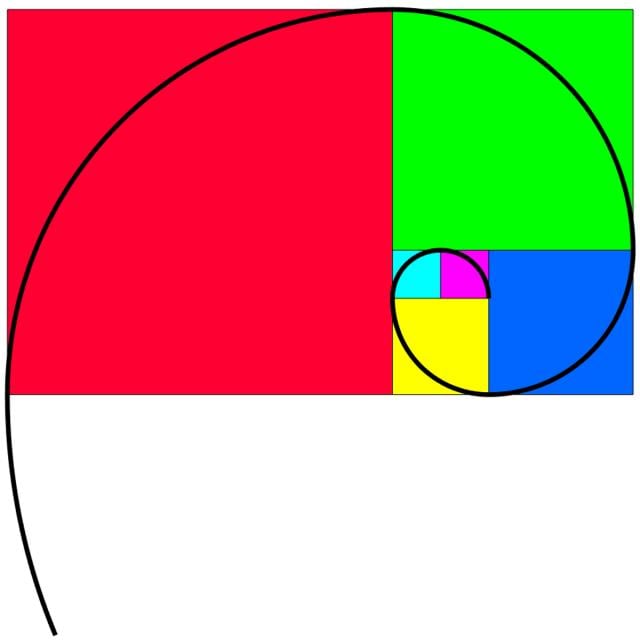
We will begin by viewing fractals as self-similar geometric objects such as trees, ferns, clouds, mountain ranges, and river basins. Fractals are scale-free, in the sense that there is not a typical length or time scale that captures their features. A tree, for example, is made up of branches, off of which are smaller branches, off of which are smaller branches, and so on. Fractals thus look similar, regardless of the scale at which they are viewed. Fractals are often characterized by their dimension. You will learn what it means to say that an object is 1.6 dimensional and how to calculate the dimension for different types of fractals.

In addition to physical objects, fractals are used to describe distributions resulting from processes that unfold in space and/or time. Earthquake severity, the frequency of words in texts, the sizes of cities, and the number of links to websites are all examples of quantities described by fractal distributions of this sort, known as power laws. Phenomena described by such distributions are said to scale or exhibit scaling, because there is a statistical relationship that is constant across scales.
We will look at power laws in some detail and will give an overview of modern statistical techniques for calculating power law exponents. We will also look more generally at fat-tailed distributions, a class of distributions of which power laws are a subset. Next we will turn our attention to learning about some of the many processes that can generate fractals. Finally, we will critically examine some recent applications of fractals and scaling in natural and social systems, including metabolic scaling and urban scaling. These are, arguably, among the most successful and surprising areas of application of fractals and scaling. They are also areas of current scientific activity and debate.
This course is intended for anyone who is interested in an overview of how ideas from fractals and scaling are used to study complex systems. The course will make use of basic algebra, but potentially difficult topics will be reviewed, and help is available in the course discussion form. There will be optional units for more mathematically advanced students and pointers to additional resources for those who want to dig deeper.
Course Outline:

  1. Introduction to fractals. Self-similarity dimension. Review of logarithms and exponents.
  2. Box-counting dimension. Further examples of fractals. Stochastic fractals.
  3. Power laws and their relation to fractals. Rank-frequency plots. How to estimate power law exponents.
  4. Empirical examples of power laws. Other long-tailed distributions: log normals and stretched exponentials. Implications of long tails.
  5. Mechanism for generating power laws. Rich-get-richer phenomena. Phase transitions. Other mechanisms.
  6. Metabolic scaling. West-Brown-Enquist scaling theory.
  7. Urban scaling.
Go to Class
MOOC List is learner-supported. When you buy through links on our site, we may earn an affiliate commission.

Related Courses

Algebra: Elementary to Advanced - Equations & Inequalities (Coursera) Coursera
Johns Hopkins University

Algebra: Elementary to Advanced - Equations & Inequalities (Coursera)

This course is intended for students looking to create a solid algebraic foundation of fundamental mathematical concepts from which to take more advanced courses that use concepts from precalculus, calculus, probability, and statistics. This course will help solidify your computational methods, review algebraic formulas and properties, and apply these concepts model real world situations.

May 25th 2026
4 Weeks
Differential Equations for Engineers (Coursera) Coursera
The Hong Kong University of Science and Technology - HKUST

Differential Equations for Engineers (Coursera)

This course is about differential equations and covers material that all engineers should know. Both basic theory and applications are taught. In the first five weeks we will learn about ordinary differential equations, and in the final week, partial differential equations. The course is composed of 56 short lecture videos, with a few simple problems to solve following each lecture. And after each substantial topic, there is a short practice quiz. Solutions to the problems and practice quizzes can be found in instructor-provided lecture notes. There are a total of six weeks in the course, and at the end of each week there is an assessed quiz.

May 25th 2026
5-12 Weeks
Precalculus: Periodic Functions (Coursera) Coursera
Johns Hopkins University

Precalculus: Periodic Functions (Coursera)

This course helps to build the foundational material to use mathematics as a tool to model, understand, and interpret the world around us. This is done through studying functions, their properties, and applications to data analysis. Concepts of precalculus provide the set of tools for the beginning student to begin their scientific career, preparing them for future science and calculus courses. This course is designed for all students, not just those interested in further mathematics courses.

Jun 1st 2026
5-12 Weeks
Precalculus: Relations and Functions (Coursera) Coursera
Johns Hopkins University

Precalculus: Relations and Functions (Coursera)

This course helps to build the foundational material to use mathematics as a tool to model, understand, and interpret the world around us. This is done through studying functions, their properties, and applications to data analysis. Concepts of precalculus provide the set of tools for the beginning student to begin their scientific career, preparing them for future science and calculus courses. This course is designed for all students, not just those interested in further mathematics courses.

Jun 1st 2026
4 Weeks
Álgebra Básica (Coursera) Coursera
Universidad Nacional Autónoma de México

Álgebra Básica (Coursera)

Galileo dijo: "El Universo está escrito en lenguaje matemático y los caracteres son triángulos, círculos y otras figuras geométricas, sin las que es humanamente imposible entender una sola palabra". Para entender el Universo, es necesario plantear leyes que expliquen su comportamiento, como pueden ser las leyes de la gravedad, la propagación del calor, el electromagnetismo, la reproducción celular, el crecimiento poblacional, la propagación de las enfermedades, la variación de los precios de las acciones en la bolsa de valores, el comportamiento de las masas ante un conflicto, etcétera.

Jun 1st 2026
5-12 Weeks
Calculus through Data & Modelling: Integration Applications (Coursera) Coursera
Johns Hopkins University

Calculus through Data & Modelling: Integration Applications (Coursera)

This course continues your study of calculus by focusing on the applications of integration. The applications in this section have many common features. First, each is an example of a quantity that is computed by evaluating a definite integral. Second, the formula for that application is derived from Riemann sums. Rather than measure rates of change as we did with differential calculus, the definite integral allows us to measure the accumulation of a quantity over some interval of input values.

May 25th 2026
4 Weeks
Constructivism and Mathematics, Science, and Technology Education (Coursera) Coursera
University of Illinois at Urbana-Champaign

Constructivism and Mathematics, Science, and Technology Education (Coursera)

This course is designed to help participants examine the implications of constructivism for learning and teaching in science, mathematics, and technology focused areas. Course readings, discussions, and assignments will examine constructivist views of learning, research on students' ideas and idea-based interactions, research on instructional approaches taking student ideas into account, and challenges in implementing constructivist perspectives in instruction.

May 25th 2026
5-12 Weeks
Precalculus: Mathematical Modeling (Coursera) Coursera
Johns Hopkins University

Precalculus: Mathematical Modeling (Coursera)

This course helps to build the foundational material to use mathematics as a tool to model, understand, and interpret the world around us. This is done through studying functions, their properties, and applications to data analysis. Concepts of precalculus provide the set of tools for the beginning student to begin their scientific career, preparing them for future science and calculus courses. This course is designed for all students, not just those interested in further mathematics courses.

Jun 1st 2026
4 Weeks
Vector Calculus for Engineers (Coursera) Coursera
The Hong Kong University of Science and Technology - HKUST

Vector Calculus for Engineers (Coursera)

Vector Calculus for Engineers covers both basic theory and applications. In the first week we learn about scalar and vector fields, in the second week about differentiating fields, in the third week about multidimensional integration and curvilinear coordinate systems. The fourth week covers line and surface integrals, and the fifth week covers the fundamental theorems of vector calculus, including the gradient theorem, the divergence theorem and Stokes’ theorem. These theorems are needed in core engineering subjects such as Electromagnetism and Fluid Mechanics.

Jun 1st 2026
5-12 Weeks
Business Growth Strategy (Coursera) Coursera
University of Virginia

Business Growth Strategy (Coursera)

Get the tools you need to analyze, evaluate and recommend specific actions organizations can take to grow their value and avoid common growth pitfalls. In this course, developed at the Darden School of Business at the University of Virginia and taught by top-ranked faculty, you will learn to determine how best to build value, whether by scaling existing markets, entering established markets or creating new markets through innovation and acquisitions.

Jun 1st 2026
4 Weeks