Foundations for Big Data Analysis with SQL (Coursera)

Offered by Cloudera,
Foundations for Big Data Analysis with SQL (Coursera)

In this course, you'll get a big-picture view of using SQL for big data, starting with an overview of data, database systems, and the common querying language (SQL). Then you'll learn the characteristics of big data and SQL tools for working on big data platforms. You'll also install an exercise environment (virtual machine) to be used through the specialization courses, and you'll have an opportunity to do some initial exploration of databases and tables in that environment.

Class Deals by MOOC List - Click here and see Coursera's Active Discounts, Deals, and Promo Codes.

By the end of the course, you will be able to
• distinguish operational from analytic databases, and understand how these are applied in big data;
• understand how database and table design provides structures for working with data;
• appreciate how differences in volume and variety of data affects your choice of an appropriate database system;
• recognize the features and benefits of SQL dialects designed to work with big data systems for storage and analysis; and
• explore databases and tables in a big data platform.
To use the hands-on environment for this course, you need to download and install a virtual machine and the software on which to run it. Before continuing, be sure that you have access to a computer that meets the following hardware and software requirements:
• Windows, macOS, or Linux operating system (iPads and Android tablets will not work)
• 64-bit operating system (32-bit operating systems will not work)
• 8 GB RAM or more
• 25GB free disk space or more
• Intel VT-x or AMD-V virtualization support enabled (on Mac computers with Intel processors, this is always enabled;
on Windows and Linux computers, you might need to enable it in the BIOS)
• For Windows XP computers only: You must have an unzip utility such as 7-Zip or WinZip installed (Windows XP’s built-in unzip utility will not work)

What You Will Learn

  • Distinguish operational from analytic databases, and understand how these are applied in big data
  • Understand how database and table design provides structures for working with data
  • Appreciate how differences in volume and variety of data affects your choice of an appropriate database system
  • Recognize the features and benefits of SQL dialects designed to work with big data systems for storage and analysis

Course 1 of 3 in the Modern Big Data Analysis with SQL Specialization.

Syllabus

WEEK 1
Data and Databases
In this week, you'll get an overview of this Specialization and of Course 1. Then you'll learn about database systems and the distinction between operational and analytic databases.

WEEK 2
Relational Databases and SQL

WEEK 3
Big Data

WEEK 4
SQL Tools for Big Data Analysis

WEEK 5
Introduction to the Hands-On Environment

Go to Class
MOOC List is learner-supported. When you buy through links on our site, we may earn an affiliate commission.

Related Courses

Pre-MBA Statistics (Coursera) Coursera
Indian Institute of Management Ahmedabad (IIMA)

Pre-MBA Statistics (Coursera)

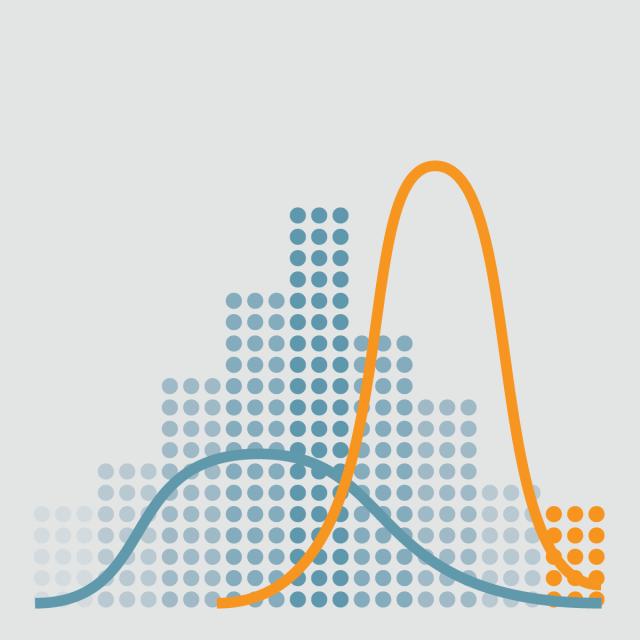
Welcome to the Pre-MBA Statistics course! By the end of this course, you will be able to describe how statistics can be used to summarize, analyze, and interpret data. This course introduces you to some aspects of descriptive and inferential statistics. You will learn to distinguish between various data types and describe the operations that you can execute with each type of data and the right tools to use.

Oct 12th 2026
5-12 Weeks
Introduction to MongoDB (Coursera) Coursera
MongoDB University

Introduction to MongoDB (Coursera)

"Introduction to MongoDB" guides you through the foundational skills and knowledge you need to get started with MongoDB. Get an introduction to MongoDB Atlas, the developer data platform, and how to create and deploy an Atlas cluster. Discover how MongoDB structures data in documents similar to JSON objects, making it flexible and developer friendly.

Oct 12th 2026
4 Weeks
Business Statistics and Analysis Capstone (Coursera) Coursera
Rice University

Business Statistics and Analysis Capstone (Coursera)

The Business Statistics and Analysis Capstone is an opportunity to apply various skills developed across the four courses in the specialization to a real life data. The Capstone, in collaboration with an industry partner uses publicly available ‘Housing Data’ to pose various questions typically a client would pose to a data analyst. Your job is to do the relevant statistical analysis and report your findings in response to the questions in a way that anyone can understand.

Oct 12th 2026
4 Weeks
Cadeia de Suprimentos na Nuvem (Coursera) Coursera
FIA Business School

Cadeia de Suprimentos na Nuvem (Coursera)

Nossas boas-vindas ao Curso Cadeia de Suprimentos na Nuvem. Neste curso, você aprenderá como o supply chain pode ampliar o valor da empresa explorando as diversas ferramentas disponíveis em cloud para potencializar a visibilidade e a responsividade da cadeia, melhorando o nível de serviço prestado aos clientes.

Oct 12th 2026
5-12 Weeks
Data Processing Using Python (Coursera) Coursera
Nanjing University

Data Processing Using Python (Coursera)

This course is mainly for non-computer majors. It starts with the basic syntax of Python, to how to acquire data in Python locally and from network, to how to present data, then to how to conduct basic and advanced statistic analysis and visualization of data, and finally to how to design a simple GUI to present and process data, advancing level by level.

Oct 19th 2026
5-12 Weeks
BigQuery Fundamentals for Teradata Professionals (Coursera) Coursera
Google Cloud

BigQuery Fundamentals for Teradata Professionals (Coursera)

This course covers BigQuery fundamentals for professionals who are familiar with SQL-based cloud data warehouses in Teradata and want to begin working in BigQuery. Through interactive lecture content and hands-on labs, you learn how to provision resources, create and share data assets, ingest data, and optimize query performance in BigQuery. Drawing upon your knowledge of Teradata, you also learn about similarities and differences between Teradata and BigQuery to help you get started with data warehouses in BigQuery.

Oct 12th 2026
2 Weeks
Matrix Methods (Coursera) Coursera
University of Minnesota

Matrix Methods (Coursera)

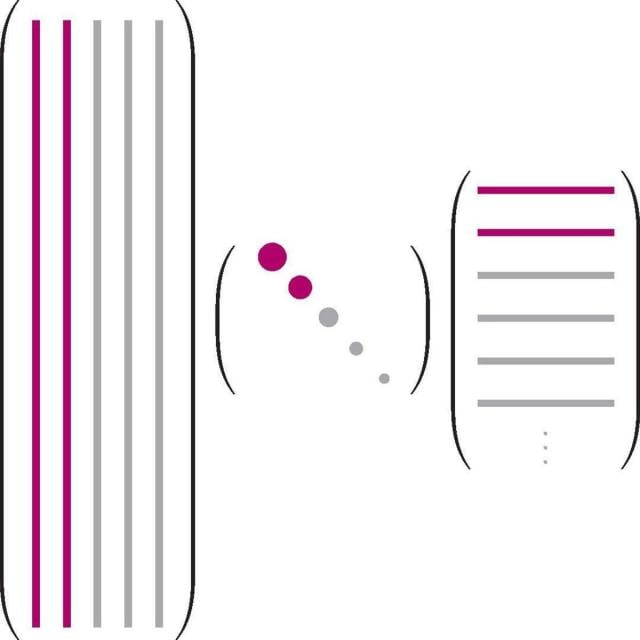
Mathematical Matrix Methods lie at the root of most methods of machine learning and data analysis of tabular data. Learn the basics of Matrix Methods, including matrix-matrix multiplication, solving linear equations, orthogonality, and best least squares approximation. Discover the Singular Value Decomposition that plays a fundamental role in dimensionality reduction, Principal Component Analysis, and noise reduction.

Oct 12th 2026
5-12 Weeks