FinTech Law and Policy (Coursera)

Offered by Duke University,
FinTech Law and Policy (Coursera)

Being a successful FinTech firm requires more than just great technology; it also requires an understanding of the laws and regulations applicable to your business. This course will provide you with that understanding. You will learn about the critical legal, regulatory, and policy issues associated with cryptocurrencies, initial coin offerings, online lending, new payments and wealth management technologies, and financial account aggregators.

Class Deals by MOOC List - Click here and see Coursera's Active Discounts, Deals, and Promo Codes.

In addition, you will learn how regulatory agencies in the U.S. are continually adjusting to the emergence of new financial technologies and how one specific agency has proposed a path for FinTech firms to become regulated banks. You will also learn the basics of how banks are regulated in the U.S.
If you are unfamiliar with how these new financial technologies work, fear not. We will begin each new course section with a high-level overview of the underlying technology. While the course is principally focused on the U.S. FinTech industry, we cannot possibly cover every relevant legal and regulatory issue. Therefore, this course should not be construed as legal advice. Rather, the goal of the course is to familiarize you with the key legal and regulatory challenges FinTech firms in various sectors face, as well as the critical policy debates that are occurring in Washington D.C. and state capitals across the country.

Syllabus

WEEK 1
Welcome to FinTech Law and Policy
In this course, you will learn about the critical legal, regulatory, and policy issues associated with cryptocurrencies, initial coin offerings, online lending, new payments and wealth management technologies, and financial account aggregators. In addition, you will learn how regulatory agencies in the U.S. are continually adjusting to the emergence of new financial technologies and how one specific agency, the Office of the Comptroller of the Currency, has proposed a path for FinTech firms to become regulated banks.
The Evolving Relationship Between FinTechs, Regulators, and Traditional Financial Institutions
This module begins with a preview of the key regulatory challenges facing FinTech firms and provides several examples of what can happen when FinTech firms fail to comply with applicable laws and regulations. We then look at how the FinTech industry has evolved post-2008 - from a disrupt mentality to one of “strategic partnership” - along with corresponding FinTech industry investment trends. Next, we examine the challenges regulators face in responding to new FinTech developments and detail how several U.S. regulatory agencies have adjusted thus far. We conclude this module by exploring one specific regulatory approach, known as a “sandbox,” that has been deployed in other countries and in one U.S. state.

WEEK 2
Cryptocurrency and Initial Coin Offerings
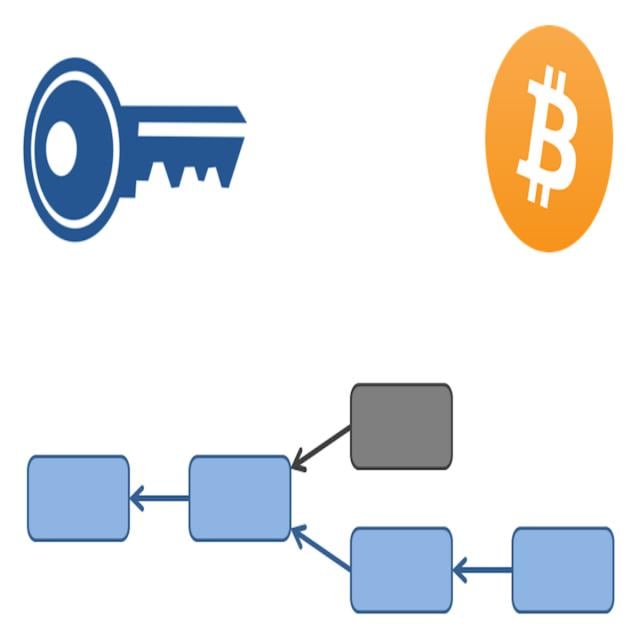
This module first provides an overview of cryptocurrencies and distributed ledger technology, and then examines how cryptocurrency is regulated by various state and federal agencies. You will also learn how cryptocurrency is regulated as: money, a commodity, and property. The module concludes with an examination of initial coin offerings and their regulatory treatment.

WEEK 3
FinTech Lending
This module will introduce you to the various types of FinTech lending models and the regulatory treatment of these lenders. You will learn how many FinTech lenders are partnering with regulated banks to get around the state-by-state restrictions that apply to non-bank lenders.

WEEK 4
Banking Regulation in the U.S.
Many FinTech firms are interested in becoming regulated banks. This module will teach you about the process of becoming a bank and the government agencies responsible for regulating banks in the U.S. We will look at the Office of the Comptroller of the Currency’s proposal to grant a new type of bank charter specifically for FinTech firms and the options currently available to FinTech firms that would like to become a bank.

WEEK 5
FinTech Payments, Wealth Management, and Account Aggregation
The final module begins with an overview of the legal framework applicable to legacy payment systems in the U.S., followed by a review of how some FinTech firms are building on top of these systems to provide faster, more convenient, consumer payments while other FinTech firms are bypassing these systems all together by utilizing distributed ledger technology. From there we examine new technologies being deployed in the wealth management industry, including the use by some firms of “robo-advisors” to allocate investors’ portfolios using algorithms based on the investors’ data and risk preferences. You will see that robo-advisors are subject to the same oversight as traditional investment advisers. The module concludes by exploring the legal issues surrounding FinTech companies that allow consumers to aggregate the information from their various financial accounts.


Go to Class
MOOC List is learner-supported. When you buy through links on our site, we may earn an affiliate commission.

Related Courses

Introduction to Spreadsheets and Models (Coursera) Coursera
University of Pennsylvania

Introduction to Spreadsheets and Models (Coursera)

The simple spreadsheet is one of the most powerful data analysis tools that exists, and it’s available to almost anyone. Major corporations and small businesses alike use spreadsheet models to determine where key measures of their success are now, and where they are likely to be in the future. But in order to get the most out of a spreadsheet, you have know how to use it. This course is designed to give you an introduction to basic spreadsheet tools and formulas so that you can begin harness the power of spreadsheets to map the data you have now and to predict the data you may have in the future.

Jul 6th 2026
4 Weeks
Power Onboarding (Coursera) Coursera
Northwestern University

Power Onboarding (Coursera)

Power Onboarding provides practical, easy-to-use tools to guide an individual who is transitioning to a new job. Students will prepare an actionable personal onboarding plan that will set them up for success in their new role. Research has shown that an actively followed power onboarding plan will allow an individual to reach proficiency in a new position up to 30% faster than the typical transitioning manager. In this course, students will develop their own onboarding plan, allowing them to contribute sooner and be eligible for promotion earlier.

Jul 6th 2026
4 Weeks
Web3 and Blockchain Leadership for Transformation (Coursera) Coursera
INSEAD

Web3 and Blockchain Leadership for Transformation (Coursera)

For most of the last century, critical advances in technology were happening inside large, well-funded industrial R&D machines that dotted the Western world. Today’s landscape, however, is very different. Even the largest and most sophisticated corporate leaders can no longer dominate their fields or dictate the pace of development. With companies across sectors seeking to harness the transformative potential of blockchain technologies, the blockchain ecosystem is an exemplar of new models of industry collaboration. In this course you will learn about various stakeholders in the blockchain ecosystem and the leadership roles they need to play in order to steward the blockchain revolution in global commerce.

Jul 12th 2026
5-12 Weeks
Applying Data Analytics in Marketing (Coursera) Coursera
University of Illinois at Urbana-Champaign

Applying Data Analytics in Marketing (Coursera)

This course introduces students to the science of business analytics while casting a keen eye toward the artful use of numbers found in the digital space. The goal is to provide businesses and managers with the foundation needed to apply data analytics to real-world challenges they confront daily in their professional lives.

Jul 11th 2026
4 Weeks
What is Social? (Coursera) Coursera
Northwestern University

What is Social? (Coursera)

The “What Is Social?" MOOC is for business owners, executives, and marketing professionals who want to significantly improve their abilities to grow their social strategy using effective, proven methodologies. This hands on, "how to" program won’t just tell you how to grow your professional persona using social – you will actually do it! This course is the first in the six-course specialization, Social Media Marketing: How to Profit in a Digital World.

Jul 6th 2026
4 Weeks
Applying Data Analytics in Finance (Coursera) Coursera
University of Illinois at Urbana-Champaign

Applying Data Analytics in Finance (Coursera)

This course introduces an overview of financial analytics. You will learn why, when, and how to apply financial analytics in real-world situations. You will explore techniques to analyze time series data and how to evaluate the risk-reward trade off expounded in modern portfolio theory. While most of the focus will be on the prices, returns, and risk of corporate stocks, the analytical techniques can be leverages in other domains. Finally, a short introduction to algorithmic trading concludes the course.

Jul 12th 2026
4 Weeks
The Role of Global Capital Markets (Coursera) Coursera
University of Melbourne

The Role of Global Capital Markets (Coursera)

In this course, participants will learn about how different markets around the world can interact to create value for, and effectively manage the risk of, corporations and their stakeholders. This is part of a Specialization in corporate finance created in partnership between the University of Melbourne and Bank of New York Mellon (BNY Mellon).

Jul 6th 2026
4 Weeks
Advanced Business Strategy (Coursera) Coursera
University of Virginia

Advanced Business Strategy (Coursera)

Advance your strategic analysis skills in this follow-up to Foundations of Business Strategy. In this course, developed at the Darden School of Business at the University of Virginia, you'll learn the tools to analyze strategy across time (competitive dynamics), industries (corporate strategy), geographies (international strategy), and institutions (non-market strategy). Top-ranked faculty will introduce the tools you need to complete a comprehensive evaluation and understand the strategy dynamics of an industry: Competitive Lifecycle, Internationalization and Stakeholder Analyses, and Diversification Matrices.

Jul 6th 2026
4 Weeks
Introduction to Blockchain for Global Commerce (Coursera) Coursera
INSEAD

Introduction to Blockchain for Global Commerce (Coursera)

This course discusses the limitations of the Internet for business and economic activity and explains how blockchain technology represents the way forward. After completing this course, you will be able to explain what blockchain is, how it works, and why it is revolutionary. You will learn key concepts such as mining, hashing, proof-of-work, public key cryptography, and the double-spend problem. You’ll be able to describe seven design principles for blockchain technology, and the challenges facing the people developing it.

Jul 12th 2026
5-12 Weeks
Overcoming Dyslexia (Coursera) Coursera
Yale University

Overcoming Dyslexia (Coursera)

Dyslexia is everywhere, touching so many children and adults, and while science has made extraordinary progress in understanding and clarifying the condition, this incredible powerful knowledge rarely reaches those who most need to know and would greatly benefit from it. Our goal is to change all this with the Coursera you are about to view, produced by Dr. Sally Shaywitz, the Audrey G. Ratner Professor in Learning Development, both the leading scientist studying dyslexia and the most devoted advocate for helping those who are dyslexic.

Jul 11th 2026
5-12 Weeks