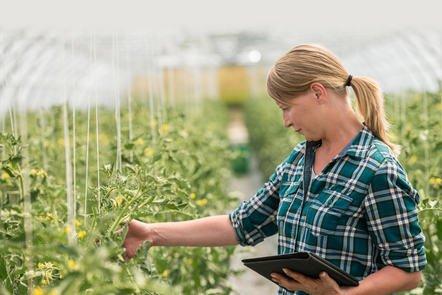
Explore How Farmers Produce Food Sustainably (FutureLearn)

Explore How Farmers Produce Food Sustainably (FutureLearn)

Gain an understanding of sustainable food production and the challenges that farmers face to offer a sustainable food supply. Build your knowledge of the processes used by farmers and food producers. On this course, you’ll gain a better understanding of where our food comes from, how it is produced, and the associated environmental, social and sustainability challenges for farmers.

Class Deals by MOOC List - Click here and see FutureLearn's Active Discounts, Deals, and Promo Codes.

You’ll explore horticulture and arable farming, as well as meat, dairy, and egg production, as you examine different farming systems and issues that farmers face.
You’ll also look at the innovative technologies available to farmers that can boost sustainability. This knowledge will help you empathise with farming challenges, and better understand farming in relation to your food purchases.

What topics will you cover?

  • What ‘sustainability’ means and how it applies to farming.
  • How crops are grown in the EU - both arable and horticultural.
  • How livestock is farmed in the EU to produce meat, dairy products and eggs.
  • The challenges of feeding a rapidly expanding global population.
  • The trade-offs involved in financially viable organic, environmentally sustainable and socially acceptable production methods.
  • Which technologies are providing the most sustainable solutions.

What will you achieve?
By the end of the course, you'll be able to...

  • Develop an informed and balanced understanding of the complexities of sustainable food production in the EU within the context of the global food supply chain.
  • Investigate how food is produced by EU farmers and explore the trade offs required when considering organic, environmentally sustainable and socially acceptable production methods.
  • Reflect on the challenges faced by farmers and how innovative technologies help them to provide a secure and sustainable food supply for a growing population.
  • Evaluate the benefits of different farming methods and apply what you’ve learned to your food-buying choices and working priorities.

Go to Class
MOOC List is learner-supported. When you buy through links on our site, we may earn an affiliate commission.

Related Courses

Achieving Transitions to Zero Carbon Emissions and Sustainable Urban Mobility (FutureLearn) FutureLearn
University College London,Transforming Urban Mobility Initiative - TUMI,EIT Urban Mobility,ICLEI

Achieving Transitions to Zero Carbon Emissions and Sustainable Urban Mobility (FutureLearn)

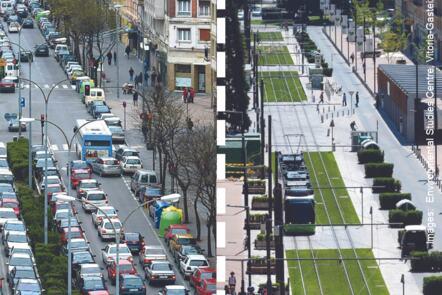
Discover how cities can transform their urban mobility systems to become more sustainable and reach zero carbon emissions. Understand the steps to becoming sustainable city. Transport accounts for a large proportion of carbon emissions, so ensuring urban mobility systems are sustainable is key to helping cities to achieve zero-carbon goals. On this four-week course, you’ll discover how cities can transition their mobility systems to become sustainable, innovative, and inclusive.

Self Paced
4 Weeks
The Great Sustainability Transition: Global Challenges, Local Actions (FutureLearn) FutureLearn
Leiden University

The Great Sustainability Transition: Global Challenges, Local Actions (FutureLearn)

Discover how global environmental crises are connected, their impacts, and how to take action in your local community. Learn from experts in environmental science at Leiden University. We are living in an era of unprecedented environmental change. As a result, we are experiencing biodiversity loss, climate change, and overuse of freshwater resources, to name just a few. All of these affect fundamental ecosystem processes, causing change on a local and global scale. On this four-week course from Leiden University, you’ll learn how these huge environmental crises are interconnected and how they impact our planet.

Jan 16th 2023
4 Weeks
Sustainable Seafood: Barriers and Opportunities in the Fishing Industry (FutureLearn) FutureLearn
EIT Food,EIT,FoodUnfolded

Sustainable Seafood: Barriers and Opportunities in the Fishing Industry (FutureLearn)

Dive into the environmental and social impacts of different fishing practices and discover sustainable approaches and innovations. Understand the true environmental and social impact of fisheries and aquaculture. As we discover more about unsustainable and damaging fishing practices, it’s important to have an accurate understanding of the problem in order to take action.

Jan 2nd 2023
3 Weeks
Introduction to Environmental Cost-Benefit Analysis (FutureLearn) FutureLearn
Deakin University

Introduction to Environmental Cost-Benefit Analysis (FutureLearn)

Boost your sustainability career as you gain the practical skills to conduct an environmental cost-benefit analysis. This two-week course will arm you with the skills to be able to choose and implement strategies for carbon reduction in your organisation. What’s more, you’ll gain expertise in environmental cost-benefit analysis to translate climate action into real value for your company.

Aug 28th 2023
2 Weeks
Climate and Energy: An Interdisciplinary Perspective (FutureLearn) FutureLearn
University of Glasgow,CIVIS

Climate and Energy: An Interdisciplinary Perspective (FutureLearn)

Explore climate change issues from an interdisciplinary perspective to find innovative solutions for a better future. Gain interdisciplinary skills for climate change solutions. On this four-week course, you’ll join educators from ten universities on a virtual field trip to a remote Swedish island to gain perspectives on climate and energy from a multitude of disciplines.

Self Paced
4 Weeks
IUCN Red List of Ecosystems: The Global Standard for Assessing Risks to Ecosystems (FutureLearn) FutureLearn
Deakin University

IUCN Red List of Ecosystems: The Global Standard for Assessing Risks to Ecosystems (FutureLearn)

This course introduces the IUCN Red List of Ecosystems and its successful use and policy impact through real-world case studies. Learn how the Red List of Ecosystems is helping to sustain global biodiversity. Nature is under threat around the world. Understanding where ecosystems are at greatest risk allows us to act to sustain species and ecosystems.

Self Paced
2 Weeks
Learning for a Sustainable Future (FutureLearn) FutureLearn
University of Edinburgh,British Council,Learning for a Sustainable Scotland

Learning for a Sustainable Future (FutureLearn)

Join a personal and professional global learning journey towards a sustainable future. What on Earth could be more important? Grow your knowledge of sustainability. Climate change, gender equality, health, social equity, and inclusion are issues that affect us all, impacting human well-being and economic stability. How to live a sustainable life affects – and connects - us all.

Mar 13th 2023
5-12 Weeks
Transforming Urban Mobility: Components of Transport Planning for Sustainable Cities (FutureLearn) FutureLearn
University College London,Transforming Urban Mobility Initiative - TUMI,GIZ

Transforming Urban Mobility: Components of Transport Planning for Sustainable Cities (FutureLearn)

Examine how different types of public transport can be employed to make urban transport more sustainable. Discover how urban transport can be made more sustainable. Good transport systems and projects are critical to the development of sustainable cities. On this course, you’ll consider the Avoid-Shift-Improve (ASI) framework – particularly the ‘Shift’ and ‘Improve’ dimensions – as key components of a sustainable urban mobility strategy.

Self Paced
5-12 Weeks
Unleash Your Potential: Sustainable Futures (FutureLearn) FutureLearn
University of Bristol

Unleash Your Potential: Sustainable Futures (FutureLearn)

Learn about the sustainability challenges of the modern world, and make a positive contribution to society. Find out how to deal with world sustainability issues. United Nations (UN) countries have adopted a set of goals to end poverty, protect the planet and ensure prosperity for all. On this online course, you’ll learn about these UN Sustainable Development Goals, and the different roles people can play in creating a sustainable future.

Self Paced
4 Weeks
Creating Ethical and Sustainable Cities at the Local Level (FutureLearn) FutureLearn
RMIT University,EIT Community

Creating Ethical and Sustainable Cities at the Local Level (FutureLearn)

See how frameworks for ethical and sustainable cities can be localised, fostering resilient cities for the future. Learn how you can contribute to the sustainable cities of tomorrow. It’s widely accepted that, as we look towards the future, we need to actively create cities that are ethical, sustainable, inclusive, and well-governed. To do this, we need to localise frameworks and principles such as the Sustainable Development Goals (SDGs), the European Green Deal and New European Bauhaus to make tangible differences. Knowing how to start this localisation can be daunting, which is why this course from RMIT is so valuable.

Self Paced
2 Weeks