Espace mondial, a French vision of Global studies (Coursera)

Offered by Sciences Po,
Espace mondial, a French vision of Global studies (Coursera)

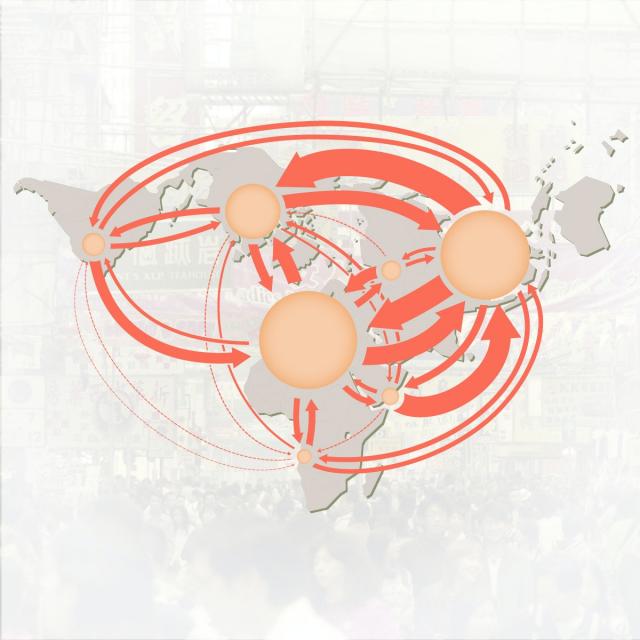
To explain how globalization rebuilt public policy and social behavior, we study the different political, economic, and social actors - public or private, individual or collective - and the exchanges and interactions between them that are remaking international relations.

Class Deals by MOOC List - Click here and see Coursera's Active Discounts, Deals, and Promo Codes.

This course is also available in french version.

Syllabus

WEEK 1
Introduction
The current global world implies a new approach of the international arena, breaking with classical theories.

WEEK 2
Inequalities
The main economic and social parameters indicate an unequal and instable world.

WEEK 3
Regionalism
The nation-state territory is challenged by new kinds of integration, and particularly by fragile regional constructions.

WEEK 4
World Actors
Nation-states are no more the only international actor. Many groups and 7 billions of individuals are now potential actors of our current international system.

WEEK 5
Globalization
Globalization is a complex process which is challenging the main traditional aspects of the world order.

WEEK 6
Identities
Identity has to be revisited and considered as a social and a political construct.

WEEK 7
Religions
Religion is perceived as a major parameter of the present world order, but generally in an oversimplified way.

WEEK 8
Nation State
Is traditional nation-state still working everywhere around the world?

WEEK 9
Power
Is power still meaningful and efficient?

WEEK 10
War and Peace
New international conflicts have a specific configuration and imply a new treatment.

WEEK 11
International System
Polarization and multilateralism are the new features of the post 1945 international system. The first one is probably over; the second one is challenged.
Conclusion
Going ahead to a new regulation?

Go to Class
MOOC List is learner-supported. When you buy through links on our site, we may earn an affiliate commission.

Related Courses

Chinese Politics Part 2 - China and the World (Coursera) Coursera
The Hong Kong University of Science and Technology - HKUST

Chinese Politics Part 2 - China and the World (Coursera)

One of the most significant changes in the world in the past 30 years is the opening of China to the outside world and its engagement with that world. In the initial years of the opening, external forces influenced China’s economy, regional balances, bureaucracy, as well as the political authority of local leaders in the coastal areas.

Sep 14th 2026
5-12 Weeks
Intellectual Humility: Science (Coursera) Coursera
University of Edinburgh

Intellectual Humility: Science (Coursera)

It’s clear that the world needs more intellectual humility. But how do we develop this virtue? And why do so many people still end up so arrogant? Do our own biases hold us back from becoming as intellectually humble as we could be—and are there some biases that actually make us more likely to be humble? Which cognitive dispositions and personality traits give people an edge at being more intellectually humble - and are they stable from birth, learned habits, or something in between? And what can contemporary research on the emotions tell us about encouraging intellectual humility in ourselves and others?

Sep 14th 2026
4 Weeks
Philosophy, Science and Religion: Religion and Science (Coursera) Coursera
University of Edinburgh

Philosophy, Science and Religion: Religion and Science (Coursera)

Philosophy, Science and Religion mark three of the most fundamental modes of thinking about the world and our place in it. Are these modes incompatible? Put another way: is the intellectually responsible thing to do to ‘pick sides’ and identify with one of these approaches at the exclusion of others? Or, are they complementary or mutually supportive? As is typical of questions of such magnitude, the devil is in the details. For example, it is important to work out what is really distinctive about each of these ways of inquiring about the world. In order to gain some clarity here, we’ll be investigating what some of the current leading thinkers in philosophy, science and religion are actually doing.

Sep 8th 2026
5-12 Weeks
Politics and Economics of International Energy (Coursera) Coursera
Sciences Po

Politics and Economics of International Energy (Coursera)

Energy issues have always been important in international relations, but in recent years may have become even more important than in the past due to the widespread awareness of existing limits to energy sources and negative climate impacts. The course discusses global trends in energy consumption and production, various available scenarios for potential developments in the coming decades, the availability of oil reserves and the evolution of the oil industry.

Sep 7th 2026
5-12 Weeks
Security & Safety Challenges in a Globalized World (Coursera) Coursera
Leiden University

Security & Safety Challenges in a Globalized World (Coursera)

Security and safety challenges rank among the most pressing issues of modern times. Challenges such as, cyber-crime, terrorism, and environmental disasters impact the lives of millions across the globe. These issues also rank high on the agenda of politicians, international organizations and businesses. They also feature prominently in the public conscience and in governmental policies.

Sep 21st 2026
5-12 Weeks
Données et Gouvernance Urbaine (Coursera) Coursera
Sciences Po

Données et Gouvernance Urbaine (Coursera)

Depuis le milieu des années 2000, les données ont fait une entrée fracassante dans le champ urbain, transformant les manières dont les villes sont gouvernées à l’ère du numérique. Que ce soit au niveau des coalitions d’acteurs, des instruments, des politiques ou des modes de régulation, la donnée impacte la façon dont la vie urbaine se trouve ordonnée.

Sep 14th 2026
4 Weeks
The Factors that Influence the Effectiveness of Boards and the Governance Process (Coursera) Coursera
University at Buffalo,The State University of New York

The Factors that Influence the Effectiveness of Boards and the Governance Process (Coursera)

The third course in this Specialization introduces you to the factors that influence how effective boards of directors will be in carrying out their roles and responsibilities and hence the impact they have in shaping the success of the organization they govern. While this course has been developed with North American culture in mind, we do appreciate that, in other parts of the world, the nature of the factors that influence the effectiveness of nonprofit boards of directors may vary. Nevertheless,it is our hope that much of the course content will still be of value to those in other parts of the world.

Sep 14th 2026
5-12 Weeks
Religious Transformation in Early China: the Period of Division (Coursera) Coursera
The Chinese University of Hong Kong

Religious Transformation in Early China: the Period of Division (Coursera)

This sequence of four courses will propose a multi-disciplinary approach to the study of Chinese cultural history conceived of as a succession of modes of rationality (philosophical, bureaucratic, and economic). The focus will be on the moments of paradigm shift from one mode of rationality to another. For each of these moments, cultural facts and artifacts—thought, literature, ritual—will be examined in relationship to changing social, political, and economic systems.

Sep 7th 2026
5-12 Weeks
Global Health Policy (Coursera) Coursera
The University of Tokyo

Global Health Policy (Coursera)

In this course, learners will become familiar with principles and theories of global health problems, and major challenges and controversies in improving global population health as well as practical applications of quantitative methods to analyze and interpret issues and challenges for policy. Topics will include health and foreign policy, health governance, acute disease surveillance, non-communicable diseases, burden of disease, universal health coverage, health systems strengthening, health financing, and human resources for health and ageing.

Sep 7th 2026
4 Weeks
Global Diplomacy – Diplomacy in the Modern World (Coursera) Coursera
University of London,SOAS University of London

Global Diplomacy – Diplomacy in the Modern World (Coursera)

The Global Diplomacy course is a unique offering to the MOOC environment. Bringing together cutting edge research in the broad fields of Diplomatic and International Studies, award winning distance learning delivery and the instructors previous experience of delivering a successful MOOC. Please see the volume Global Diplomacy: Theories, Types and Models authored with Dr Alison Holmes, (Westview, 2016), and the Understanding Research Methods MOOC from Coursera.

Sep 7th 2026
5-12 Weeks
A Journey through Western Christianity: from Persecuted Faith to Global Religion (200 - 1650) (Coursera) Coursera
Yale University

A Journey through Western Christianity: from Persecuted Faith to Global Religion (200 - 1650) (Coursera)

This course follows the extraordinary development of Western Christianity from its early persecution under the Roman Empire in the third century to its global expansion with the Jesuits of the early modern world. We explore the dynamic and diverse character of a religion with an enormous cast characters. We will meet men and women who tell stories of faith as well as of violence, suppression, and division.

Sep 7th 2026
5-12 Weeks
Management of International Development: Towards Agenda 2030 (Coursera) Coursera
Università Bocconi

Management of International Development: Towards Agenda 2030 (Coursera)

Welcome! This course provides participants with the opportunity to explore the multifaceted concept of international development in order to be able to interpret and lead its challenges, opportunities and constant evolutions. Starting from an in-depth analysis of the current international development architecture, its key actors and trends, the course then illustrates the main international organizations' governance systems; identifies their funding and financing tools necessary to implement development programs and achieve sustainable development goals; and explains how to effectively leverage on human capital to drive organizational success and be ‘fit for purpose’ in an ever changing international development scenario.

Sep 14th 2026
5-12 Weeks