Energy management for real estate - Fundamentals, methods and digital tools (POK)

Offered by Politecnico di Milano,
Energy management for real estate - Fundamentals, methods and digital tools (POK)

This MOOC will provide you with the essential skills and knowledge to address the energy management process in real estate. The figure of the Energy Manager (EM), introduced in the United States in the early 1970s, during the first oil crisis, brought to light the need to get more work out of less energy. In Italy, this figure was officially introduced by Law 308/82, but had its first strong impulse thanks to Law 10/91, aimed at implementing the National Energy Plan on the rational use of energy, energy saving and the development of renewable energy sources.

More in detail, an Energy Manager is a person whose task is to manage what concerns energy within a company, a public body, or more generally a structure, verifying the energy consumption, optimising it, and promoting interventions aimed at energy efficiency and the use of renewable sources.

In such respect, the course will provide the necessary information to:

  • verify consumption, through ad hoc audits or, if available, through digital models or reports produced by remote management;
  • optimise consumption through the correct regulation of systems and their appropriate use from an energy point of view;
  • promote energy-aware behaviour by employees and/or occupants of the facility;
  • propose improvement investments, possibly improving production processes or the performance of related services.

The course is structured into 4 Weeks:
Week 1 – Introduction to the course
Week 2 – Energy framework and Buildings foundamentals
Week 3 – Energy management in buildings
Week 4 – Practical applications
In the first week a brief introduction about the course, highlighting the main skills of the energy manager, is provided. After that, the fundamental about energy in buildings is discussed in the second week. More in detail, the week aims to define the main energy, regulatory and market framework in which the energy manager has to deal with. Within the same week, the fundamentals of building physics and technical plants are also introduced. During week 3, the specific methodology to carry out the energy survey and audit as well as the available solution to improve the energy efficiency of existing buildings are treated. In the last week, the general approach to face with specific digital tools are also shown and, finally, all the knowledge acquired over the weeks is applied in two exemplifying case studies.

Go to Class
MOOC List is learner-supported. When you buy through links on our site, we may earn an affiliate commission.

Related Courses

Global Warming I: The Science and Modeling of Climate Change (Coursera) Coursera
University of Chicago

Global Warming I: The Science and Modeling of Climate Change (Coursera)

This class describes the science of global warming and the forecast for humans’ impact on Earth’s climate. Intended for an audience without much scientific background but a healthy sense of curiosity, the class brings together insights and perspectives from physics, chemistry, biology, earth and atmospheric sciences, and even some economics—all based on a foundation of simple mathematics (algebra).

Sep 21st 2026
5-12 Weeks
Enabling policies for innovation in the Next Production Revolution (POK) Polimi OPEN KNOWLEDGE
Politecnico di Milano

Enabling policies for innovation in the Next Production Revolution (POK)

A short introduction to enabling policies for innovation in the Next Production Revolution with a focus on energy and digital regulation. The course is part of a series of Sprint MOOC addressing the Next production Revolution (NPR) paradigma, as new wave of technological innovation. It addresses people from anywhere in the world, from industrialized economies as well as from “developing countries” and particularly from Africa.

Available
2 Weeks
Oil & Gas Industry Operations and Markets (Coursera) Coursera
Duke University

Oil & Gas Industry Operations and Markets (Coursera)

The oil and gas industry has an enormous impact on all aspects of daily life. Individuals, corporations, and national governments make financial and policy decisions based on the cost, use, and availability of these two natural resources. This two-week course looks at the two most fundamental aspects of the oil and gas industry, its operations and markets, each of which is addressed as a separate module in the course.

Sep 30th 2026
2 Weeks
Measuring the impact of the Energy Transition (POK) Polimi OPEN KNOWLEDGE
Politecnico di Milano

Measuring the impact of the Energy Transition (POK)

The Industrial Ecology approach for assessing the Sustainability of the Energy Transition. The aim of this MOOC is to provide a holistic but quantitative and multi-dimensional perspective on the energy transition underway today. Especially when dealing with cross sectoral linkages and circular economy, the instruments made available by the Industrial Ecology can represent a great support to researchers and practitioners and can be used to better inform policy makers.

Available
3 Weeks
Greening the Economy: Sustainable Cities (Coursera) Coursera
Lund University

Greening the Economy: Sustainable Cities (Coursera)

How can we shape urban development towards sustainable and prosperous futures? This course will explore sustainable cities as engines for greening the economy. We place cities in the context of sustainable urban transformation and climate change. Sustainable urban transformation refers to structural transformation processes – multi-dimensional and radical change – that can effectively direct urban development towards ambitious sustainability and climate goals. We will connect the key trends of urbanization, decarbonisation and sustainability.

Sep 28th 2026
5-12 Weeks
Energy, Environment, and Everyday Life (Coursera) Coursera
University of Illinois at Urbana-Champaign

Energy, Environment, and Everyday Life (Coursera)

This course teaches you everything you need to know about energy, the environment, and at least a number of things in everyday life. It starts by talking about energy itself and where it comes from. This includes how much we have, who has it, who uses it, and what that all means. The video clips are produced in a fast-paced multimedia format during which Professor Ruzic throws in fun and demonstrations. There are multiple-choice questions to check your understanding and some more in-depth exercises to guide you deeper into the subject.

Sep 28th 2026
5-12 Weeks
Comprendre l'écologie, pour une économie innovante (Coursera) Coursera
ESCP Europe

Comprendre l'écologie, pour une économie innovante (Coursera)

Conçu conjointement par le think-tank Ecolo-Ethik et ESCP Europe, ce MOOC se propose de vous aider à dépasser les idées reçues sur l’écologie, dans le souci d’une démarche ouverte et multiple. A ce titre, de grands experts reconnus interviendront pour illustrer, approfondir et enrichir les différentes thématiques.

Sep 28th 2026
5-12 Weeks
Introduction to Chemistry: Reactions and Ratios (Coursera) Coursera
Duke University

Introduction to Chemistry: Reactions and Ratios (Coursera)

This is an introductory course for students with limited background in chemistry; basic concepts involved in chemical reactions, stoichiometry, the periodic table, periodic trends, nomenclature, and chemical problem solving will be emphasized with the goal of preparing students for further study in chemistry as needed for many science, health, and policy professions.

Oct 5th 2026
5-12 Weeks
Photovoltaic solar energy (Coursera) Coursera
École Polytechnique

Photovoltaic solar energy (Coursera)

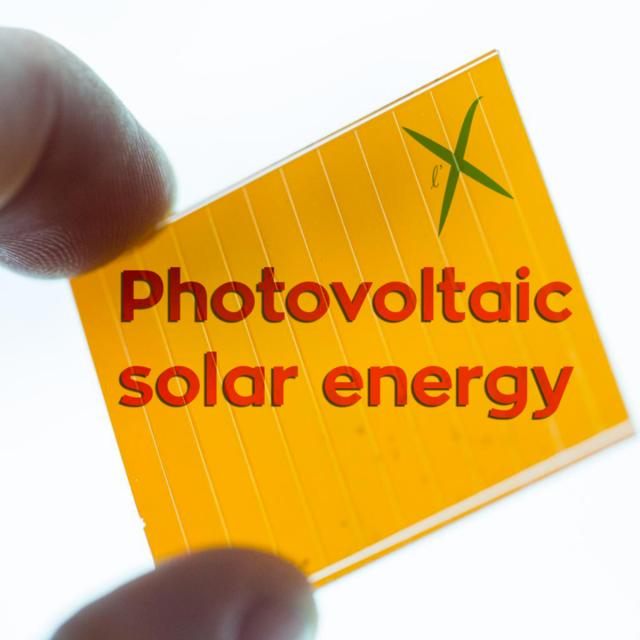
The course is an introduction to the photovoltaic (PV) applications in the general mix energetic context dominated by climate warming mitigation. The various uses of solar energy are firstly presented before a short description of the principle of the direct solar photon conversion into electricity (PV). The various PV technologies are reviewed in the current context dominated by crystalline silicon cells. The perspectives of the various technologies are then analysed in terms of R&D investments.

Sep 28th 2026
3 Weeks
Organic Solar Cells - Theory and Practice (Coursera) Coursera
Technical University of Denmark - DTU

Organic Solar Cells - Theory and Practice (Coursera)

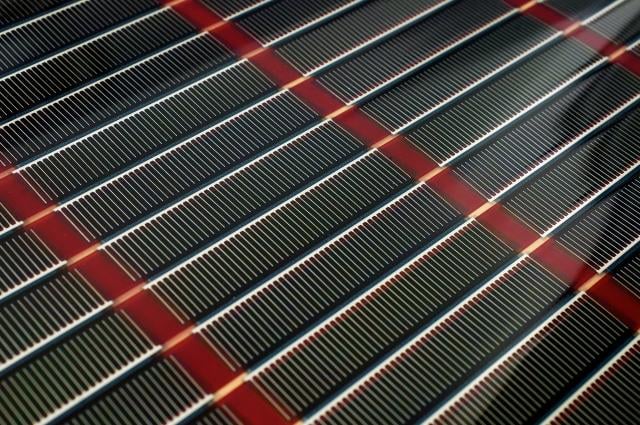
The goal of the course is to give students awareness of the largest alternative form of energy and how organic / polymer solar cells can harvest this energy. The course provides an insight into the theory behind organic solar cells and describes the three main research areas within the field i.e. materials, stability and processing.

Sep 21st 2026
5-12 Weeks
Electrodynamics: An Introduction (Coursera) Coursera
Korea Advanced Institute of Science and Technology - KAIST

Electrodynamics: An Introduction (Coursera)

The depth and breadth of electromagnetism, the foundation for many fields including materials science, electrical engineering, and physical chemistry, requires a long, steep, and steady learning curve. This course aims to bridge the gap between the fundamental principles taught in electromagnetism and its practical application to specific fields such as materials, physics, and chemistry related to energy storage and harvesting.

Sep 28th 2026
5-12 Weeks
The Little Stuff: Energy, Cells, and Genetics (Coursera) Coursera
University of Colorado Boulder

The Little Stuff: Energy, Cells, and Genetics (Coursera)

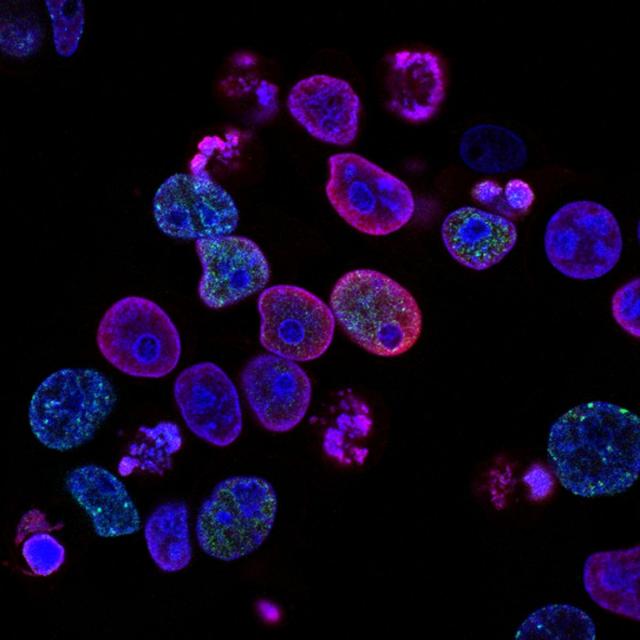
In this course, we will explore the smaller side of biology: molecular biology. We’ll cover basic topics including cell biology and how cells can go “rogue” and turn into cancer, how energy from the sun is transferred to fuel our bodies, basics of genetics and inheritance, and genetic technologies. At the end of this course, we will discuss ethical and moral implications of several exciting and new genetic technologies.

Sep 21st 2026
4 Weeks