Intro to the Design of Everyday Things (Udacity)

Offered by Udacity,
Intro to the Design of Everyday Things (Udacity)

Everyone designs. Design occurs anytime you deliberately change an environment to make things better. When you decide what seat to take in an auditorium you’re designing your experience. When you rearrange the furniture in a room or draft an email, you’re designing.

Class Deals by MOOC List - Click here and see Udacity's Active Discounts, Deals, and Promo Codes.

This course provides a summary of key concepts from the first two chapters of The Design of Everyday Things (Revised and Expanded Edition, November 2013) by Don Norman. It’s intended to be enjoyable and informative for anyone curious about design: everyday people, technical people, designers, and non-designers alike.
This course will provide you with the knowledge needed to start recognizing the role of design in today’s world, and to start making better design decisions in your own life. In addition to learning basic design concepts such as affordances and signifiers, you will also gain practice in observing and applying design principles.

What You Will Learn

LESSON 1
Affordances and Signifiers

  • Discover the various affordance you must account for when designing.
  • Learn about signifiers and how to improve the utility of your designs.

LESSON 2
Conceptual Models and the System Image

  • Use conceptual models to improve your designs.
  • Learn how to design something so your users can develop their own conceptual model.

LESSON 3
Gulfs of Evaluation and Execution

  • Discover what you are allowed to do
  • using the Gulf of Evaluation.
  • Get feedback on your designs with the Gulf of Execution.

LESSON 4
Design the User Interface for a Timebank

  • Combine everything you have learned in this course to design the user interface for a Timebank.
  • Sketch a concept of your design.
  • Conduct user testing to improve upon your design.

Why Take This Course
This course will provide you with the knowledge needed to start recognizing the role of design in today’s world, and to start making better design decisions in your own life. In addition to learning basic design concepts such as affordances and signifiers, you will also gain practice in observing and applying design principles.

Note: This course is currently not available.

Related Courses

Pixel Art for Video Games (Coursera) Coursera
Michigan State University

Pixel Art for Video Games (Coursera)

This course is aimed to give you the tools and knowledge you need to start creating simple art for video games made in the Unity game engine. Through the aesthetic of pixel art we will explore artistic principals like shape language, color theory, and composition as well as show you a step by step workflow for creating assets that you can use to make your own games.

Nov 30th 2026
5-12 Weeks
How to Make a Comic Book (Project-Centered Course) (Coursera) Coursera
High Tech High Graduate School of Education

How to Make a Comic Book (Project-Centered Course) (Coursera)

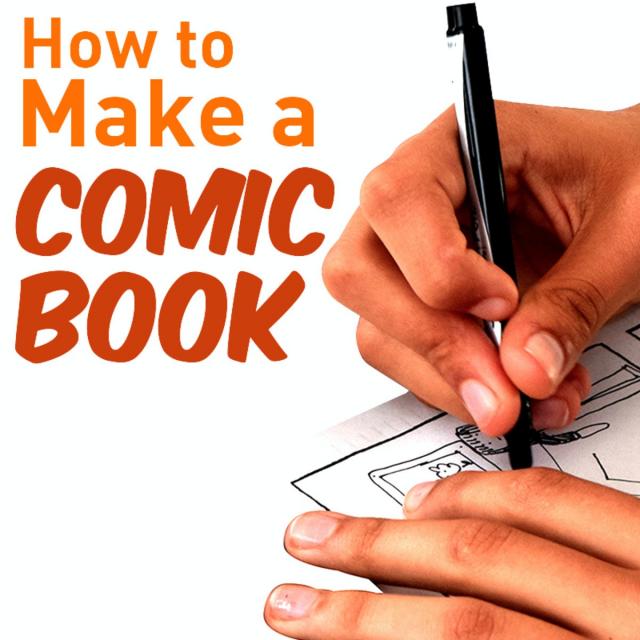
What you’ll achieve: In this project-centered course, you will create an original four page minicomic designed around a short story of your choosing. What you’ll need to get started: This project-centered course is designed for all-age learners (high school age and above, at least 13 years of age) who are interested in learning how to make a comic book, but have never completed one before. While comic books can be created with any kinds of materials, we recommend that learners have the following materials available to complete the project: at least one ream of 8.5x11 copy paper, #2 pencils and eraser, Sharpie-type fine point pens, ruler with inch measurements, and adjustable binding stapler. Learners should also have access to a printer and scanner (to facilitate digitizing work to be shared with peers on Coursera).

Nov 23rd 2026
5-12 Weeks
Mobile Design and Usability for iOS (Udacity) Udacity
Udacity,Facebook

Mobile Design and Usability for iOS (Udacity)

Learn how to design an intuitive, user-centered mobile app. Featuring Facebook's experts in User Research and Product Design, this course walks you through the steps to design a new mobile product that puts users first. You'll learn how to use data collected from users to guide prototyping, and conduct user testing with a production app to guide a future redesign.

Self Paced
Self-Paced
UX Design for Mobile Developers (Udacity) Udacity
Udacity,Google

UX Design for Mobile Developers (Udacity)

Learn to Design a 5-Star Android App. This course is optimized for the developer who is looking to efficiently learn the most important design techniques that will help them make better apps (with a focus on mobile/Android). This is a UX design course built for current (and aspiring) mobile developers. In this short course, you'll step back from your IDE and dive into the techniques that great designers use to plan and prototype amazing apps before any code is written.

Self Paced
Self-Paced
Introduction to Content Design (FutureLearn) FutureLearn
Government Digital Service

Introduction to Content Design (FutureLearn)

Discover the fundamentals of content design. Learn about user-centred content that's easy for everyone to understand and access. Learn how to apply user-centred design methods to enhance your digital content. On this course, you’ll get to grips with the main concepts of effective user-centred content design. You’ll develop your skills and confidence in designing content that is accessible, backed by user research and written in plain English.

Apr 10th 2023
4 Weeks
Designing for Textiles (edX) EdX
Smithsonian,SmithsonianX

Designing for Textiles (edX)

The Designing for Textiles workshop provides those who work in traditional crafts-based media with an introduction, or refresher, to design education through the lens of Armenian textiles. Based on an in-person training program that took place in 2018 through the My Armenia program, this workshop is a series of lessons and extension activities that build upon one another and encourage you to innovate in your own textiles-based design work.

Self Paced
Self-Paced
Compilers (edX) EdX
StanfordOnline

Compilers (edX)

This self-paced course will discuss the major ideas used today in the implementation of programming language compilers, including lexical analysis, parsing, syntax-directed translation, abstract syntax trees, types and type checking, intermediate languages, dataflow analysis, program optimization, code generation, and runtime systems.

Self Paced
Self-Paced
Cameras, Exposure, and Photography (Coursera) Coursera
Michigan State University

Cameras, Exposure, and Photography (Coursera)

Welcome to Course One of Photography Basics and Beyond: From Smartphone to DSLR! In these first 4 Modules you will gain the knowledge and the confidence that will help you make good choices as you consider qualities of the camera you own, and the qualities of the other types of digital cameras you might be considering. You will learn about the basic functions that most digital cameras have in common. You will also go beyond the "technical" matters and learn about how you can make exciting pictures by emphasizing the aspects of Frame and Vantage Point to interpret old subjects in new ways.

Nov 16th 2026
4 Weeks
Mobile Design and Usability for Android (Udacity) Udacity
Udacity,Facebook

Mobile Design and Usability for Android (Udacity)

Learn how to design an intuitive, user-centered mobile app. Featuring Facebook's experts in User Research and Product Design, this course walks you through the steps to design a new mobile product that puts users first. You'll learn how to use data collected from users to guide prototyping, and conduct user testing with a production app to guide a future redesign.

Self Paced
Self-Paced
Sharpened Visions: A Poetry Workshop (Coursera) Coursera
California Institute of the Arts

Sharpened Visions: A Poetry Workshop (Coursera)

Why just write poems when you can write better ones? This course is built on the notion that the most exciting writing begins after the first draft. It is specifically for folks who believe that writing poems just to express oneself is like using the Internet just for email. After all, poetry can change the way you and your readers think of the world and its inhabitants; it can break new ground for language; turn a blank sheet of paper into a teeming concert of voices and music.

Nov 23rd 2026
5-12 Weeks