Demystifying Disruption: Essential Insights for Leaders (Coursera)

Demystifying Disruption: Essential Insights for Leaders (Coursera)

In this course, you explore what disruption is, what drives it, and how it affects organizations. An overview of the way disruption has changed over time is provided to illustrate the power and scope of disruption. Once you are able to diagnose disruption, you explore ways leaders can defend against and leverage it by examining internal and external drivers and implementing practical offensive and defensive strategies. You learn to differentiate between innovation and disruption and, more specifically, between sustaining and disruptive innovations.

Class Deals by MOOC List - Click here and see Coursera's Active Discounts, Deals, and Promo Codes.

This course explains how balancing sustaining and disruptive innovations allows your organization to thrive through disruption by preventing creative stagnation or chaos from disrupting your organization and how an un-disruptable mindset helps leaders find ways to leverage disruption and methods of defense against it.
Course 1 of 3 in the Defying Disruption: How to Become an Un-Disruptable Leader Specialization.

What You Will Learn

  • Recognize the economic, technological, and social forces that influence disruption.
  • Develop diagnostic skills for assessing disruption.
  • Maximize the ability to leverage disruption and innovation for sustainable growth.

Syllabus

WEEK 1: Framing Disruption
WEEK 2: Decoding the Difference: Disruption vs. Innovation
WEEK 3: Defying the Drivers of Disruption
WEEK 4: Diagnosing Disruption


Go to Class
MOOC List is learner-supported. When you buy through links on our site, we may earn an affiliate commission.

Related Courses

Global Impact: Cross-Cultural Management (Coursera) Coursera
University of Illinois at Urbana-Champaign

Global Impact: Cross-Cultural Management (Coursera)

With globalization, multiculturalism is on the rise. Managers need to lead a workforce composed of individuals from diverse cultural backgrounds. Managers need to negotiate and cooperate with organizations from diverse cultures; they need to know about the effects that diverse cultures can have on business practices. This course introduces the fundamentals of multicultural management by describing the impact of culture on interpersonal processes in organizations, discussing how culture shapes communication, leadership, negotiation, and teamwork.

Nov 23rd 2026
4 Weeks
Conversations that Inspire: Coaching Learning, Leadership and Change (Coursera) Coursera
Case Western Reserve University

Conversations that Inspire: Coaching Learning, Leadership and Change (Coursera)

Coaching can inspire and motivate people to learn, change and be effective leaders, among other roles in life. Although most attempts are “coaching for compliance” (coaching someone to your wishes or expectations), decades of behavioral and neuroscience research show us that “coaching with compassion” (coaching someone to their dreams and desires) is more effective.

Nov 23rd 2026
5-12 Weeks
Unleashing the Impact of your Social Enterprise (Coursera) Coursera
Copenhagen Business School

Unleashing the Impact of your Social Enterprise (Coursera)

In Course 3 of this Specialization you will first of all learn about Social Impact Assessment. Hence you will be able to develop a method to evaluate the social mission that you achieve while implementing your business plan. Next you will outline an appropriate communication strategy for your social enterprise and will demonstrate how to market your products and services to beneficiaries and other customers. Here you will employ an adaptable communication strategy as you move from early adopters to a broader market share.

Nov 30th 2026
5-12 Weeks
How to Network: Leading Yourself to Lead Others (Coursera) Coursera
University of Michigan

How to Network: Leading Yourself to Lead Others (Coursera)

Life is a relationship business, and the world is our work. Success in today’s complex, dynamic, and unpredictable world depends on our ability to cultivate, nurture, and activate relationships. This course – designed for students, professionals, and executives – will inspire learners to build a networking mindset and harness the power of networking to solve problems, create opportunities, and live out their respective purposes and goals.

Nov 23rd 2026
4 Weeks
Leading Diverse Teams (Coursera) Coursera
University of California, Irvine

Leading Diverse Teams (Coursera)

This course addresses the leadership skills and competencies that are requisite for leading across cultures in a global business environment. Participants will learn from frameworks, principles, and practices regarding how to leverage their cross-cultural business experiences for greater influence and effectiveness across cultural contexts (teams, organizations, regions, countries, etc.). Participants will develop working knowledge of the Cultural Intelligence (CQ) framework, including the four CQ capabilities (CQ Drive, CQ Knowledge, CQ Strategy, & CQ Action) and their practical applications for the workplace and for global leaders.

Nov 23rd 2026
4 Weeks
Business Model Canvas: A Tool for Entrepreneurs and Innovators (Project-Centered Course) (Coursera) Coursera
University System of Georgia

Business Model Canvas: A Tool for Entrepreneurs and Innovators (Project-Centered Course) (Coursera)

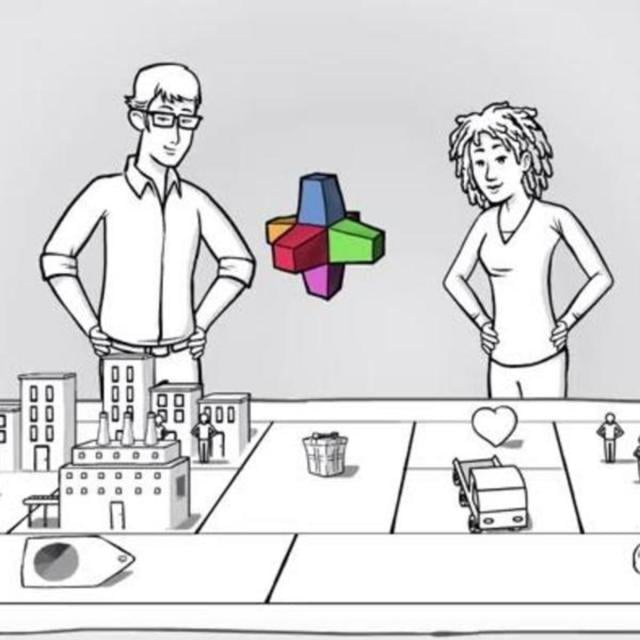
In this project-centered course*, you will use the Business Model Canvas innovation tool to approach either a personal or corporate challenge or opportunity. You’ll learn to identify and communicate the nine key elements of a business model: Customer Segments, Value Proposition, Channels, Customer Relationships, Key Resources, Key Activities, Key Partners, Revenue Streams, and Cost Structure. Your completed project will be a polished Business Model Canvas that outlines the business case for a new product or service to address your selected challenge or opportunity. You’ll present your case in both a one-page document and a 10-minute video presentation.

Nov 23rd 2026
5-12 Weeks
Global Public Procurement (Coursera) Coursera
Korea Advanced Institute of Science and Technology - KAIST

Global Public Procurement (Coursera)

Students will learn the key principles of public procurement with public entities, including national international organizations. This course also illustrates practical examples and models on understanding the processes and procedurals of public procurement. Through the course, students will learn practical information such as registering as vendors and finding and bidding for opportunities.

Nov 23rd 2026
5-12 Weeks
Design Thinking para Inovação (Coursera) Coursera
University of Virginia

Design Thinking para Inovação (Coursera)

Hoje em dia, a inovação é um negócio de todos. Se você for um gerente em uma corporação global, um empreendedor iniciando em uma função governamental ou um professor em uma escola primária, espera-se que todos sejam enxutos – para fazer melhor com menos. É por isso que todos nós precisamos de design thinking (pensamento criativo).

Nov 23rd 2026
5-12 Weeks
Innovation Management: Winning in the Age of Disruption (Coursera) Coursera
University of Leeds

Innovation Management: Winning in the Age of Disruption (Coursera)

Not all organisations innovate, and those that do often find it difficult to initiate, develop, and deliver innovation consistently. Innovation management is crucial in leading valuable change and profits for companies of all sizes. This course will give you the skills for successful strategic innovation by exploring how the world’s most successful businesses use systematic processes to harness its power. You will learn about disruptive innovation and how businesses need to have an innovation strategy in place to stay ahead of the competition.

Nov 23rd 2026
2 Weeks
La gestión de personas y equipos (Coursera) Coursera
IESE Business School

La gestión de personas y equipos (Coursera)

En una ocurrente frase, Peter Drucker, pionero en el campo de la gestión empresarial, afirmó en una ocasión que las personas tienen una tendencia perversa a comportarse como seres humanos. Con ello quería señalar algo que es evidente: que las personas no somos máquinas y, por ello, no somos programables. Sin embargo, sí que tenemos unas necesidades que satisfacer, y unas características comunes. Y conocerlas - qué motiva a las personas en el ámbito laboral, qué necesidades buscan satisfacer, y por qué - ayuda a entender mejor el comportamiento en las organizaciones.

Nov 23rd 2026
4 Weeks