Dasar-Dasar Dukungan Teknis (Coursera)

Offered by Google,
Dasar-Dasar Dukungan Teknis (Coursera)

Materi ini adalah rangkaian pertama dari keseluruhan program pelatihan yang akan membantu Anda untuk berperan sebagai Spesialis Teknisi IT tingkat pemula. Dalam kursus ini, Anda akan diperkenalkan ke dunia Teknologi Informasi, atau IT. Anda akan mempelajari berbagai aspek Teknologi Informasi, seperti perangkat keras komputer, Internet, perangkat lunak komputer, pemecahan masalah, dan layanan pelanggan. Pelatihan ini mencakup berbagai topik dalam dunia IT yang dirancang untuk memberi Anda gambaran tentang pelajaran apa yang akan diperoleh melalui program sertifikasi ini.

Class Deals by MOOC List - Click here and see Coursera's Active Discounts, Deals, and Promo Codes.

Pada akhir kursus ini, Anda akan dapat:
● memahami cara kerja sistem biner
● merakit komputer dari awal
● memilih dan menginstal sistem operasi di komputer
● memahami apa itu Internet, cara kerjanya, dan dampaknya di dunia modern
● mempelajari bagaimana aplikasi dibuat dan bagaimana suatu aplikasi bekerja di dalam komputer
● menggunakan metode pemecahan masalah dan soft skill dalam bidang Teknologi Informasi

Course 1 of 5 in the IT Support Google Professional Certificate.

Syllabus

WEEK 1
Pengantar IT
Selamat Datang di Dasar-Dasar Dukungan Teknis, materi pertama dalam program Sertifikasi Teknisi IT Profesional! Dengan mengikuti pelatihan ini, Anda telah mengambil langkah pertama untuk memulai karier di bidang teknologi. Pada minggu pertama pelatihan ini, kita akan belajar tentang bagaimana komputer diciptakan, bagaimana komputer telah berevolusi dari waktu ke waktu, dan bagaimana cara kerja komputer saat ini. Kita juga akan belajar mengenai apa yang dimaksud dengan profesi "Spesialis Teknisi IT" dan apa yang mereka lakukan. Pada akhir modul ini, Anda akan memahami bagaimana cara kerja komputasi komputer menggunakan sistem biner dan mengapa metode perhitungan ini memiliki arti penting bagi masyarakat. Mari kita mulai!
Catatan: Dalam beberapa bacaan, terdapat tautan menuju halaman/konten berbahasa Inggris.

WEEK 2
Perangkat keras
Di pelatihan minggu kedua ini, kita akan belajar tentang apa isi di dalam komputer. Kita akan mempelajari tentang aneka komponen perangkat keras yang ada di dalam komputer. Kita akan mengetahui apa fungsi tiap komponen dan bagaimana mereka bekerja agar komputer dapat berfungsi. Di akhir modul ini, Anda juga akan mengetahui cara merakit komputer dari nol!

WEEK 3
Sistem Operasi
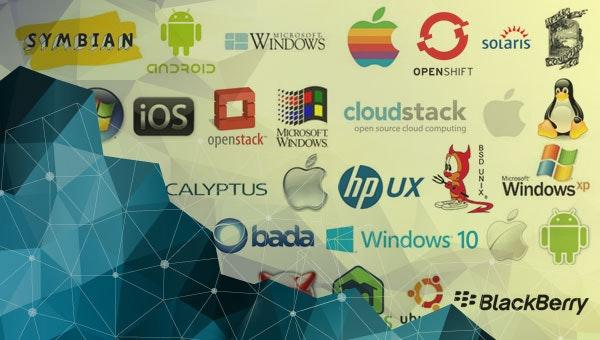
Pada materi di minggu ketiga ini kita akan belajar mengenai sistem operasi. Kita akan berdiskusi mengenai sistem operasi yang paling banyak digunakan saat ini dan mempelajari bagaimana sistem operasi berinteraksi dengan perangkat keras komputer. Kita akan mempelajari tentang proses mulainya sistem operasi dan menunjukkan dari awal cara menginstal sistem operasi Windows, Linux dan Mac OS X. Di akhir modul ini, Anda akan berinteraksi langsung dengan sistem operasi Windows dan Linux menggunakan Qwiklabs.

WEEK 4
Jaringan
Di pertemuan minggu keempat ini, kita akan belajar tentang jaringan komputer. Kita akan mempelajari sejarah Internet dan apa sebenarnya yang disebut dengan "Web". Kita juga akan membahas berbagai topik seperti privasi dan keamanan Internet, serta bagaimana internet di masa depan. Anda juga akan memahami mengapa Internet memiliki keterbatasan sampai hari ini. Di akhir modul, Anda akan dapat memahami bagaimana Internet bekerja serta mengenali dampak positif dan negatif Internet terhadap dunia.

WEEK 5
Perangkat lunak
Pada materi di minggu kelima ini, kita akan belajar tentang perangkat lunak komputer. Kita akan belajar tentang pengertian perangkat lunak serta berbagai jenis perangkat lunak yang mungkin Anda temui sebagai Spesialis IT Support. Kita juga akan mempelajari cara mengelola perangkat lunak dan menilik kembali konsep "abstraksi". Di akhir modul ini, Anda akan menggunakan platform Qwiklabs untuk menginstal, memperbarui, dan menghapus perangkat lunak pada sistem operasi Windows dan Linux.

WEEK 6
Pemecahan masalah
Selamat, Anda berhasil sampai pada minggu terakhir materi ini! Di minggu terakhir ini, kita akan mempelajari pentingnya pemecahan masalah dan dukungan pelanggan. Kita akan mempelajari beberapa skenario di dunia nyata yang mungkin akan Anda temui jika Anda bertugas di bagian Help Desk atau Desktop Support. Kita akan belajar pentingnya berempati kepada pengguna ketika Anda bekerja di dunia teknologi. Terakhir, kita akan mempelajari mengapa penulisan
dokumentasi menjadi aspek penting di semua peranan kerja TI. Pada akhir modul ini, Anda akan menggunakan soft skill dan menulis dokumentasi untuk berkomunikasi dengan orang lain.
Go to Class
MOOC List is learner-supported. When you buy through links on our site, we may earn an affiliate commission.

Related Courses

3D Printing Software (Coursera) Coursera
University of Illinois at Urbana-Champaign

3D Printing Software (Coursera)

This course will demonstrate how to use 3D printing software to create digital designs that can be turned into physical objects. It will also demonstrate how 3D scanners work to turn physical objects into digital designs. This course is hands-on in nature and will provide step-by-step instructions to guide you through two popular 3D modeling programs, Tinkercad and Fusion 360.

Jun 1st 2026
5-12 Weeks
Java Programming: Solving Problems with Software (Coursera) Coursera
Duke University

Java Programming: Solving Problems with Software (Coursera)

Learn to code in Java and improve your programming and problem-solving skills. You will learn to design algorithms as well as develop and debug programs. Using custom open-source classes, you will write programs that access and transform images, websites, and other types of data. At the end of the course you will build a program that determines the popularity of different baby names in the US over time by analyzing comma separated value (CSV) files.

Jun 1st 2026
4 Weeks
Programming Fundamentals (Coursera) Coursera
Duke University

Programming Fundamentals (Coursera)

Programming is an increasingly important skill, whether you aspire to a career in software development, or in other fields. This course is the first in the specialization Introduction to Programming in C, but its lessons extend to any language you might want to learn. This is because programming is fundamentally about figuring out how to solve a class of problems and writing the algorithm, a clear set of steps to solve any problem in its class.

Jun 1st 2026
4 Weeks
Security Governance & Compliance (Coursera) Coursera
University of California, Irvine

Security Governance & Compliance (Coursera)

Students are introduced to the field of cyber security with a focus on the domain of security & risk management. Topics include the fundamental concepts and goals of cybersecurity (the CIA triad), security governance design, the NIST cybersecurity framework, relevant laws and regulations, and the roles of policies, strategies, and procedures in cybersecurity governance.

Jun 1st 2026
4 Weeks
IT Security: Defense against the digital dark arts (Coursera) Coursera
Google

IT Security: Defense against the digital dark arts (Coursera)

This course covers a wide variety of IT security concepts, tools, and best practices. It introduces threats and attacks and the many ways they can show up. We’ll give you some background of encryption algorithms and how they’re used to safeguard data. Then, we’ll dive into the three As of information security: authentication, authorization, and accounting. We’ll also cover network security solutions, ranging from firewalls to Wifi encryption options. The course is rounded out by putting all these elements together into a multi-layered, in-depth security architecture, followed by recommendations on how to integrate a culture of security into your organization or team.

Jun 1st 2026
5-12 Weeks
Sensors and Sensor Circuit Design (Coursera) Coursera
University of Colorado Boulder

Sensors and Sensor Circuit Design (Coursera)

After taking this course, you will be able to: understand how to specify the proper thermal, flow, or rotary sensor for taking real-time process data; implement thermal sensors into an embedded system in both hardware and software; add the sensor and sensor interface into a microprocessor based development kit; create hardware and firmware to process sensor signals and feed data to a microprocessor for further evaluation; study sensor signal noise and apply proper hardware techniques to reduce it to acceptable levels.

Jun 1st 2026
5-12 Weeks
Enterprise System Management and Security (Coursera) Coursera
University of Colorado System

Enterprise System Management and Security (Coursera)

The world runs on computers. Your watch, your TV, your car. You might be familiar on how to operate each of these. Your home computer you are even more familiar with operating it. But what does it take to really take computer systems to the next level? - The enterprise level. In this course we discuss what makes home computing systems different from enterprise computing systems. This course will also help you prepare and design your own home lab to explore enterprise operating systems.

Jun 1st 2026
5-12 Weeks
Problem Solving, Python Programming, and Video Games (Coursera) Coursera
University of Alberta

Problem Solving, Python Programming, and Video Games (Coursera)

This course is an introduction to computer science and programming in Python. Important computer science concepts such as problem solving (computational thinking), problem decomposition, algorithms, abstraction, and software quality are emphasized throughout. The Python programming language and video games are used to demonstrate computer science concepts in a concrete and fun manner. However, a learner can take the knowledge and skills from this course and apply them to non-game problems, other programming languages, and other computer science courses.

Jun 1st 2026
5-12 Weeks
Embedded Hardware and Operating Systems (Coursera) Coursera
EIT Digital

Embedded Hardware and Operating Systems (Coursera)

This course is intended for the Bachelor and Master's students, who like practical programming and making IoTs applications! In this course we will talk about two components of a cyber physical system, namely hardware and operating systems. After completing this course, you will have the knowledge of both hardware components and operating systems. You are able to plan and use embedded operating systems in resource-constraint devices for Internet-of-Things (cyber physical system) applications.

Jun 1st 2026
4 Weeks
Medical Technology and Evaluation (Coursera) Coursera
University of Minnesota

Medical Technology and Evaluation (Coursera)

Innovations in medical technologies are one of the leading areas of economic growth in the world. Whether new technologies take the form of pharmaceutical, medical device, biotechnology, information technology of some combination of these innovations, the opportunities for both private enterprise and social welfare are substantial. However, these innovations are not without cost, and require reimbursement from either a privately or publicly financed health care delivery system to enter the marketplace.

Jun 1st 2026
4 Weeks