Cultural intelligence: Become a global citizen (Coursera)

Offered by Macquarie University,
Cultural intelligence: Become a global citizen (Coursera)

We now live in a truly global, interconnected world in which every manager requires a high level of cultural intelligence. In a diverse work environment, a successful leader must understand the cultural backgrounds, beliefs and attitudes of the people around them – or run the risk of failing to achieve the organisation’s goals. This course, via structured learning activities (video lectures, quizzes, discussion prompts, industry interviews and written assessments), will teach you that those with high ‘cultural intelligence’ – are good at spotting cultural differences and adapt their behaviour accordingly.

Class Deals by MOOC List - Click here and see Coursera's Active Discounts, Deals, and Promo Codes.

You’ll develop cultural intelligence and sensitivity – key future-focused capabilities required of every leader.
Course 2 of 4 in the Adapting: Career Development Specialization.

Syllabus

WEEK 1
Globalisation of people
We are living in an increasingly globalised world, with growing flows of capital/business and people across national boundaries. What are the current state of development of global migration of capital and people? What are the important implications to businesses, communities and individuals? This week you will be introduced to the recent development in global migration of capital and people; the contributing factors to the changes over time; and consequences of global migration of capital and people. You will start by review the contemporary literature in these areas. You will also be exposed to the theoretical perspectives such as institutional approach and structural inequality framework in understanding global migration of business and people.

WEEK 2
Affinities and diversities
Our communities and workplaces have become more diverse in terms of gender, age, ethnicity, religion, and country of origin. How do you perceive diversity in your communities and workplaces? Does diversity mean different? This week you will be introduced the concepts of affinities in addition to diversities. You will have the opportunities to examine the commonalities that diverse groups of people share in their daily life and in workplaces. You will also apply the theoretical framework “cultural capital” (in Pierre Bourdieu’s “The Forms of Capital”) in understanding how diversity contribute to the societies and businesses.

WEEK 3
Developing Cultural Intelligence (CQ): Improving self
Employees and business leaders nowadays are constantly interacting with people and stakeholders from diverse backgrounds. The cultural inclusion approach is adopted by many businesses and organizations to promote equity and fairness. What is your understanding of cultural diversity? Is diversity inclusion approach only for promoting the rights and opportunities for those who are disadvantaged? Are you aware of the values and benefits that people from diverse cultural backgrounds could bring to an organization? Do you know how to develop your cultural intelligence (CQ)? This week you will learn the importance of cultural intelligence (CQ) and the steps that you will need to take to develop your cultural strategic thinking and to cultivate your behavioural cultural intelligence.

WEEK 4
Applying and leveraging CQ: Leading others
Being culturally intelligent is a key future-focused capability for today’s business leaders. In addition to developing their own cultural intelligence, business leaders need to learn how to leverage their cultural intelligence to effectively motivate and lead others in workplaces. This week you will learn the approaches and programs through which you apply cultural intelligence to effectively manage and lead culturally diverse teams or effectively interact with culturally diverse stakeholders. You will develop the competencies of evaluating cultural environments and strategizing responses accordingly. Attention will also be on the approach and framework for developing high-performing global teams

WEEK 5
Global citizenship challenges
Being a citizen of our globalised and interconnected world could also face a series of challenges. Traditional institutions, such as the state, community, workplace, and family have all been affected one way or another by the global forces. The boundaries of nation states become increasing blurry and weakened with increasing dominance of transnational business activities and migration of people. For many, traditional family structures are disrupted and family members scattered around globe. All these changes affect individual behaviour and the interactions with each other. This week you will examine the major challenges brought about by globalised forces and develop the awareness of these challenges in a range of institutional settings.

WEEK 6
Global mindset and competence: Becoming a Global Citizen
Cultural intelligence (CQ) is a competitive advantage that current and future business leaders need to acquire and cultivate. By consciously or unconsciously practicing and applying CQ in your workplace and daily life, you will become a true global citizen and business leader in a globalized world. In the final week of this course, you will apply all the knowledge we have learned so far and focus on some practical exercises on how to develop the mindset that is globally oriented and culturally sensitive. You will also further develop some skills in translating your individual global mindset to ethical conducts of businesses and organizations.
Go to Class
MOOC List is learner-supported. When you buy through links on our site, we may earn an affiliate commission.

Related Courses

Cities are back in town : sociología urbana para un mundo globalizado (Coursera) Coursera
Sciences Po

Cities are back in town : sociología urbana para un mundo globalizado (Coursera)

Los procesos de globalización y europeización respaldan el rápido desarrollo de las ciudades en distintas partes del mundo. En el mundo contemporáneo, el proceso de urbanización está alcanzando un nuevo pico con el incremento de las megalópolis (más de 15 millones de habitantes) como Calcuta, Los Ángeles, Daca, El Cairo, Tokio, Nueva York, Shanghái, Ciudad de México. o Seúl. Más allá de las metrópolis modernas, los investigadores intentan entender estas grandes zonas urbanas con el uso de distintos conceptos, tales como "posmetrópolis", "ciudades globales" y "ciudades-regiones globales".

Sep 28th 2026
5-12 Weeks
Supply Chain Management: A Learning Perspective (Coursera) Coursera
Korea Advanced Institute of Science and Technology - KAIST

Supply Chain Management: A Learning Perspective (Coursera)

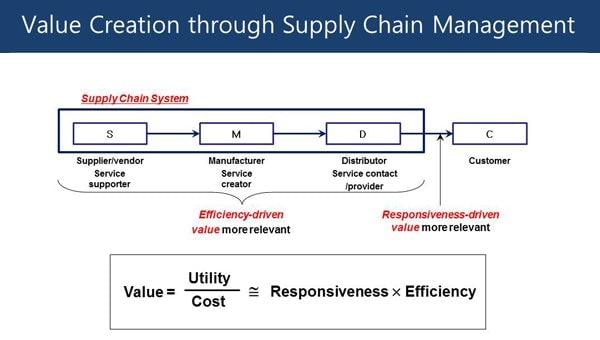
As a human being, we all consume products and/or services all the time. This morning you got up and ate your breakfast, e.g., eggs, milk, bread, fresh fruits, and the like. After the breakfast, you drove your car to work or school. At your office, you used your computer, perhaps equipped with 27” LCD monitor. During your break, you drank a cup of coffee and played with your iPhone. So on and so forth. You probably take it for granted that you can enjoy all of these products. But if you take a closer look at how each of these products can be made and eventually delivered to you, you will realize that each one of these is no short of miracle.

Jul 27th 2026
5-12 Weeks
Arctic Economy (Coursera) Coursera
University of Alberta,UiT The Arctic University of Norway

Arctic Economy (Coursera)

Arctic communities have diverse histories and roles in local, regional and global economies. However, the scope and scale of globalization has increased so quickly that vulnerable Arctic communities are facing new kinds of challenges to their survival. In this 3-week MOOC, a unique collaboration between the University of Alberta and UiT The Arctic University of Norway, you will investigate the challenges faced by Indigenous, North American, Russian and Nordic Arctic communities in a modern world. So join us as we venture above the 60th parallel North, and explore how these fascinating communities adjust to change while maintaining their ways of life, socio-economic histories, and cultural traditions.

Oct 12th 2026
4 Weeks
Relações Internacionais (Coursera) Coursera
FIA Business School

Relações Internacionais (Coursera)

Nossas boas-vindas ao Curso Relações Internacionais. Este curso tem o objetivo de apresentar os tipos de acordos e instituições que constituem o comércio internacional. O participante também compreenderá os mecanismos de classificação fiscal, as medidas protecionistas e as tradicionais etapas de internacionalização de empresas.

Sep 28th 2026
4 Weeks
Global Impact: Cultural Psychology (Coursera) Coursera
University of Illinois at Urbana-Champaign

Global Impact: Cultural Psychology (Coursera)

Globalization has brought dramatic changes to the marketplace. A proliferation of global brands brings diverse cultures to a consumer population that is also growing culturally diverse. This course enables students to understand how globalization changes consumers at a psychological level, and provides tools for imbuing brands with cultural meanings—creating iconic brands—that can resonate with global consumers.

Sep 21st 2026
4 Weeks
Economics of Transition and Emerging Markets (Coursera) Coursera
Higher School of Economics - HSE University

Economics of Transition and Emerging Markets (Coursera)

The course analyzes challenges faced by transition and emerging-market economies, i.e., those middle- and low-income countries, which have conducted market-oriented economic reforms and become integrated into the global economy since 1990s. It starts from a brief history of communist economic system based on central planning in the former Soviet Union and Central and Eastern Europe, its evolution and collapse at the end of 1980s/ early 1990s and subsequent transition to a market system in 1990s and 2000s.

Jul 18th 2022
5-12 Weeks
Professional development: Improve yourself, always (Coursera) Coursera
Macquarie University

Professional development: Improve yourself, always (Coursera)

The world of work is characterised by rapid ongoing change. In this dynamic environment, one of the most critical skills for leaders is their capacity to learn and to adapt; to engage in the continuous development of their skills in managing and leading others. This course will assist you in the ongoing development of your skills and abilities by focusing on the nature of the self-development process.

Sep 21st 2026
5-12 Weeks
Effective Communication for Building Relationships (Coursera) Coursera
National Research Tomsk State University

Effective Communication for Building Relationships (Coursera)

We will discuss self-presentation: how you can create the right impression and fit in at work. We will talk about intercultural communication: cultural values and cultural intelligence, working in an intercultural climate, and working in an intercultural team. Finally, we will speak about interaction with clients: creating a win-win relationship, maintaining a positive relationship, and resolving conflict. By the end of the course, you will be able to present yourself positively, communicate effectively in a variety of settings, and build positive relationships with clients.

May 9th 2022
5-12 Weeks
China’s Economic Transformation Part 1: Economic Reform and Growth in China (Coursera) Coursera
The Hong Kong University of Science and Technology - HKUST

China’s Economic Transformation Part 1: Economic Reform and Growth in China (Coursera)

In 1978, after nearly 30 years of socialist planning under Mao Zedong, China was one of the world’s poorest countries, saddled with an inefficient, inward-looking economy. Today, China is an upper-middle income country and the world’s largest trading nation, contributing more to global economic growth than any other nation. How could such a remarkable transformation take place? This course will examine in detail the reforms that have contributed to China’s economic development and the current challenges facing the Chinese economy.

Sep 21st 2026
5-12 Weeks