COVID-19: Global Health Perspectives (FutureLearn)

COVID-19: Global Health Perspectives (FutureLearn)

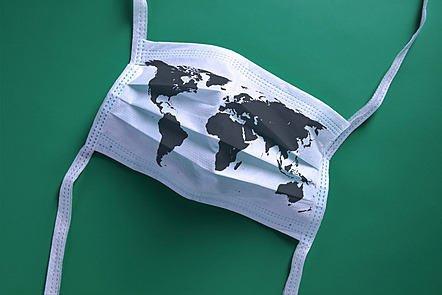
Analyse how differing capacities of health systems, governments and communities have shaped responses to and impacts of COVID-19. Explore how countries can strengthen their health systems for future pandemics. The global response to COVID-19 has varied dramatically, but how prepared were different countries for this crisis, and what does pandemic preparedness require?

Class Deals by MOOC List - Click here and see FutureLearn's Active Discounts, Deals, and Promo Codes.

On this course, you’ll discover how a country’s response and resilience to COVID-19 is directly shaped by the disparity between global systems, including health, political, economic and environmental systems.
As you learn what pandemic preparedness requires, you’ll analyse key lessons learnt from the COVID-19 pandemic, and consider how these lessons can be applied to a country’s emergency planning and decision-making for the future.

What topics will you cover?

  • Impacts of both COVID-19 and varying country responses to COVID-19
  • Readiness for and responses to COVID-19
  • Resilience demonstrated in responses to the pandemic and the inequities driving uneven pandemic outcomes
  • Intersectionality of vulnerable systems and population-level inequities in relation to COVID-19 and responses to COVID-19
  • Pandemic prevention, preparedness, and health system strengthening for the future
  • The intersection of multiple systems in shaping the impacts and responses to COVID-19

What will you achieve?
By the end of the course, you‘ll be able to...

  • Assess the widely varied responses to and impacts of the COVID-19 pandemic in diverse country contexts, and analyse the significance of different health systems and political, economic and environmental factors in determining these differences.
  • Compare and contrast different country and community readiness for and resilience to COVID-19.
  • Evaluate how complex and intersecting inequalities have both shaped, and are being shaped by COVID-19 and responses to the COVID-19 pandemic.
  • Understand key opportunities and strategies for the future in relation to inter-sectoral pandemic preparedness, and designing responses with a focus on health systems strengthening, equity and inclusion.
Go to Class
MOOC List is learner-supported. When you buy through links on our site, we may earn an affiliate commission.

Related Courses

Infant Nutrition: from Breastfeeding to Baby's First Solids (FutureLearn) FutureLearn
Deakin University

Infant Nutrition: from Breastfeeding to Baby's First Solids (FutureLearn)

Learn what good infant nutrition looks like, how and what to feed a baby, and how to start weaning. Explore the principles of good nutrition in the first 12 months of a baby’s life. In this insightful course led by nutritional experts from Deakin University, you’ll trace the milestones in a baby’s first year of life to learn about the principles of good infant nutrition and how you can apply them. You’ll explore the nutritional requirements of young children, as well as why healthy food for babies is so essential.

Self Paced
2 Weeks
Introduction to Health Technology Assessment (FutureLearn) FutureLearn
University of Glasgow

Introduction to Health Technology Assessment (FutureLearn)

Learn about health technology assessment (HTA) and quality of life (QoL), and how they’re used to decide which treatments to fund. Get an introduction to health technology assessment (HTA). This online course provides a short, interactive introduction to health technology assessment (HTA), based on the University of Glasgow’s successful online distance-learning programme, the MSc in HTA.

Self Paced
3 Weeks
Understanding Autism (FutureLearn) FutureLearn
University of Kent

Understanding Autism (FutureLearn)

Understand more about autism, including diagnosis, the autistic spectrum and life with autism, with this online course. First identified over 70 years ago, autism is a lifelong developmental disability affecting how a person communicates with and relates to others, and how they make sense of the world. It is a spectrum condition; all people on the spectrum share certain difficulties, but their condition will affect them in different ways.

Self Paced
4 Weeks
Nutrition and Disease Prevention (FutureLearn) FutureLearn
Taipei Medical University

Nutrition and Disease Prevention (FutureLearn)

Learn about the relationship between diet and disease and discover the role a nutrient-rich diet can play in disease prevention. Understand how good nutrition can prevent disease. Diet-related diseases and obesity levels are rising. On this course you will explore the relationship between diet and disease and the role diet plays in weight management. You will examine the latest research studies to consider how poor nutrition can lead to ill health, and whether what we eat can help to prevent the onset of common diseases, such as cancer.

Self Paced
4 Weeks
Introduction to Emergency Contraception (FutureLearn) FutureLearn
University of East Anglia

Introduction to Emergency Contraception (FutureLearn)

Understand emergency contraception and the choices available with this course for people working in healthcare and related fields. Emergency contraception can be confusing, with different types available and public understanding sometimes limited. On this course you will master the basics of emergency contraception: learning about the different types of post-coital contraception, exploring clinical guideliness; and working out which type of contraception is appropriate in different situations.

Self Paced
3 Weeks
Health and Wellbeing in the Ancient World (FutureLearn) FutureLearn
The Open University

Health and Wellbeing in the Ancient World (FutureLearn)

Use literary and archaeological evidence to see how ancient Greeks and Romans approached health, well-being and societal issues. What did being healthy in ancient Rome or Greece look like? How can we tell what well-being meant in ancient times? This online course will help you investigate these questions, using both literary and archaeological evidence, to uncover details of real life in ancient societies.

Self Paced
5-12 Weeks
Small and Mighty: Introduction to Microbiology (FutureLearn) FutureLearn
University of Reading

Small and Mighty: Introduction to Microbiology (FutureLearn)

Understand the basics of microbiology and explore the diversity of microbial life in our world. Discover the fascinating world of microbes. Microbes may be invisible to the eye, but they dominate every environment on Earth – including you. Microbes are often associated with disease yet the majority of species help to keep us alive. How can you distinguish the good from the bad?

Self Paced
3 Weeks
Biochemistry: the Molecules of Life (FutureLearn) FutureLearn
University of East Anglia

Biochemistry: the Molecules of Life (FutureLearn)

Explore the impact of biochemistry on bioenergy and health, discovering why graduates are in demand; with the Biochemical Society. Biochemistry brings together all of the sciences to study the chemical and physical processes that occur in living organisms. It truly is the science of life. As a scientific discipline in its own right, biochemistry has a major impact on all areas of the life sciences and biochemists are in high demand among employers.

Self Paced
3 Weeks
Challenges in Antibiotic Resistance: Gram Negative Bacteria (FutureLearn) FutureLearn
British Society for Antimicrobial Chemotherapy - BSAC

Challenges in Antibiotic Resistance: Gram Negative Bacteria (FutureLearn)

This course by BSAC is for healthcare professionals managing infections. You will learn about Gram Negative Bacteria. Identify, diagnose and treat gram negative bacterial infections. Gram negative bacteria (GNB) are a group of bacteria that can cause infection and toxic reaction in patients, yet are difficult to differentiate and treat with antibiotics due to their structure.

Self Paced
3 Weeks