EdX

Computer Applications of Artificial Intelligence and e-Construction (edX)

Offered by Purdue University, PurdueX,
Computer Applications of Artificial Intelligence and e-Construction (edX)

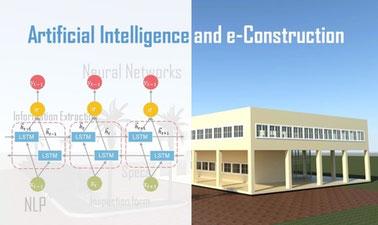
Learn the fundamentals of artificial intelligence, machine learning, natural language processing and their applications in e-Construction. This course is the third in a sequence of interrelated courses of the current computer applications in the construction industry. The emphasis of this course is the advanced computational tools including artificial intelligence, machine learning, and natural language processing, and their applications in e-Construction.

Class Deals by MOOC List - Click here and see EdX's Active Discounts, Deals, and Promo Codes.

The primary goal of this course is to:

  • cultivate students’ knowledge on the current trend of computational advancements; and
  • train students to develop intelligent e-Construction applications.

A number of carefully crafted hands-on activities targeting construction problems will help students to not only learn the fundamentals, but also master their applications in construction.

What you'll learn

  • Program and develop spreadsheet applications for construction project management tasks;
  • Develop different types of machine learning algorithms to process construction data;
  • Develop natural language processing algorithms to process construction big data;
  • Exploit e-Construction applications.

Prerequisites:
Students interested in taking this course should have successfully completed the edX courses, Fundamentals of Building Information Modeling, and BIM for Construction or equivalents.

Syllabus

Week 1: Introduction to e-Construction, Spreadsheet, and VBA

  • Introduction to e-Construction
  • Spreadsheet- Formulas
  • Spreadsheet- Functions
  • Spreadsheet- Pivot Table
  • Spreadsheet- Programming and Applications Development
  • Spreadsheet Applications for Cost Estimating and Control

Week 2: Engineering Database

  • Introduction to Database
  • Database Design
  • Entity-Relationship Diagram vs. Object-Oriented Modeling
  • Normalization
  • Database Implementation in MS Access and Spreadsheet

Week 3: Programming in Python

  • Introduction to Object-Oriented Programming
  • Python Basics I - IV

Week 4: Natural Language Processing

  • Introduction to Natural Language Processing (NLP) I - IV
  • NLP for Processing Construction Specifications

Week 5: Machine Learning

  • Machine Learning I- III
  • Digital Inspection System
Go to Class
MOOC List is learner-supported. When you buy through links on our site, we may earn an affiliate commission.

Related Courses

CS50's Introduction to Artificial Intelligence with Python (edX) EdX
HarvardX,Harvard University

CS50's Introduction to Artificial Intelligence with Python (edX)

Learn to use machine learning in Python in this introductory course on artificial intelligence. AI is transforming how we live, work, and play. By enabling new technologies like self-driving cars and recommendation systems or improving old ones like medical diagnostics and search engines, the demand for expertise in AI and machine learning is growing rapidly. This course will enable you to take the first step toward solving important real-world problems and future-proofing your career.

Self Paced
Self-Paced
CS50's Introduction to Computer Science (edX) EdX
HarvardX,Harvard University

CS50's Introduction to Computer Science (edX)

An introduction to the intellectual enterprises of computer science and the art of programming. This is CS50, Harvard University's introduction to the intellectual enterprises of computer science and the art of programming for majors and non-majors alike, with or without prior programming experience. An entry-level course taught by David J. Malan, CS50 teaches students how to think algorithmically and solve problems efficiently.

Self Paced
Self-Paced
How to Code: Complex Data (edX) EdX
The University of British Columbia,UBCx

How to Code: Complex Data (edX)

Learn how to design more complex programs, using new data structures, abstraction, and generative recursion. As your program requirements get more complex, you will find that simple additions to the design method make it easy to write well-structured and well-tested code that is easy to maintain. By learning how to capture common data and control structures using abstraction, your programs will get shorter and better tested.

Self Paced
Self-Paced
Laboratorio di Programmazione (edX) EdX
University of Naples Federico II,FedericaX

Laboratorio di Programmazione (edX)

Impara a risolvere problemi complessi attraverso l'uso del computer e avvicinati alla magia degli algoritmi. Il linguaggio di programmazione è uno degli strumenti che abbiamo per interpretare e risolvere i problemi di tutti i giorni. Un linguaggio che è alla base di problemi comuni, come le previsioni del tempo o l'analisi della deformazione di una struttura di un'auto in un incidente stradale.

Self Paced
Self-Paced
MATLAB et Octave pour débutants (edX) EdX
École Polytechnique Fédérale de Lausanne,EPFLx

MATLAB et Octave pour débutants (edX)

Premiers pas dans MATLAB et Octave avec un regard vers le calcul scientifique. Commencer à utiliser un logiciel est toujours délicat, on ne sait jamais par où commencer. Dans ce cours nous allons nous concentrer sur la maîtrise d’Octave et MATLAB, de façon à pouvoir par la suite continuer à apprendre de manière indépendante.

Self Paced
Self-Paced
Data Science: Capstone (edX) EdX
HarvardX,Harvard University

Data Science: Capstone (edX)

Show what you’ve learned from the Professional Certificate Program in Data Science. To become an expert data scientist you need practice and experience. By completing this capstone project you will get an opportunity to apply the knowledge and skills in R data analysis that you have gained throughout the series. This final project will test your skills in data visualization, probability, inference and modeling, data wrangling, data organization, regression, and machine learning.

Self Paced
Self-Paced
Programming for Data Science (edX) EdX
University of Adelaide,AdelaideX

Programming for Data Science (edX)

Learn how to apply fundamental programming concepts, computational thinking and data analysis techniques to solve real-world data science problems. There is a rising demand for people with the skills to work with Big Data sets and this course can start you on your journey through our Big Data MicroMasters program towards a recognised credential in this highly competitive area. Using practical activities you will learn how digital technologies work and will develop your coding skills through engaging and collaborative assignments.

Self Paced
Self-Paced
Java Programming Fundamentals (edX) EdX
Galileo University,GalileoX

Java Programming Fundamentals (edX)

Your career as a program developer starts here. Gain entry-level programing skills in Java language, and prepare yourself to handle any task that is required in any programming job. Java is one of the most in-demand programming languages today. This course is designed to provide students the basic skills and knowledge on Java.

Self Paced
Self-Paced
Data Science: R Basics (edX) EdX
HarvardX,Harvard University

Data Science: R Basics (edX)

Build a foundation in R and learn how to wrangle, analyze, and visualize data. This course will introduce you to the basics of R programming. You can better retain R when you learn it to solve a specific problem, so you’ll use a real-world dataset about crime in the United States. You will learn the R skills needed to answer essential questions about differences in crime across the different states.

Self Paced
Self-Paced
How to Code: Simple Data (edX) EdX
The University of British Columbia,UBCx

How to Code: Simple Data (edX)

Learn systematic program design - how to write programs that tell a clear story about what they do, are well-tested, and easy to improve. This programming course takes a unique approach, as it focuses on learning a systematic programming method rather than a programming language. This practical approach will help you channel your creativity so that you can program well in any language.

Self Paced
Self-Paced