EdX

Codificación de audio: Más allá del MP3 (edX)

Codificación de audio: Más allá del MP3 (edX)

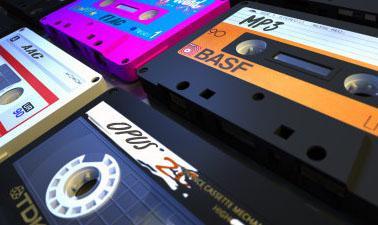
En este curso el alumno estudiará los fundamentos de los sistemas de compresión de audio así como los estándares más utilizados. Se verán los estándares del grupo MPEG como el MP3 y el AAC así como otros de código abierto como el OPUS.

Class Deals by MOOC List - Click here and see EdX's Active Discounts, Deals, and Promo Codes.

La Codificación de Audio (también conocida como compresión de audio) es una representación digital de las señales de sonido para ser almacenadas o transmitidas por cualquier medio digital. En este proceso se busca siempre ocupar el mínimo número de bits posible para poder transmitirla por canales limitados en velocidad o bien poder almacenar muchos sonidos o música en el menor espacio posible. Todo ello se debe realizar manteniendo una calidad de sonido cada vez más exigente y, en los últimos años, permitiendo sistemas más avanzados que el estéreo que proporcionan sonido espacial. En este curso veremos los estándares más conocidos, como el MP3, así como otros formatos superiores aparecidos en los últimos años.

Unidades:

Sección 1: Digitalización y compresión de audio, ¿cómo afecta a nuestra percepción?
Sección 2: Escalas auditivas y tipos de compresión
Sección 3: Estándares MPEG de compresión de audio
Sección 4: Codificadores avanzados de audio
Sección 5: Evaluación de codificadores

What you'll learn

  • Aprenderás los conceptos básicos de digitalización y almacenamiento de las señales y la capacidad de memoria necesaria.
  • Comprenderás el concepto de “tasa de compresión” y “velocidad binaria” (bitrate) de una coficación digital.
  • Estudiarás los mecanismos subjetivos de la percepción humana del sonido, sus limitaciones y el enmascaramiento que se produce en el oído.
  • Diferenciarás entre compresión con pérdidas y sin pérdidas.
  • Estudiarás los fundamentos básicos de la compresión con pérdidas a través de las diferentes capas del estándar MPEG hasta llegar al MP3.
  • Repasaremos estándares más avanzados que el MP3 como el MPEG-4 AAC y el OPUS.
  • Aprenderás a evaluar la calidad de un codificador con pérdidas a través de test “doble ciego” y MUSHRA

Go to Class
MOOC List is learner-supported. When you buy through links on our site, we may earn an affiliate commission.

Related Courses

Tecnología musical con software libre: Proyecto final (Coursera) Coursera
Universidad Nacional Autónoma de México

Tecnología musical con software libre: Proyecto final (Coursera)

Bienvenidas y bienvenidos a nuestro curso final. Después de haber concluido seis intensos cursos en los que vimos distintas aproximaciones a la tecnología musical, llegó el momento de aplicar todo lo que vimos en un único proyecto final. Como hemos insistido a lo largo del programa especializado, lo más importante en este tipo de proyectos es la creatividad que impriman a sus creaciones artísticas. Es por eso que en este curso los invitamos a generar proyectos diversos que amplíen y complementen nuestra manera de entender la música libre.

Aug 10th 2026
3 Weeks
Information Theory (Coursera) Coursera
The Chinese University of Hong Kong

Information Theory (Coursera)

At the completion of this course, the student should be able to: demonstrate knowledge and understanding of the fundamentals of information theory; appreciate the notion of fundamental limits in communication systems and more generally all systems; develop deeper understanding of communication systems; apply the concepts of information theory to various disciplines in information science.

Aug 10th 2026
13-24 Weeks
HTML5 Coding Essentials and Best Practices (edX) EdX
World Wide Web Consortium - W3C,W3Cx

HTML5 Coding Essentials and Best Practices (edX)

Learn how to write Web pages and Web sites by mastering HTML5 coding techniques and best practices. HTML5 is the standard language of the Web, developed by W3C. For application developers and industry, HTML5 represents a set of features that people will be able to rely on for years to come. HTML5 is supported on a wide variety of devices, lowering the cost of creating rich applications to reach users everywhere.

Self Paced
Self-Paced
Applications in Communication Acoustics (edX) EdX
RWTH Aachen,Technische Universität München - TUM,RWTHx,TUMx

Applications in Communication Acoustics (edX)

Explore the different system components involved in acoustic communication using a representative set of practical applications. This engineering course is the continuation of the edX course, “Fundamentals of Communication Acoustics.” Communication acoustics is defined as the way sounds travels from a source, through a channel and finally to a receiver.

Nov 27th 2023
5-12 Weeks
Principles of Secure Coding (Coursera) Coursera
University of California, Davis

Principles of Secure Coding (Coursera)

This course introduces you to the principles of secure programming. It begins by discussing the philosophy and principles of secure programming, and then presenting robust programming and the relationship between it and secure programming. We'll go through a detailed example of writing robust code and we'll see many common programming problems and show their connection to writing robust, secure programs in general.

Aug 10th 2026
4 Weeks
Writing, Running, and Fixing Code in C (Coursera) Coursera
Duke University

Writing, Running, and Fixing Code in C (Coursera)

Building on the course Programming Fundamentals, this course will teach you how to write code by first planning what your program should do—an important approach for novice and professional programmers. You will learn how to compile and run your program, and then how to test and debug it. This course builds on the Seven Steps you have already learned and provides a framework for systematically testing for problems and fixing them, so you can find and fix problems efficiently.

Aug 10th 2026
4 Weeks
AI for Efficient Programming: Harnessing the Power of LLMs (Coursera) Coursera
Fred Hutchinson Cancer Center

AI for Efficient Programming: Harnessing the Power of LLMs (Coursera)

This course on Artificial Intelligence (AI) for software development explores the use of AI large language models such as ChatGPT, Bard, and others and their potential benefits and challenges. Through examples and hands-on activities, you will develop an understanding of the ways in which AI can speed up software development tasks and free up time for more creative and strategic work.

Aug 10th 2026
4 Weeks
The Art of Music Production (Coursera) Coursera
Berklee College of Music

The Art of Music Production (Coursera)

Explore the art of record production and how to make recordings that other people will love listening to. This course will teach you how to make emotionally moving recordings on almost any recording equipment, including your phone or laptop. The emphasis is on mastering tangible artistic concepts; the gear you use is up to you. You will learn to develop the most important tool in the recording studio: your ears. You will learn to enhance every aspect of your own productions, both sonically and musically, by employing deeper listening skills.

Aug 10th 2026
4 Weeks
Gen AI for Code Generation for Python (Coursera) Coursera
Edureka

Gen AI for Code Generation for Python (Coursera)

Welcome to the 'Gen AI for Code Generation for Python' course, where you'll embark on a journey to explore and develop your skills in the art of code generation with Generative AI. Throughout this short course, you will delve into various techniques for generating Python code effortlessly, ranging from simple scripts to complete end-to-end projects.

Aug 17th 2026
1 Week