HTML, CSS, and Javascript for Web Developers (Coursera)

HTML, CSS, and Javascript for Web Developers (Coursera)

Do you realize that the only functionality of a web application that the user directly interacts with is through the web page? Implement it poorly and, to the user, the server-side becomes irrelevant! Today’s user expects a lot out of the web page: it has to load fast, expose the desired service, and be comfortable to view on all devices: from a desktop computers to tablets and mobile phones. In this course, we will learn the basic tools that every web page coder needs to know. We will start from the ground up by learning how to implement modern web pages with HTML and CSS.

Class Deals by MOOC List - Click here and see Coursera's Active Discounts, Deals, and Promo Codes.

We will then advance to learning how to code our pages such that its components rearrange and resize themselves automatically based on the size of the user’s screen. You’ll be able to code up a web page that will be just as useful on a mobile phone as on a desktop computer. No “pinch and zoom” required! Last but certainly not least, we will get a thorough introduction to the most ubiquitous, popular, and incredibly powerful language of the web: Javascript. Using Javascript, you will be able to build a fully functional web application that utilizes Ajax to expose server-side functionality and data to the end user.

Syllabus

WEEK 1
Introduction to HTML5
In this module we will learn the basics of HTML5. We'll start with instructional videos on how to set up your development environment, go over HTML5 basics like valid document structure, which elements can be included inside other elements and which can not, discuss the meaning and usefulness of HTML5 semantic tags, and go over essential HTML5 tags.

WEEK 2
Introduction to CSS3
A lot of people "tinker" with CSS. In this module, we'll take you from the very basics of CSS3 to some fairly advanced concepts like floating and CSS rule conflict resolution. We'll go over the 'box model', background property, etc. We'll finish off the module with learning about Responsive Design using our own CSS code as well as start introducing Twitter Bootstrap with its essential Grid System.

WEEK 3
Coding the Static Restaurant Site
Ready for some REAL fun? This module is it! We'll go over some basics of interacting with a client when managing a web site project and then go visit a real client at their place of business (a Chinese restaurant), help the owner figure out what she wants in a site, and get acquainted with the restaurant in general. We'll spend the rest of the module building a real web site for this business from scratch and you'll get to sit next to me and watch as the site comes together.

WEEK 4
Introduction to Javascript
What fun would a web site be if there was no functionality to it? In this module, we are going to concentrate on learning the fundamentals of the Javascript language. A lot of even seasoned developers “tinker” with Javascript without really understanding how the language works. That leads to viewing the language as more of a nuisance instead of a powerful tool. That is why we are going to concentrate not only on the “how” but also on the “why”, so you are empowered by the Javascript language features, not confused by them. We’ll cover just about everything - from common language constructs and Javascript types to objects, functions, arrays, closures, and scope isolation.

WEEK 5
Using Javascript to Build Web Applications
In this module, we are going to take all those newly learned Javascript language skills and learn how to utilize them within the context of a web page. We’ll start by learning how to properly manipulate the web page components using the Javascript Document Object Model API. We will then move on to learning one of the most popular ways of serving up data to a web site - Ajax. We'll learn about the protocol that the language of the web speaks in (HTTP), how to set up and handle Ajax requests and responses, as well as how to process JSON data. We'll finish the module by connecting our restaurant web site from Module 3 to a real backend service that will allow us to pull the data for the restaurant menu dynamically from the server without having to reload the entire page.

Go to Class
MOOC List is learner-supported. When you buy through links on our site, we may earn an affiliate commission.

Related Courses

An Introduction to Interactive Programming in Python (Part 2) (Coursera) Coursera
Rice University

An Introduction to Interactive Programming in Python (Part 2) (Coursera)

This two-part course is designed to help students with very little or no computing background learn the basics of building simple interactive applications. Our language of choice, Python, is an easy-to learn, high-level computer language that is used in many of the computational courses offered on Coursera. To make learning Python easy, we have developed a new browser-based programming environment that makes developing interactive applications in Python simple.

Oct 5th 2026
4 Weeks
Creative Programming for Digital Media & Mobile Apps (Coursera) Coursera
University of London,Goldsmiths, University of London

Creative Programming for Digital Media & Mobile Apps (Coursera)

This course is for anyone who would like to apply their technical skills to creative work ranging from video games to art installations to interactive music, and also for artists who would like to use programming in their artistic practice. This course will teach you how to develop and apply programming skills to creative work. This is an important skill within the development of creative mobile applications, digital music and video games. It will teach the technical skills needed to write software that make use of images, audio and graphics, and will concentrate on the application of these skills to creative projects. Additional resources will be provided for students with no programming background.

Oct 12th 2026
5-12 Weeks
Build a Modern Computer from First Principles: Nand to Tetris Part II (project-centered course) (Coursera) Coursera
Hebrew University of Jerusalem

Build a Modern Computer from First Principles: Nand to Tetris Part II (project-centered course) (Coursera)

In this project-centered course you will build a modern software hierarchy, designed to enable the translation and execution of object-based, high-level languages on a bare-bone computer hardware platform. In particular, you will implement a virtual machine and a compiler for a simple, Java-like programming language, and you will develop a basic operating system that closes gaps between the high-level language and the underlying hardware platform.

Oct 12th 2026
5-12 Weeks
Introduction à la programmation orientée objet (en Java) (Coursera) Coursera
École Polytechnique Fédérale de Lausanne

Introduction à la programmation orientée objet (en Java) (Coursera)

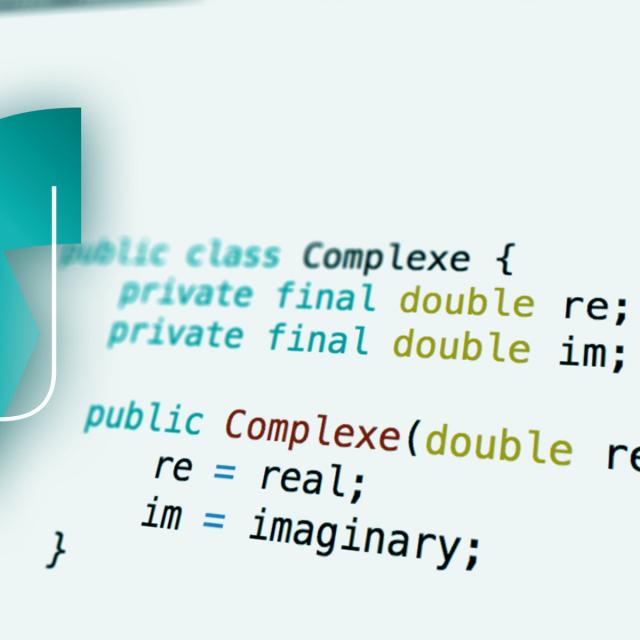
Ce cours introduit la programmation orientée objet (encapsulation, abstration, héritage, polymorphisme) en l'illustrant en langage Java. Il présuppose connues les bases de la programmation (variables, types, boucles, fonctions, ...). Il est conçu comme la suite du cours « Initiation à la programmation (en Java) ».

Oct 11th 2026
5-12 Weeks
Basic Modeling for Discrete Optimization (Coursera) Coursera
University of Melbourne,The Chinese University of Hong Kong

Basic Modeling for Discrete Optimization (Coursera)

Optimization is a common form of decision making, and is ubiquitous in our society. Its applications range from solving Sudoku puzzles to arranging seating in a wedding banquet. The same technology can schedule planes and their crews, coordinate the production of steel, and organize the transportation of iron ore from the mines to the ports. Good decisions in manpower and material resources management also allow corporations to improve profit by millions of dollars.

Oct 12th 2026
4 Weeks
Programming Languages, Part A (Coursera) Coursera
University of Washington

Programming Languages, Part A (Coursera)

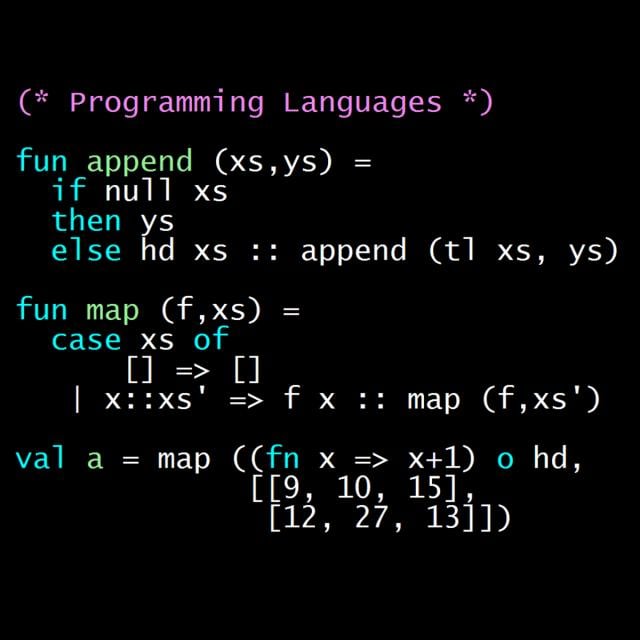
This course is an introduction to the basic concepts of programming languages, with a strong emphasis on functional programming. The course uses the languages ML, Racket, and Ruby as vehicles for teaching the concepts, but the real intent is to teach enough about how any language “fits together” to make you more effective programming in any language -- and in learning new ones.

Oct 5th 2026
5-12 Weeks
Learn Imba (Coursera) Coursera
Scrimba

Learn Imba (Coursera)

In this class, you'll dive into Imba, the programming language used to build scrimba.com. Imba, a compile-to-JavaScript language, packs a punch with nifty features for whipping up web apps, including built-in tags and styles. We'll cover the ABCs of Imba syntax and work on creating a Dopamine Box app. By the finish line, you'll be armed with the skills to construct your very own web app UI using Imba.

Oct 12th 2026
1 Week
Kotlin for Java Developers (Coursera) Coursera
JetBrains

Kotlin for Java Developers (Coursera)

The Kotlin programming language is a modern language that gives you more power for your everyday tasks. Kotlin is concise, safe, pragmatic, and focused on interoperability with Java code. It can be used almost everywhere Java is used today: for server-side development, Android apps, and much more. This course aims to share with you the power and the beauty of Kotlin.

Oct 12th 2026
5-12 Weeks
Computer Science: Algorithms, Theory, and Machines (Coursera) Coursera
Princeton University

Computer Science: Algorithms, Theory, and Machines (Coursera)

This course introduces the broader discipline of computer science to people having basic familiarity with Java programming. It covers the second half of our book Computer Science: An Interdisciplinary Approach (the first half is covered in our Coursera course Computer Science: Programming with a Purpose, to be released in the fall of 2018). Our intent is to demystify computation and to build awareness about the substantial intellectual underpinnings and rich history of the field of computer science.

Oct 5th 2026
5-12 Weeks
Persistent Memory Technology - Introduction and Deployment (Coursera) Coursera
EDUCBA

Persistent Memory Technology - Introduction and Deployment (Coursera)

Embark on a dynamic learning journey through this course. In the first module, explore the intricacies of Persistent Memory (PMEM), unraveling its fundamental concepts, characteristics, and operating system support. Transition seamlessly into the second module, mastering transactional concepts, optimizing hardware configurations, and discerning between volatile and persistent libraries. In the final module, dive into advanced programming with libpmemobj, overcoming C++ Standard limitations, and applying insights to real-world scenarios like building a phonebook.

Oct 12th 2026
3 Weeks
Web Application Development: Basic Concepts (Coursera) Coursera
University of New Mexico

Web Application Development: Basic Concepts (Coursera)

This is the first course in a Coursera Specialization track involving Web Application Architectures. This course will give you the basic background, terminology and fundamental concepts that you need to understand in order to build modern full stack web applications. A full stack web developer is familiar with each "layer" of the software technologies involved in a web application, including data modeling and database technologies, the web server environment and middleware components, network protocols, the user interface and basic visual design and user interaction concepts.

Oct 12th 2026
5-12 Weeks