Climate Change, Sustainability, and Global Public Health (Coursera)

Climate Change, Sustainability, and Global Public Health (Coursera)

The third course of the Impacts of the Environment on Global Public Health specialization will introduce you to two major environmental health challenges facing the world today. The first is climate change –the preeminent threat to public health today, and a threat that will impact every human and ecosystem on the planet.

Class Deals by MOOC List - Click here and see Coursera's Active Discounts, Deals, and Promo Codes.

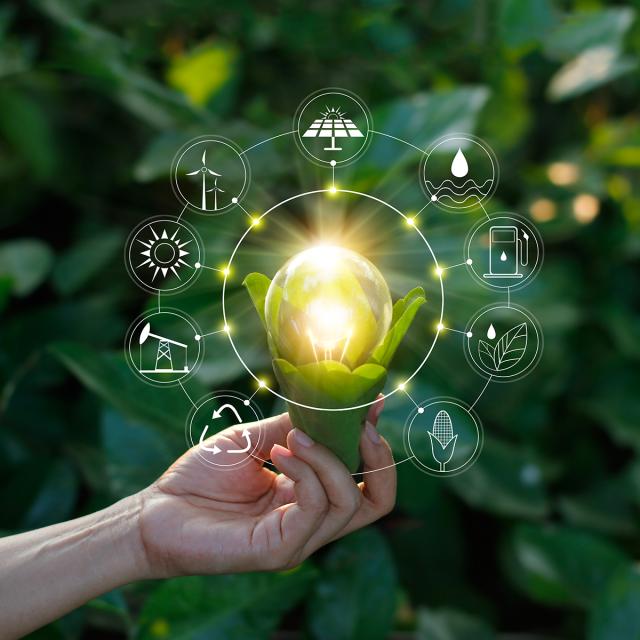
We will evaluate the causes and impacts of climate change, as well as policies and approaches that can be used to reduce the impacts of climate change on human health. The second is sustainability, a concept that can be applied to reduce the impacts of human activities on the environment as well as human health. We will explore different sustainability frameworks, as well as the effects of different energy generation sources on the environment and public health.
This course is part of the Impacts of the Environment on Global Public Health Specialization.

Syllabus

Week 1: Impacts of Climate Change
Welcome to Week 1! We start this week with an orientation to the course and our learning community. Then, we start our course by covering what is arguably the most important challenge facing humankind today: climate change. Let’s find out how climate change impacts our environment and what we can do about it in the Week 1 module.

Week 2: Responding to Climate Change
Climate change is not a hoax or just a theory. Despite the different political views on the subject, the scientific evidence is conclusive: our climate is changing, and not for the better. The real challenge is identifying and implementing responses to climate change. In other words, what could be done today, what can be done tomorrow, and what can be done in the future? Let’s find out how we can mitigate and adapt to climate change, and more, in the Week 2 module.

Week 3: Sustainability
Energy use and consumption have adverse impacts on climate change. The golden solution is to develop sustainable energy resources and incorporate sustainable practices into our daily lives. Let’s find out how to do so, and more, in the Week 3 module.

Week 4: Climate Change Case Peer-Review Assignment
We have seen throughout this course that climate change is the preeminent threat to public health, with substantial impacts at all levels, and that we need to increase sustainability in our lives. Now, with your peers, it is your opportunity to develop the skill of evaluating policies or regulations intended to reduce environmental impacts on human health from climate change, or to increase sustainability. Let’s find out more about this in the Week 4 module - the last of the course.

Go to Class
MOOC List is learner-supported. When you buy through links on our site, we may earn an affiliate commission.

Related Courses

Interventions and Calibration (Coursera) Coursera
Imperial College London

Interventions and Calibration (Coursera)

This course covers approaches for modelling treatment of infectious disease, as well as for modelling vaccination. Building on the SIR model, you will learn how to incorporate additional compartments to represent the effects of interventions, such the effect of vaccination in reducing susceptibility. You will learn about ‘leaky’ vaccines and how to model them, as well as different types of vaccine and treatment effects.

Jun 1st 2026
4 Weeks
Public Involvement in Research (Coursera) Coursera
Imperial College London

Public Involvement in Research (Coursera)

This course focuses on participatory approaches in research, known as 'public involvement' in the UK. You'll specifically, consider why citizens and patients would be involved in research and explore participatory approaches across and within the research cycle in more detail, diving into questions such as: What kinds of participation can be undertaken at each of the 7 stages of the cycle? How can you utilise participation in research? What examples of using participatory approaches exist in research?

Jun 3rd 2026
4 Weeks
Managing Responsibly: Practicing Sustainability, Responsibility and Ethics (Coursera) Coursera
University of Manchester

Managing Responsibly: Practicing Sustainability, Responsibility and Ethics (Coursera)

Managers are increasingly confronted with issues of sustainability, responsibility and ethics. Managing responsibly is an integrative approach to sustainability, responsibility and ethics, which allows you as a manager to deal competently with such challenges. This course will facilitate your learning process to engage in changing practices to make them more sustainable, responsible, and ethically informed.

Jun 1st 2026
5-12 Weeks
Villes africaines: Environnement et enjeux de développement durable (Coursera) Coursera
École Polytechnique Fédérale de Lausanne

Villes africaines: Environnement et enjeux de développement durable (Coursera)

Le cours propose une lecture de l’environnement urbain en Afrique à travers les thématiques les plus pertinentes pour mesurer le niveau de développement d’un pays : eau et vie urbaine, assainissement (eaux usées et pluviales), gestion des déchets solides, agriculture urbaine. Après avoir analysé les différents enjeux de celles-ci, nous aborderons les liens entre environnement urbain et santé.

Jun 1st 2026
5-12 Weeks
Sustentabilidad y Economías Sociales (Coursera) Coursera
Universidad de Chile

Sustentabilidad y Economías Sociales (Coursera)

En los últimos años el fenómeno del Emprendimiento con Sentido, la Innovación Social y la relevancia de la Sustentabilidad dan cuenta de la imperiosa necesidad de modernizar los esquemas de gestión de empresas y adaptarlos a una realidad cambiante, modificando paradigmas hacia las nuevas economías enfocadas en un desarrollo sustentable.

Jun 1st 2026
5-12 Weeks
Capstone: Creating A Sustainability Proposal (Coursera) Coursera
University of Colorado System

Capstone: Creating A Sustainability Proposal (Coursera)

Congratulations on reaching the Capstone Class of the Become a Sustainable Business Change Agent specialization. The class will help you apply material from the previous three classes. We have developed a case about a hypothetical ski resort that offers lots of opportunities to develop sustainability recommendations. A second option is do develop a proposal for a change in your company or organization. Or you can do both the case and your own proposal.

Jun 1st 2026
3 Weeks
Our Energy Future (Coursera) Coursera
University of California, San Diego

Our Energy Future (Coursera)

This course is designed to introduce students to the issues of energy in the 21st century – including food and fuels – which are inseparably linked – and will discuss energy production and utilization from the biology, engineering, economics, climate science, and social science perspectives. This course will cover the current production and utilization of energy, as well as the consequences of this use, examining finite fossil energy reserves, how food and energy are linked, impacts on the environment and climate, and the social and economic impacts of our present energy and food production and use.

Jun 1st 2026
5-12 Weeks
Foundations of Public Health Practice: Health Protection (Coursera) Coursera
Imperial College London

Foundations of Public Health Practice: Health Protection (Coursera)

The Health Protection course is the fourth instalment of the wider Foundations of Public Health Practice specialisation from Imperial College London's Global Master of Public Health (MPH). The scope and content of this course has been developed from the ground up by a combined team of academics and practitioners drawing on decades of real-world public health experience as well as deep academic knowledge. Through short video lectures, practitioner interviews and a wide range of interactive activities, learners will be immersed in the world of public health practice.

Jun 1st 2026
3 Weeks
Science of Exercise (Coursera) Coursera
University of Colorado Boulder

Science of Exercise (Coursera)

Learners who complete Science of Exercise will have an improved physiological understanding of how your body responds to exercise, and will be able to identify behaviors, choices, and environments that impact your health and training. You will explore a number of significant adjustments required by your body in order to properly respond to the physical stress of exercise, including changes in carbohydrate, fat and protein metabolism, nutritional considerations, causes of muscle soreness & fatigue, and the effectiveness and dangers of performance enhancing drugs.

Jun 1st 2026
4 Weeks
Electric Industry Operations and Markets (Coursera) Coursera
Duke University

Electric Industry Operations and Markets (Coursera)

This is a two week course. In the first week you will learn about the core activities that the Industry executes to bring electricity to customers. We will review what electricity is, how it is generated, how it is transmitted, how it comes into buildings, and how consumption of electricity instantly feeds back on the transmission and generation of electricity.

Jun 1st 2026
2 Weeks
International Women's Health and Human Rights (Coursera) Coursera
Stanford University

International Women's Health and Human Rights (Coursera)

This course focuses on women’s health and human rights issues from infancy through old age, including information about positive interventions relating to those issues. Learners are encouraged to interact with each other through interactive discussions. It is important to us that this course be available to all learners. We encourage you to apply for Coursera's financial aid (see link to left) if the cost of the course certificate is difficult for you to afford. Please note that you may view all materials in this course, and participate in it, without purchasing a certificate.

Jun 1st 2026
5-12 Weeks
Opioid Epidemic: From Evidence to Impact (Coursera) Coursera
Johns Hopkins University

Opioid Epidemic: From Evidence to Impact (Coursera)

While prescription opioids serve an invaluable role for the treatment of cancer pain and pain at the end of life, their overuse for acute and chronic non-cancer pain as well as the increasing availability of heroin and illicit fentanyl, have contributed to the highest rates of overdose and opioid addiction in U.S. history. Evidence-informed solutions are urgently needed to address these issues and to promote high-quality care for those with pain. This course and the report it is based on are a response to that need. They offer timely information and a path forward for all who are committed to addressing injuries and deaths associated with opioids in the United States.

Jun 1st 2026
4 Weeks