Climate Change in Four Dimensions (Coursera)

Climate Change in Four Dimensions (Coursera)

This course views climate change from a variety of perspectives at the intersection of the natural sciences, technology, and the social sciences and humanities.

Class Deals by MOOC List - Click here and see Coursera's Active Discounts, Deals, and Promo Codes.

This course views climate change from a variety of perspectives at the intersection of the natural sciences, technology, and the social sciences and humanities.
Specific topics included are:

  • the scientific basis for human-induced climate change, including uncertainties and controversies, the historical context for identifying the climate problem, links to other issues such as air pollution, and the evidence for extreme as well as irreversible climate changes;
  • communication and social responses to the scientific evidence, including the role of science in the media;
  • assessment of climate impacts and adaptive management; and
  • mitigation of emissions, including the design of national policy instruments, the roles of market failures such as in technological innovation, and the role of institutions in managing international collective action.
Note: This course is currently not available.

Related Courses

African development – from the past to the present (Coursera) Coursera
Lund University

African development – from the past to the present (Coursera)

African development – from the past to the present -- offers a unique economic history perspective on Africa's development. Over a period of five weeks, the course covers a logical account of historical events and decisions that have shaped the current political-economical landscape of Sub-Saharan Africa - from the pre-colonial and the colonial era, to the era of liberalisation, modern day Africa and the future prospects of the continent.

Nov 16th 2026
5-12 Weeks
Quantitative Methods (Coursera) Coursera
University of Amsterdam

Quantitative Methods (Coursera)

Discover the principles of solid scientific methods in the behavioral and social sciences. Join us and learn to separate sloppy science from solid research! This course will cover the fundamental principles of science, some history and philosophy of science, research designs, measurement, sampling and ethics. The course is comparable to a university level introductory course on quantitative research methods in the social sciences, but has a strong focus on research integrity. We will use examples from sociology, political sciences, educational sciences, communication sciences and psychology.

Nov 9th 2026
5-12 Weeks
Cities are back in town : urban sociology for a globalizing urban world (Coursera) Coursera
Sciences Po

Cities are back in town : urban sociology for a globalizing urban world (Coursera)

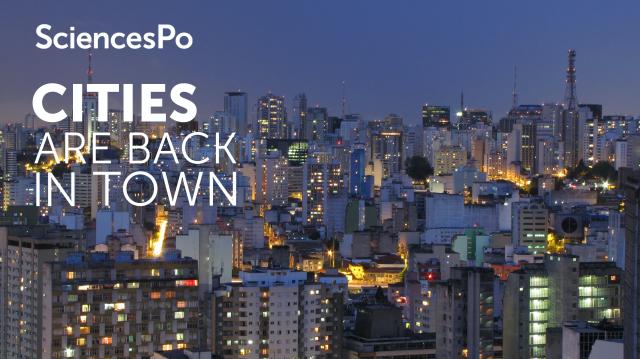
Urbanization is reaching a new peak in the contemporary world with the rise of mega cities. Researchers try to make sense of these large urban areas using a variety of concepts. The class will review debates and present social science models of cities to analyse and compare contemporary developments. The class will review debates and present social science models of cities and metropolis to analyse and compare contemporary developments.

Nov 16th 2026
5-12 Weeks
The Worldview of Thomas Berry: The Flourishing of the Earth Community (Coursera) Coursera
Yale University

The Worldview of Thomas Berry: The Flourishing of the Earth Community (Coursera)

Thomas Berry (1914-2009) was a historian of world religions and an early voice awakening moral sensibilities to the environmental crisis. He is known for articulating a “new story” of the universe that explores the implications of the evolutionary sciences and cultural traditions for creating a flourishing future. This course investigates Berry’s life and thought in relation to the Journey of the Universe project.

Nov 9th 2026
5-12 Weeks
AstroTech: The Science and Technology behind Astronomical Discovery (Coursera) Coursera
University of Edinburgh

AstroTech: The Science and Technology behind Astronomical Discovery (Coursera)

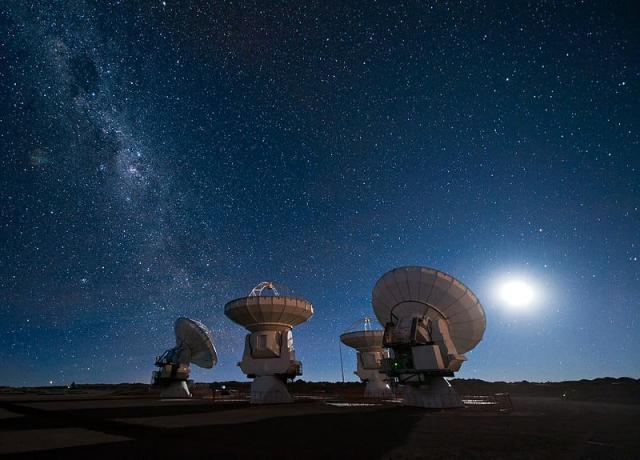
Modern astronomy has made some astonishing discoveries - how stars burn and how black holes form; galaxies from the edge of the universe and killer rocks right next door; where the elements come from and how the expanding universe is accelerating. But how do we know all that? The truth is that astronomy would be impossible without technology, and every advance in astronomy is really an advance in technology. But the technology by itself is not enough. We have to apply it critically with a knowledge of physics to unlock the secrets of the Universe.

Nov 16th 2026
5-12 Weeks
Introduction to the Arctic: Climate (Coursera) Coursera
University of Alberta

Introduction to the Arctic: Climate (Coursera)

The University of Alberta, the University of Tromso and the University of the Arctic invite you to explore this four week course that examines the environment and climate of the circumpolar North. This course is the result of an international collaboration and provides you with an insight into our planet's North. Following an overview of regional geography, we will focus on the cryosphere (ice), as well as the atmosphere and ocean of the region.

Nov 16th 2026
4 Weeks
What future for education? (Coursera) Coursera
University of London,UCL Institute of Education

What future for education? (Coursera)

Through this course you will start to critically examine your own ideas about education, teaching and learning. The critique will be developed through engagement with theories and ideas developed through educational research. You will be encouraged to use these ideas to challenge or support your own ideas about education. Each week we will focus on one key question, using video lectures, key readings and challenges to explore some commonplace notions about education.

Nov 9th 2026
5-12 Weeks
Science and Technology in the Silla Cultural Heritage (Coursera) Coursera
Pohang University of Science and Technology - POSTECH

Science and Technology in the Silla Cultural Heritage (Coursera)

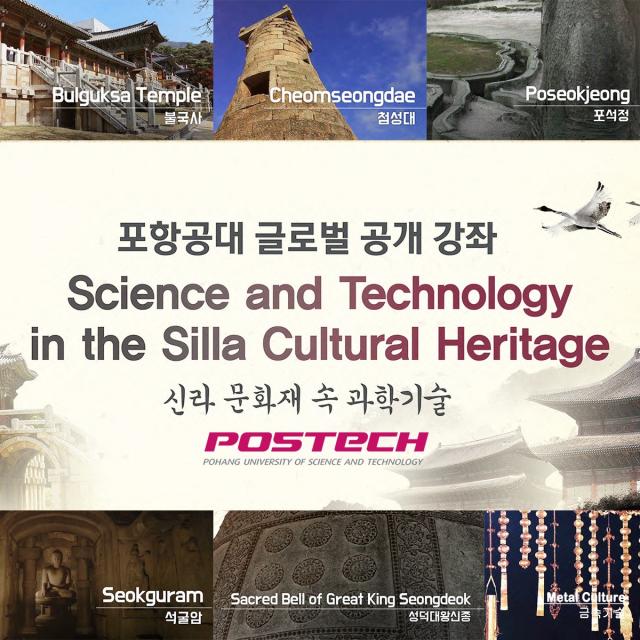
Science and Technology in the Silla Heritage. The course explores the scientific and technological aspects of the cultural heritage of Silla, an ancient dynasty in Korea, and its relationship with other ancient civilizations in the world. The lecture series will cover major cultural heritage of Silla: Bulguksa, Seokguram, Cheomseongdae, Poseokjeong, the Sacred Bell of Great King Seongdeok, and metallurgy.

Nov 16th 2026
5-12 Weeks
Refugees in the 21st Century (Coursera) Coursera
University of London

Refugees in the 21st Century (Coursera)

This MOOC provides insight into the refugee phenomenon as one of the most complex, compelling and (arguably) misunderstood features of the 21st century. Taking a global perspective, it will outline the fundamentals of who ‘refugees’ are, where they come from and where they go, as well as delving into the features of the global system for refugee protection and ‘solutions’ for those who have been forcibly displaced.

Nov 16th 2026
5-12 Weeks
Foundations of Teaching for Learning: Developing Relationships (Coursera) Coursera
Commonwealth Education Trust

Foundations of Teaching for Learning: Developing Relationships (Coursera)

The Foundations of Teaching for Learning programme is for anyone who is teaching, or who would like to teach, in any subject and any context - be it at school, at home or in the workplace. With dynamic lessons taught by established and respected professionals from across the Commonwealth, this eight course programme will see you develop and strengthen your skills in teaching, professionalism, assessment, and more. As you carry on through the programme, you will find yourself strengthening not only your skills, but your connection with colleagues across the globe. A professional development opportunity not to be missed.

Nov 16th 2026
5-12 Weeks
Copyright for Educators & Librarians (Coursera) Coursera
Duke University,Emory University,University of North Carolina at Chapel Hill

Copyright for Educators & Librarians (Coursera)

Fear and uncertainty about copyright law often plagues educators and sometimes prevents creative teaching. This course is a professional development opportunity designed to provide a basic introduction to US copyright law and to empower teachers and librarians at all grade levels. Course participants will discover that the law is designed to help educators and librarians.

Nov 9th 2026
5-12 Weeks