Refugees in the 21st Century (Coursera)

Offered by University of London,
Refugees in the 21st Century (Coursera)

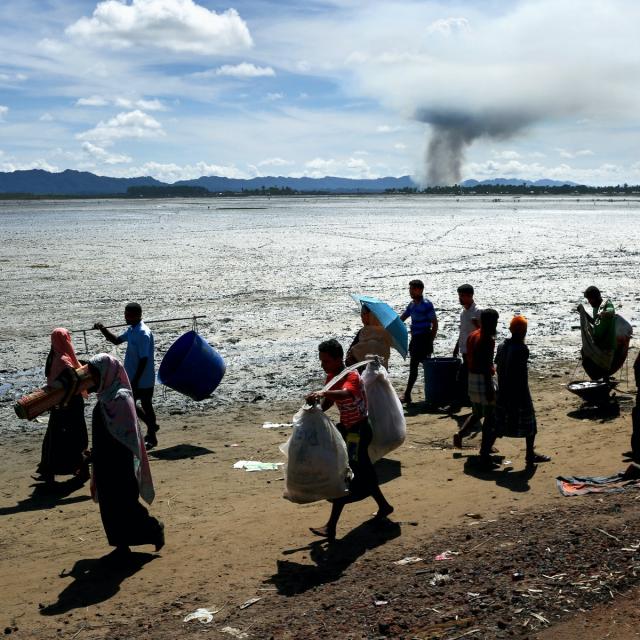
This MOOC provides insight into the refugee phenomenon as one of the most complex, compelling and (arguably) misunderstood features of the 21st century. Taking a global perspective, it will outline the fundamentals of who ‘refugees’ are, where they come from and where they go, as well as delving into the features of the global system for refugee protection and ‘solutions’ for those who have been forcibly displaced.

Class Deals by MOOC List - Click here and see Coursera's Active Discounts, Deals, and Promo Codes.

It places the student at the centre of the learning experience through engagement with a range of robust and challenging activities, materials and online peer engagement.

Syllabus

WEEK 1
Course Introduction and 'A world of refugees'
This MOOC provides insight into the refugee phenomenon as one of the most complex, compelling and (arguably) misunderstood features of the 21st century. Taking a global perspective, it will outline the fundamentals of who ‘refugees’ are, where they come from and where they go, as well as delving into the features of the global system for refugee protection and ‘solutions’ for those who have been forcibly displaced. It places the student at the centre of the learning experience through engagement with a range of robust and challenging activities, materials and online peer engagement. This course has been developed by the Refugee Law Initiative at the renowned School of Advanced Study of the University of London, one of the leading research institutions working on refugee protection and forced migration studies. Please review the Course Introduction video and activities and then proceed to our first weekly lesson: 'A world of refugees'.

WEEK 2
Who is a refugee?
This session addresses the paramount question of who is a refugee. The concept of a ‘refugee’ can be interpreted in several ways. The session shows that, alongside the ‘everyday’ meaning of the term, the global refugee regime established by the international community also uses a ‘specialised’ technical understanding of the term. The session asks you to think how that technical term might be applied by governments and others in practice to different situations when deciding who qualifies as a ‘refugee’ deserving protection by the international community.This week we will be looking to explore the following areas: key aspects of what we mean when we use the term ‘refugee’; comparisons between the technical definition of a ‘refugee’ and everyday use of this term; key features of the technical ‘refugee’ definition in the 1951 Refugee Convention, and; ‘asylum seeker’ as a non-technical term merely for persons seeking to have their refugee status recognised.

WEEK 3
The global 'system' of refugee protection
In today’s world, there exists a ‘global system’ for responding to refugee arrivals. This session introduces you to two of the main features of this system: the 1951 Refugee Convention as the ‘cornerstone’ of refugee protection standards globally; and the Office of the United Nations High Commissioner for Refugees (UNHCR) as the global actor charged with the role of refugee protection by the international community. You are asked to reflect on the continuing relevance of this system, established in the middle of the 20th century, in the shifting contexts of the 21st century.This week we will be looking to explore the following areas: the global ‘system’ created by States for refugee protection; the main features of its legal ‘cornerstone’, the 1951 Refugee Convention, and; how the main institutional actor, UNHCR, fulfils its role in today’s world.

WEEK 4
Solving the 'refugee problem'
With forced displacement at such high levels, a crucial component of the refugee protection regime is finding durable, long-lasting solutions for refugees and displaced persons. This session introduces you to the three core ‘durable solutions’ for refugees: voluntary repatriation, local integration and resettlement. You will examine the similarities and differences between these forms of durable solution, and the challenges that lack of solutions in practice pose for refugees around the world. This week we will be looking to explore the following areas: the concept of ‘solutions’ for refugees as the end of refugee status; the similarities and differences between the three main ‘durable solutions’ for refugees, and; the process and challenges of (lack of) solutions in a real-life case study.

WEEK 5
Refugees as migrants
For a variety of reasons, some refugees move on from their first country or region of asylum to more geographically distant locations. Looking particularly at the European ‘crisis’ of 2015, this session explores the patterns and drivers of such refugee ‘mobility’ and how refugees undertaking these migratory journeys can get caught up in broader efforts to prevent or discourage irregular migration. This week we will be looking to explore the following areas: debates about the extent to which refugees are ‘migrants’; Government strategies to deter immigration and their impact on refugees, and; a case study of secondary movements and deterrence strategies.

WEEK 6
Only the tip of the ‘forced migration’ iceberg
Refugees are not the only kind of forced migrants. Indeed, they represent only the tip of the iceberg so far as the wider universe of forced migrants in the 21st century is concerned. This session asks you to consider two of these other kinds of forced migrants lacking the protection of a State: stateless persons; and ‘internally displaced persons’ (IDPs). It focuses particularly on the similarities and differences between refugees and IDPs globally, including an assessment of the main protection challenges facing IDPs globally today. This week we will be looking to explore the following key areas: the wider range of forced migrants, including stateless persons, IDPs etc.; similarities and differences between refugees and conflict-IDPs globally, and; protection challenges in situations of internal displacement.
Go to Class
MOOC List is learner-supported. When you buy through links on our site, we may earn an affiliate commission.

Related Courses

Design Thinking for the Greater Good: Innovation in the Social Sector (Coursera) Coursera
University of Virginia

Design Thinking for the Greater Good: Innovation in the Social Sector (Coursera)

Do you work for a nonprofit or in the social sector? Are you struggling to solve the problems and meet the needs of the people you serve? Come learn more about how design thinking, a human-centered approach to problem solving, can help you truly understand an issue, generate ideas worth testing and iterate to find solutions that make a real difference. Through global stories from areas as diverse as government, health care, and education, we’ll show you the tools, techniques and mindset needed to use design thinking to uncover new and creative solutions in the social sector.

Aug 3rd 2026
4 Weeks
Arctic Economy (Coursera) Coursera
University of Alberta,UiT The Arctic University of Norway

Arctic Economy (Coursera)

Arctic communities have diverse histories and roles in local, regional and global economies. However, the scope and scale of globalization has increased so quickly that vulnerable Arctic communities are facing new kinds of challenges to their survival. In this 3-week MOOC, a unique collaboration between the University of Alberta and UiT The Arctic University of Norway, you will investigate the challenges faced by Indigenous, North American, Russian and Nordic Arctic communities in a modern world. So join us as we venture above the 60th parallel North, and explore how these fascinating communities adjust to change while maintaining their ways of life, socio-economic histories, and cultural traditions.

Aug 17th 2026
4 Weeks
Literacy Teaching and Learning: Aims, Approaches and Pedagogies (Coursera) Coursera
University of Illinois at Urbana-Champaign

Literacy Teaching and Learning: Aims, Approaches and Pedagogies (Coursera)

This course opens with an exploration of the social context and aims of literacy teaching and learning. It goes on to describe a range of historical and contemporary approaches to literacy pedagogy, including didactic, authentic, functional, and critical approaches. The course takes has a 'Multiliteracies' perspective, which aims to expand the definition of literacy to encompass today's multimodal communications, and the diversity of literacies across different social and culltural contexts.

Aug 10th 2026
4 Weeks
Foundations of Teaching for Learning: Introduction to Student Assessment (Coursera) Coursera
Commonwealth Education Trust

Foundations of Teaching for Learning: Introduction to Student Assessment (Coursera)

The Foundations of Teaching for Learning programme is for anyone who is teaching, or who would like to teach, in any subject and any context - be it at school, at home or in the workplace. With dynamic lessons taught by established and respected professionals from across the Commonwealth, this eight course programme will see you develop and strengthen your skills in teaching, professionalism, assessment, and more. As you carry on through the programme, you will find yourself strengthening not only your skills, but your connection with colleagues across the globe. A professional development opportunity not to be missed.

Jul 27th 2026
5-12 Weeks
After the Arab Spring – Democratic Aspirations and State Failure (Coursera) Coursera
University of Copenhagen

After the Arab Spring – Democratic Aspirations and State Failure (Coursera)

Learn why the hope and excitement of the Arab Spring is gone, why so many Arab states are falling apart, why the youth are so frustrated, why there are so many refugees, and what can be done about it. The so-called Arab Spring appeared to end decades of exceptionalism and bring the Arab world back into the mainstream of global developments. The rebellions promised the return of politics and the reassertion of popular sovereignty against their corrupt and geriatric leaders. Much hope and flowery language greeted the young men and women who deposed their leaders and tried to build new, better societies.

Aug 3rd 2026
5-12 Weeks
Introduction to the Orbital Perspective (Coursera) Coursera
University of Florida,University of Arizona,Drexel University

Introduction to the Orbital Perspective (Coursera)

The goals of this course are to develop the student’s critical thinking skills, global awareness, and ability to work as an integral part of a team in an increasingly complex global job market. The course provides a foundation in such skills as team building, collaboration, and elevated empathy using real-world scenarios from some of world’s most effective collaborative projects including the Earthrise-2068 Project.

Aug 17th 2026
5-12 Weeks
Diversity and Inclusion in Education (Coursera) Coursera
University of Glasgow

Diversity and Inclusion in Education (Coursera)

Student diversity is becoming the rule rather than the exception in education systems across the world. Students bring to classroom different characteristics such as ability and disability, socio-economic background, race, ethnicity, and cultural background, beliefs and religion, and gender characteristics. The United Nations’ Sustainable Development Goal 4 aims to ensure inclusive and equitable quality education and promote lifelong learning opportunities for all (United Nations, 2015).

Aug 10th 2026
4 Weeks
Chemerinsky on Constitutional Law - The Structure of Government (Coursera) Coursera
University of California, Irvine

Chemerinsky on Constitutional Law - The Structure of Government (Coursera)

This course will highlight the construction and interpretation of the U.S. Constitution through the centuries. You'll learn the history behind the Constitution, cases that formed important precedent, and how changes in interpretation have been dependent on shifts in cultural and political climate as well as the composition of the Supreme Court.

Aug 17th 2026
5-12 Weeks
ADHD: Everyday Strategies for Elementary Students (Coursera) Coursera
University at Buffalo,The State University of New York

ADHD: Everyday Strategies for Elementary Students (Coursera)

This course will provide an overview of ADHD diagnosis and treatment. Course participants can expect to learn about ADHD as a developmental disorder that begins early in childhood, and participants will also learn about evidence-based approaches for diagnosing ADHD. Following that, two evidence-based treatment approaches (the Daily Report Card and Parenting Strategies) will be introduced. (Note these course activities are informational and are not intended to replace working with a licensed/trained professional).

Aug 3rd 2026
4 Weeks
Ethical Social Media (Coursera) Coursera
The University of Sydney

Ethical Social Media (Coursera)

Social media connects us across space and time, allowing us to find like-minded communities and participate creatively in public life as never before. We may often use social media without thinking much about the possible consequences. But there is a shadow side associated with social media use, which takes the form of hate speech, increased surveillance, lack of anonymity and questionable use of our data. What do we need to know to use social media spaces effectively, in a way that is safe and productive for all?

Aug 10th 2026
5-12 Weeks
Introduction to Economic Theories (Coursera) Coursera
Erasmus University Rotterdam

Introduction to Economic Theories (Coursera)

Wondering why economists have not predicted serious financial crises? Shocked by economic assumptions of human behavior as self-centered and focusing only on what can be measured? Asking yourself if there are no sensible economic alternatives to free markets? Then you are at the right place to learn economics! This is the first online course that teaches economics from a pluralist perspective. Economic pluralism means that a plurality of theoretical and methodological viewpoints is regarded as valuable in itself and is simply the best way in which economics can make progress in understanding the world.

Aug 3rd 2026
5-12 Weeks
Game Theory II: Advanced Applications (Coursera) Coursera
Stanford University,The University of British Columbia

Game Theory II: Advanced Applications (Coursera)

Popularized by movies such as "A Beautiful Mind", game theory is the mathematical modeling of strategic interaction among rational (and irrational) agents. Over four weeks of lectures, this advanced course considers how to design interactions between agents in order to achieve good social outcomes. Three main topics are covered: social choice theory (i.e., collective decision making and voting systems), mechanism design, and auctions.

Jul 27th 2026
5-12 Weeks