Chemical Engineering: Shaping a Sustainable Future (FutureLearn)

Offered by University of Leeds,
Chemical Engineering: Shaping a Sustainable Future (FutureLearn)

Learn how chemical engineering can help to solve global challenges and explore its role in delivering sustainable development. Understand how chemical engineers can provide sustainable solutions. Chemical engineers are leading the way in providing answers to global challenges such as climate change, food security, and effective healthcare. On this two-week course, you will be introduced to the exciting world of chemical engineering. You’ll explore how chemical engineers develop and design chemical manufacturing processes to provide sustainable solutions.

Class Deals by MOOC List - Click here and see FutureLearn's Active Discounts, Deals, and Promo Codes.

Discover sustainable energy solutions from renewable sources
You’ll be introduced to what chemical engineering is and the different ways it can help tackle climate change.
You’ll also explore how it can be used to promote renewable energy sources such as solar, wind power, and geothermal energy to secure a sustainable energy future across the world.

Explore how chemical engineering can promote food security
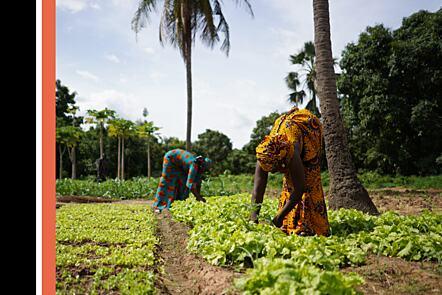
You will learn how chemical engineers optimise processes and improve fertilisers to ensure a more sustainable food supply.
You’ll then explore how they advocate new technologies such as the treatment of salt water to help tackle drinking water demands in times of drought.

Discover how chemical engineers are responsible for the future of healthcare products
You will understand vaccine development and how chemical engineers design and optimise the manufacturing process to produce vaccines that meet global demand.
You’ll then explore how digital design will lead to the development, manufacture, and delivery of high-quality personalised medicines which will revolutionise patient care.
By the end of the course, you will understand the importance of chemical engineering in every-day life and explore the huge range of career paths chemical engineers can take.

Syllabus

Week 1: Solving global challenges: Climate change
Week 2: Solving global challenges: Health

What will you achieve?
By the end of the course, you‘ll be able to...

  • Describe how chemical engineering can help tackle climate change
  • Explore a chemical engineer’s role in delivering a sustainable future for energy supply, food security and healthcare
  • Identify which United Nations’ Sustainable Development Goals (SDGs) chemical engineers are meeting to deliver a sustainable future
  • Explain the role of a chemical engineer in the development of personalised medicine
  • Identify the digital tools which chemical engineers use to produce personalised medicine
  • Compare the potential career choices of chemical engineers
  • Explore the chemical engineer’s role in producing household products.
Go to Class
MOOC List is learner-supported. When you buy through links on our site, we may earn an affiliate commission.

Related Courses

Nutrition for Health and Sustainability (FutureLearn) FutureLearn
EIT Food,EIT

Nutrition for Health and Sustainability (FutureLearn)

Learn what makes up a healthy, sustainable diet and how certain food types can help to treat and prevent disease. Explore the relationship between health, nutrition, and sustainability. Diet is the biggest single risk factor for preventable diseases in the world and a key driver of diabetes, heart disease, and other non-communicable diseases (NCDs). On this course, you’ll look at what makes up a healthy diet, and see what types of foods play a crucial part in preventing diseases and improving wellbeing.

Sep 4th 2023
3 Weeks
Sport for Sustainable Development: Designing Effective Policies and Programmes (FutureLearn) FutureLearn
The International Platform on Sport and Development,Commonwealth Secretariat,Australian Department of Foreign Affairs and Trade - DFAT

Sport for Sustainable Development: Designing Effective Policies and Programmes (FutureLearn)

Explore the ways in which sports can actively contribute to the advancements of the Sustainable Development Goals. Learn how to make a positive impact through sport. Sport has been recognised as an enabler of the Sustainable Development Goals (SDGs) by governments globally. Organisations worldwide are using sport to contribute to this agenda, addressing issues ranging from health and education to employment, and conflict resolution.

Self Paced
4 Weeks
Creating Ethical and Sustainable Cities at the Local Level (FutureLearn) FutureLearn
RMIT University,EIT Community

Creating Ethical and Sustainable Cities at the Local Level (FutureLearn)

See how frameworks for ethical and sustainable cities can be localised, fostering resilient cities for the future. Learn how you can contribute to the sustainable cities of tomorrow. It’s widely accepted that, as we look towards the future, we need to actively create cities that are ethical, sustainable, inclusive, and well-governed. To do this, we need to localise frameworks and principles such as the Sustainable Development Goals (SDGs), the European Green Deal and New European Bauhaus to make tangible differences. Knowing how to start this localisation can be daunting, which is why this course from RMIT is so valuable.

Self Paced
2 Weeks
Sustainable Cities: Governing Urban Adaptation Under Climate Change (FutureLearn) FutureLearn
University of Groningen,Global Center on Adaptation

Sustainable Cities: Governing Urban Adaptation Under Climate Change (FutureLearn)

Discover expert governance strategies for preparing urban areas to face the challenges posed by climate change. Learn how cities can successfully adapt to environmental change. In this course, you will investigate how governance strategies and policies for making cities more sustainable and resilient in the face of increasing climate risks can be financed and implemented.

Self Paced
3 Weeks
IUCN Red List of Ecosystems: The Global Standard for Assessing Risks to Ecosystems (FutureLearn) FutureLearn
Deakin University

IUCN Red List of Ecosystems: The Global Standard for Assessing Risks to Ecosystems (FutureLearn)

This course introduces the IUCN Red List of Ecosystems and its successful use and policy impact through real-world case studies. Learn how the Red List of Ecosystems is helping to sustain global biodiversity. Nature is under threat around the world. Understanding where ecosystems are at greatest risk allows us to act to sustain species and ecosystems.

Self Paced
2 Weeks
Renewable Energy: Sustainable Electricity Supply with Microgrids (FutureLearn) FutureLearn
University of Leeds

Renewable Energy: Sustainable Electricity Supply with Microgrids (FutureLearn)

Explore approaches to electrification, microgrids, and how to harness this form of renewable energy to achieve sustainability. Learn and assess different electrification approaches from around the world. On this two-week course, you will learn how electricity is generated globally and explore different approaches to electrification. You will then learn technical aspects of electrification options via a national grid, off grid, micro and mini grids and reflect on the barriers to affordable, clean and fair access to electricity.

Self Paced
2 Weeks
Upcycling: From Green Ideas to Starting a Business (FutureLearn) FutureLearn
MINCA,Hands of Honour

Upcycling: From Green Ideas to Starting a Business (FutureLearn)

Explore the concept of upcycling, its link to sustainable development, and how you can start your own upcycling business. Understand upcycling, how to make upcycling products and start up a company. Have you ever turned unwanted objects or waste materials into entirely new products? Upcycling is the ideal way to combine creative ideas with a passion for sustainability and entrepreneurship.

Self Paced
3 Weeks
Sustainability Through Film (FutureLearn) FutureLearn
INTO FILM

Sustainability Through Film (FutureLearn)

Engage and empower your students when teaching sustainability, using film analysis and basic filmmaking principles. Use film and filmmaking to provide meaningful lessons in sustainability. Film is an engaging way to reach young people on any topic or subject, bringing important topics to life and adding context to learning. With that in mind, Into Film presents this two-week course showing you how to teach learners aged 5 to 19 about sustainable practices using short films.

Self Paced
2 Weeks
Unleash Your Potential: Sustainable Futures (FutureLearn) FutureLearn
University of Bristol

Unleash Your Potential: Sustainable Futures (FutureLearn)

Learn about the sustainability challenges of the modern world, and make a positive contribution to society. Find out how to deal with world sustainability issues. United Nations (UN) countries have adopted a set of goals to end poverty, protect the planet and ensure prosperity for all. On this online course, you’ll learn about these UN Sustainable Development Goals, and the different roles people can play in creating a sustainable future.

Self Paced
4 Weeks
Exploring the World of Electric Mobility: Key Concepts and Strategies (FutureLearn) FutureLearn
RWTH Aachen,Transforming Urban Mobility Initiative - TUMI,GIZ,PEM Motion

Exploring the World of Electric Mobility: Key Concepts and Strategies (FutureLearn)

Explore concepts, policies, and innovations in electric mobility to help decarbonise and build more sustainable transport systems. Learn how e-mobility can help create sustainable cities. Electric mobility is crucial for making urban transport greener and more sustainable. But with recommendations and policies on electric vehicles evolving rapidly, it can be hard to know what’s what in the world of e-mobility. This six-week course from the Transformative Urban Mobility Initiative (TUMI) provides a comprehensive overview of issues relating to electric mobility.

Oct 7th 2024
5-12 Weeks