C Programming: Getting Started - 1 (Coursera)

C Programming: Getting Started - 1 (Coursera)

Start learning one of the most powerful and widely used programming languages: C. Within moments you will be coding hands-on in a browser tool that will provide instant feedback on your code. The C programming language is one of the most stable and popular programming languages in the world. It helps to power your smartphone, your car's navigation system, robots, drones, trains, and almost all electronic devices. C is used in any circumstances where speed and flexibility are important, such as in embedded systems or high-performance computing. In this course, you will get started with C and learn how to write your first programs, how to make simple computations and print the results to the screen, how to store values in variables and how to repeat instructions using loops.

Class Deals by MOOC List - Click here and see Coursera's Active Discounts, Deals, and Promo Codes.

Beginners, even those without any programming experience, will be able to immediately start coding in C with the help of powerful yet simple coding tools right within the web browser. No need to install anything!
Why learn C and not another programming language? Did you know that smartphones, your car’s navigation system, robots, drones, trains, and almost all electronic devices have some C-code running under the hood? C is used in any circumstance where speed and flexibility are important, such as in embedded systems or high-performance computing.
C is a foundational programming language taught at engineering schools around the world, and represents one of the building blocks of modern computer information technology. Invented in the 1970’s. It is still one of the most stable and popular programming languages in the world.
We are excited to introduce you to the world of coding and launch you along your path to becoming a skilled C programmer!
This is the first course in the C Programming with Linux Specialization. This series of seven courses will establish your programming skills and unlock doors to careers in computer engineering.
This course has received financial support from the Patrick & Lina Drahi Foundation.
Course 1 of 7 in the C Programming with Linux Specialization.

What You Will Learn

  • Define, distinguish and give examples of hardware/software, computer programs/algorithms
  • Explain the concept of a variable and declare, initialize and modify variables of data types int, double and char
  • Create and comment simple C-programs that may print text, special characters and variables to the screen with controlled formatting
  • Create simple C-programs that utilize for-loops to repeat blocks of instructions

Syllabus

Week 1: Welcome and the History of C
This week you will write your first line of code and become familiar with our learning tools (without installing anything!).

Week 2: Printing, loops, and comments
This week you will to print text to the screen, utilize for-loops, explain their code by adding comments in various ways, and recognize the different sections of a simple C-program and their purposes (e.g. variable declaration, main function).

Week 3: Integers, variables and user input
This week, you will explore the concept of variables and use integer-type variables (of format specifier %d) through declarations, assignments, and reassignments. You will also utilize these integer-type variables in for-loops and with user input.

Week 4: Characters and doubles
This week you will utilize variables of type integer, double, and character through declarations, assignments, reassignments, printing, converting between types, casting, etc.. You will also create C-programs that perform tasks involving user input, integer and floating point arithmetic operations, and output to the screen.
Concluding the course

Go to Class
MOOC List is learner-supported. When you buy through links on our site, we may earn an affiliate commission.

Related Courses

Computer Science: Algorithms, Theory, and Machines (Coursera) Coursera
Princeton University

Computer Science: Algorithms, Theory, and Machines (Coursera)

This course introduces the broader discipline of computer science to people having basic familiarity with Java programming. It covers the second half of our book Computer Science: An Interdisciplinary Approach (the first half is covered in our Coursera course Computer Science: Programming with a Purpose, to be released in the fall of 2018). Our intent is to demystify computation and to build awareness about the substantial intellectual underpinnings and rich history of the field of computer science.

Oct 5th 2026
5-12 Weeks
Applied Text Mining in Python (Coursera) Coursera
University of Michigan

Applied Text Mining in Python (Coursera)

This course will introduce the learner to text mining and text manipulation basics. The course begins with an understanding of how text is handled by python, the structure of text both to the machine and to humans, and an overview of the nltk framework for manipulating text. The second week focuses on common manipulation needs, including regular expressions (searching for text), cleaning text, and preparing text for use by machine learning processes. The third week will apply basic natural language processing methods to text, and demonstrate how text classification is accomplished. The final week will explore more advanced methods for detecting the topics in documents and grouping them by similarity (topic modelling).

Oct 12th 2026
4 Weeks
Basic Modeling for Discrete Optimization (Coursera) Coursera
University of Melbourne,The Chinese University of Hong Kong

Basic Modeling for Discrete Optimization (Coursera)

Optimization is a common form of decision making, and is ubiquitous in our society. Its applications range from solving Sudoku puzzles to arranging seating in a wedding banquet. The same technology can schedule planes and their crews, coordinate the production of steel, and organize the transportation of iron ore from the mines to the ports. Good decisions in manpower and material resources management also allow corporations to improve profit by millions of dollars.

Oct 12th 2026
4 Weeks
Principles of Computing (Part 2) (Coursera) Coursera
Rice University

Principles of Computing (Part 2) (Coursera)

This two-part course introduces the basic mathematical and programming principles that underlie much of Computer Science. Understanding these principles is crucial to the process of creating efficient and well-structured solutions for computational problems. To get hands-on experience working with these concepts, we will use the Python programming language. The main focus of the class will be weekly mini-projects that build upon the mathematical and programming principles that are taught in the class.

Oct 5th 2026
4 Weeks
Programming Languages, Part A (Coursera) Coursera
University of Washington

Programming Languages, Part A (Coursera)

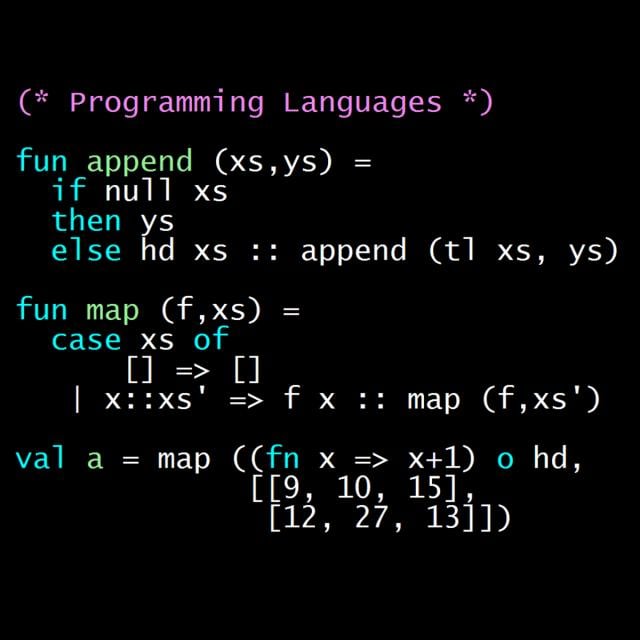
This course is an introduction to the basic concepts of programming languages, with a strong emphasis on functional programming. The course uses the languages ML, Racket, and Ruby as vehicles for teaching the concepts, but the real intent is to teach enough about how any language “fits together” to make you more effective programming in any language -- and in learning new ones.

Oct 5th 2026
5-12 Weeks
Programming Fundamentals (Coursera) Coursera
Duke University

Programming Fundamentals (Coursera)

Programming is an increasingly important skill, whether you aspire to a career in software development, or in other fields. This course is the first in the specialization Introduction to Programming in C, but its lessons extend to any language you might want to learn. This is because programming is fundamentally about figuring out how to solve a class of problems and writing the algorithm, a clear set of steps to solve any problem in its class.

Oct 5th 2026
4 Weeks
Problem Solving Using Computational Thinking (Coursera) Coursera
University of Michigan

Problem Solving Using Computational Thinking (Coursera)

Have you ever heard that computers "think"? Believe it or not, computers really do not think. Instead, they do exactly what we tell them to do. Programming is, "telling the computer what to do and how to do it." Before you can think about programming a computer, you need to work out exactly what it is you want to tell the computer to do. Thinking through problems this way is Computational Thinking. Computational Thinking allows us to take complex problems, understand what the problem is, and develop solutions. We can present these solutions in a way that both computers and people can understand.

Oct 12th 2026
5-12 Weeks
Introduction à la programmation orientée objet (en Java) (Coursera) Coursera
École Polytechnique Fédérale de Lausanne

Introduction à la programmation orientée objet (en Java) (Coursera)

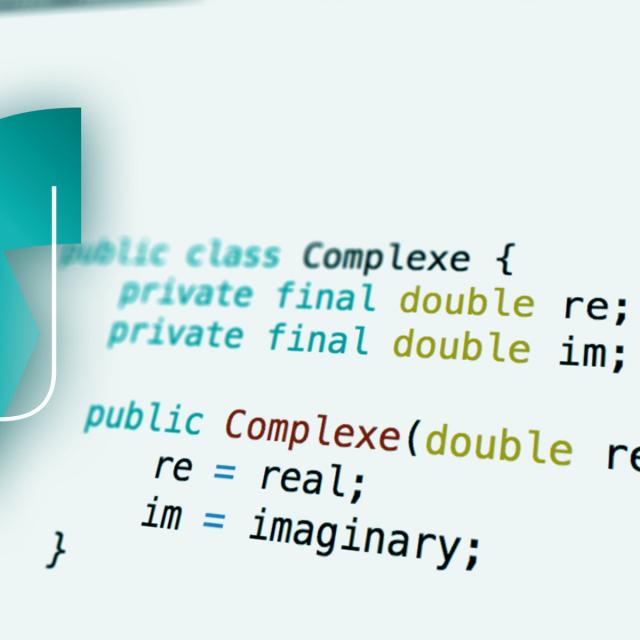
Ce cours introduit la programmation orientée objet (encapsulation, abstration, héritage, polymorphisme) en l'illustrant en langage Java. Il présuppose connues les bases de la programmation (variables, types, boucles, fonctions, ...). Il est conçu comme la suite du cours « Initiation à la programmation (en Java) ».

Oct 11th 2026
5-12 Weeks