Tibetan Buddhist Meditation and the Modern World: Lesser Vehicle (Coursera)

Tibetan Buddhist Meditation and the Modern World: Lesser Vehicle (Coursera)

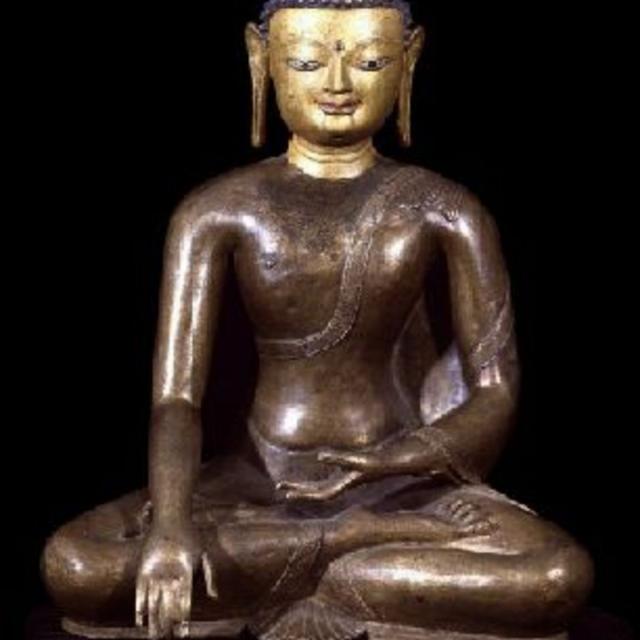
Tibetan Buddhist Meditation and the Modern World explores the immense variety of meditation practices past and present. We present their histories, their philosophical underpinnings, their transformations in the modern global world, and we give you a chance to reflect upon meditation practices through secular contemplations designed just for this course.

Class Deals by MOOC List - Click here and see Coursera's Active Discounts, Deals, and Promo Codes.

We use a traditional, if overly simplistic, way of grouping Buddhist philosophical systems and ritual-contemplative practices into “three vehicles”, three programs of theory and practice supporting the personal journey from suffering to enlightenment. This scheme became normative in India and Tibet: (i) the Lesser Vehicle (Hīnayāna), (ii) the Great Vehicle (Mahāyāna), and (iii) the Adamantine Vehicle (Vajrayāna), also referred to as “esoteric Buddhism” or “Buddhist tantra”. To this, we will add a fourth Vehicle which is explicit in many Tibetan materials, though no standard term ever emerged that was accepted by all sectarian traditions - we will thus term it as the “Natural Vehicle” or “Post Tantra”. We follow an indigenous Tibetan tradition in terms of characterizing each with a specific orientational paradigm - repression, refinement, transformation, and natural freedom. These twelve meditative traditions constitute the framework for the course’s discussion of the main streams of Tibetan Buddhist meditation.
The five modules of the present course, dedicated to "Lesser Vehicle" practices and perspectives, treat the first five of these twelve types. Each module in turn has four components: (i) the specific Buddhist meditation in its traditional presentation and practice; (ii) modern scientific research into its efficacy and dynamics, or on practices, principles, and processes related to this type of meditation in our analysis; (iii) the fact, problems, and opportunities of modern secular adaptations in a variety of educational, professional, and personal settings; and (iv) secular practices for experimentation, which are either direct adaptations or new practices designed to give an experiential sense of some of the principles underlying the Buddhist meditative practice.


Note: This course is currently not available.

Related Courses

Religious Transformation in Early China: the Period of Division (Coursera) Coursera
The Chinese University of Hong Kong

Religious Transformation in Early China: the Period of Division (Coursera)

This sequence of four courses will propose a multi-disciplinary approach to the study of Chinese cultural history conceived of as a succession of modes of rationality (philosophical, bureaucratic, and economic). The focus will be on the moments of paradigm shift from one mode of rationality to another. For each of these moments, cultural facts and artifacts—thought, literature, ritual—will be examined in relationship to changing social, political, and economic systems.

Jun 15th 2026
5-12 Weeks
Buddhism: Diamond Sutra and Zen Meditation (FutureLearn) FutureLearn
HKU School of Professional and Continuing Education

Buddhism: Diamond Sutra and Zen Meditation (FutureLearn)

Discover the secrets of the Diamond Sutra and learn how its Buddhist teachings promote living in serenity and ease. Explore the meaning of ‘prajñā-pāramitā’ in relation to attaining buddhahood. How can we resolve afflictions? The Diamond Sutra is one of the most historically important texts in Buddhism. On this course, you will explore the meaning of ‘prajñā-pāramitā’ from the Diamond Sutra. You will learn why and how the zen school uses the teachings of the Diamond Sutra to attain buddhahood.

Mar 25th 2024
5-12 Weeks
Religions From The Inside: Improving Interreligious Dialogue (FutureLearn) FutureLearn
Università della Svizzera italiana

Religions From The Inside: Improving Interreligious Dialogue (FutureLearn)

Explore the value of cooperation between faiths and learn how the five main world religions’ core beliefs relate to each other. Learn how to encourage and benefit from respectful interfaith dialogue. This short course, led by the Faculty of Theology of Lugano in collaboration with USI, will develop your knowledge of what interfaith dialogue means from a philosophical and epistemological point of view, and teach how to enjoy productive interfaith dialogue.

Oct 4th 2021
5-12 Weeks
China’s First Empires and the Rise of Buddhism (edX) EdX
HarvardX,Harvard University

China’s First Empires and the Rise of Buddhism (edX)

Learn about the Qin and Han dynasties, and how Buddhism and ideas of self-realization influenced the medieval period. This course, the second in a collection on Chinese history and culture, addresses how the Qin dynasty conquered China and established a new system of government and how the Han dynasty built a stable, centralized empire that lasted for hundreds of years. We cover the early history of Buddhism in China and how the rising feudal aristocracy responded to the loss of empire by looking inward.

Self Paced
Self-Paced
South Asian Religions & Ecology (Coursera) Coursera
Yale University

South Asian Religions & Ecology (Coursera)

At first glance the fields of religion and ecology may seem and unlikely pairing, but a deeper consideration reveals the two have a great deal to contribute to one another and are indeed inextricably linked. Religions recognize the unity and interdependence of humans with nature. Ecological sciences affirm this deep interconnection with the natural world. This partnership can inspire work for the wellbeing of the Earth community

Jul 6th 2026
5-12 Weeks
Soul Beliefs: Causes and Consequences - Unit 2: Belief Systems (Coursera) Coursera
Rutgers University

Soul Beliefs: Causes and Consequences - Unit 2: Belief Systems (Coursera)

Throughout history, the vast majority of people around the globe have believed they have, however defined, a “soul.” While the question of whether the soul exists cannot be answered by science, what we can study are the causes and consequences of various beliefs about the soul and its prospects of surviving the death of the body. Why are soul and afterlife beliefs so common in human history? Are there adaptive advantages to assuming souls exist?

Jul 6th 2026
5-12 Weeks
Creative Writing: The Craft of Setting and Description (Coursera) Coursera
Wesleyan University

Creative Writing: The Craft of Setting and Description (Coursera)

In this course aspiring writers will be introduced to the techniques that masters of fiction use to ground a story in a concrete world. From the most realist settings to the most fantastical, writers will learn how to describe the physical world in sharp, sensory detail. We will also learn how to build credibility through research, and to use creative meditation exercises to deepen our own understanding of our story worlds, so that our readers can see all that we imagine.

Jul 6th 2026
4 Weeks
Pensamiento Científico (Coursera) Coursera
Universidad Nacional Autónoma de México

Pensamiento Científico (Coursera)

¿El pensamiento científico es sólo para científicos? Su utilidad va mucho más allá, ayudando a las personas a tomar mejores decisiones todos los días. El objetivo de este curso es fomentar en pensamiento científico en los alumnos para ayudarles a tomar mejores decisiones profesionales, personales y sociales.

Jul 6th 2026
5-12 Weeks