EdX

Chinese Culture: Tradition (edX)

Chinese Culture: Tradition (edX)

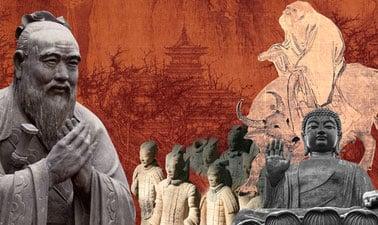
This compact course introduces 5 interesting aspects of traditional Chinese culture. They are (a) Confucianism, (b) Daoism, (c) Buddhism, (d) Sunzi's The Art of War and ancient Chinese warfare, and (e) the art of painting in the Song dynasty. This dynamic course forms part of the HKPolyUx series on Chinese culture.

Class Deals by MOOC List - Click here and see EdX's Active Discounts, Deals, and Promo Codes.

Owing to its rapid development in recent years, China has moved into the spotlight of the international arena. While understanding modern China's economy, technology and politics is important, knowing its cultural roots and evolution is no less crucial for seeing a full picture of Chinese culture. This course introduces 5 interesting aspects of traditional Chinese culture.

Key questions of the course
What was the origin of ancient Confucianism? How does ancient Confucian wisdom help us address the modern human predicament?
How does Daoism enlighten us with a butterfly and fish? What is the connection between Daoism and the equality of all living organisms?
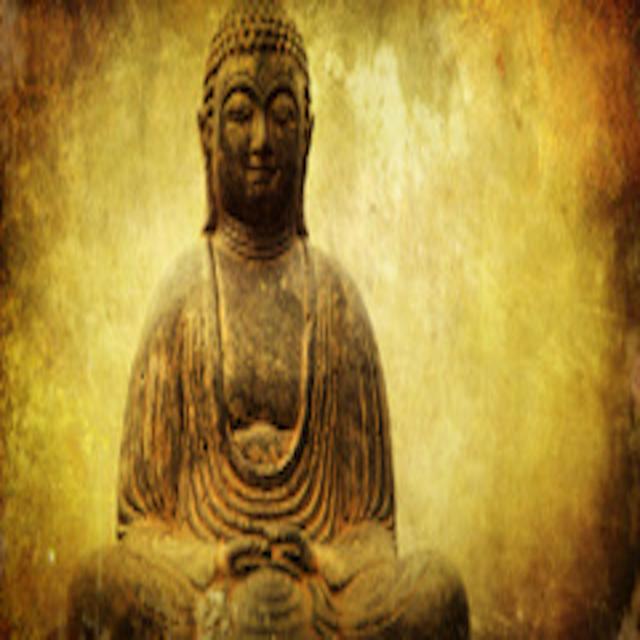
Why does Buddhism see our present lifetime to be nothing but suffering? How do the Four Noble Truths help liberate us from suffering?
What is special about Chinese ancient warfare? Who is Sunzi? What is his book The Art of War about? What can we learn from this famous book?
What are the main styles and themes of the paintings in the Song dynasty? Who were the famous painters in that period? How did they collectively usher in a new era of artistic achievement for Chinese traditional paintings?
Course Design
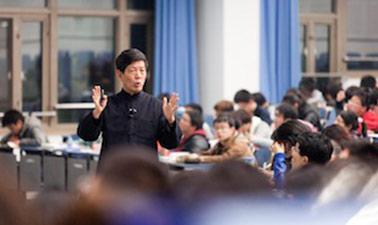
A team of 5 experts in Chinese culture has designed the course. They are, in alphabetical order, Dr Chen, Dr Muelenbeld, Dr Fok, Dr Tse and Dr Wan.
The compact design of the mini-lectures suits the busy schedule of edX learners.
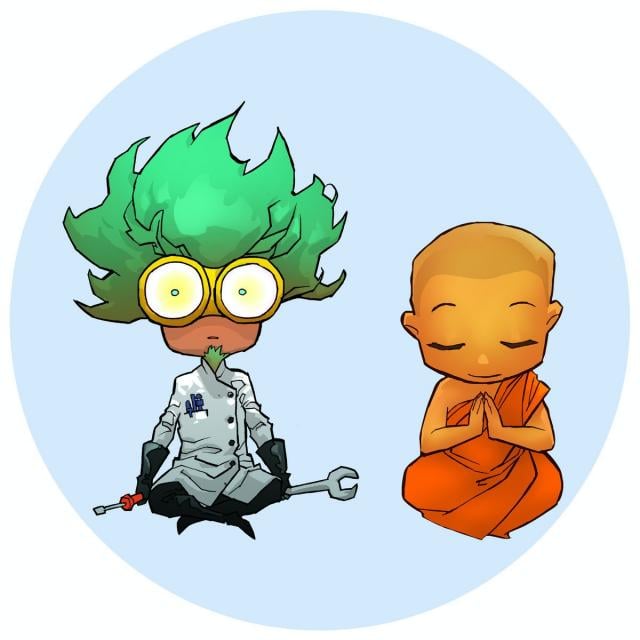
Introductions by animation hosts highlight the key questions of each unit.
Illustrations and maps are designed to liven up the mini-lectures.
Self-learning is supported by review questions and forums.
Cross-referencing enhances a fruitful learning experience across the units of the HKPolyUx series on Chinese culture.
This course is part of the Chinese Culture: Tradition, Transformation and Interaction XSeries Program.

What you'll learn

  • Origin and wisdom of Confucianism
  • Philosophy of Daoism
  • Four Noble Truths of Buddhism
  • Ancient Chinese warfare and The Art of War by Sunzi
  • The art of Chinese painting in the Song dynasty

Syllabus

Confucianism: Origins

  • Introduction
  • Historical background of Confucianism
  • Kongzi's efforts to restore Zhou Li
  • Significance of Kongzi's teaching to the modern age

Daoism: Laozi and Zhuangzi

  • Introduction
  • Butterfly and fish: Language and being
  • Laozi and Kongzi on order
  • Unspeakable knowledge
  • One world: Within and outside us
  • Interconnection, equality and ecology

Buddhism in China

  • Introduction
  • From a prince to the Buddha
  • The First Noble Truth: Suffering
  • The Second Noble Truth: Cause of suffering
  • The Third Noble Truth: Elimination of suffering
  • The Fourth Noble Truth: Paths to enlightenment

Ancient Chinese Warfare and Sunzi's The Art of War

  • Introduction
  • Civilization and warfare
  • From oracle bones to chariot warfare
  • Background of Sunzi's The Art of War
  • Understanding The Art of War : Chapters 1 to 7
  • Understanding The Art of War : Chapters 8 to 13

Chinese Paintings in the Song Dynasty

  • Introduction
  • Northern Song Painting Style: Monumental Realism
  • Transitional Painting: Li Tang
  • Southern Song Painting Style: Lyrical Representation

Literati Painting (Wenrenhua)

  • Chan Painting: Mu QiChinese Paintings in the Song Dynasty
  • Introduction
  • Northern Song Painting Style: Monumental Realism
  • Transitional Painting: Li Tang
  • Southern Song Painting Style: Lyrical Representation
  • Literati Painting (Wenrenhua)
  • Chan Painting: Mu Qi
Go to Class
MOOC List is learner-supported. When you buy through links on our site, we may earn an affiliate commission.

Related Courses

Many Faces: Understanding the Complexities of Chinese Culture (FutureLearn) FutureLearn
University of Exeter

Many Faces: Understanding the Complexities of Chinese Culture (FutureLearn)

Develop a clearer understanding of modern China by exploring the role of art, literature and the 'noble hero' in Chinese culture. Look beyond the clichés and stereotypes of art and literature in Chinese culture. Chinese culture has not been explored in as much depth as Chinese history and politics. By uncovering the richness and diversity of Chinese culture, you can gain a broader understanding of modern China as a whole.

Available Now
4 Weeks
Intellectual Change in Early China: Warring States and Han (Coursera) Coursera
The Chinese University of Hong Kong

Intellectual Change in Early China: Warring States and Han (Coursera)

This sequence of four courses will propose a multi-disciplinary approach to the study of Chinese cultural history conceived of as a succession of modes of rationality (philosophical, bureaucratic, and economic). The focus will be on the moments of paradigm shift from one mode of rationality to another. For each of these moments, cultural facts and artifacts—thought, literature, ritual—will be examined in relationship to changing social, political, and economic systems.

Aug 10th 2026
5-12 Weeks
文物精品与文化中国:农业与制造业 | Relics in Chinese History - Part 1: Agriculture and Manufacturing (edX) EdX
Tsinghua University,TsinghuaX

文物精品与文化中国:农业与制造业 | Relics in Chinese History - Part 1: Agriculture and Manufacturing (edX)

Discover manufacturing and agriculture’s role in the history of China as we explore Chinese culture through artifacts and relics. 本课程以精品文物作引子,将学术界探索中华文明的过程作为线索,介绍古代中国在造船、玉器等诸多领域的杰出成就

Self Paced
Self-Paced
Discovering Socially Engaged Art in Contemporary China (FutureLearn) FutureLearn
City University of Hong Kong

Discovering Socially Engaged Art in Contemporary China (FutureLearn)

Find out about inspiring projects created by Chinese artists to address important social issues, with this free online course. China has experienced dramatic changes over the past four decades - while the country is becoming more affluent, it’s also facing complex social issues. A number of Chinese artists have responded to these issues through powerful art.

No sessions available
5-12 Weeks
A Global History of Architecture (edX) EdX
MIT,MITx

A Global History of Architecture (edX)

Learn about humanity’s rich architectural history on this journey around the globe – from 100,000 BCE to ca. 1,600 CE. How do we understand architecture? One way of answering this question is by looking through the lens of history, beginning with First Societies and extending to the 16th century. This course in architectural history is not intended as a linear narrative, but rather aims to provide a more global view, by focusing on different architectural "moments."

Oct 18th 2023
5-12 Weeks
Géopolitique de la Chine contemporaine (FUN) FUN
Institut Catholique de Paris

Géopolitique de la Chine contemporaine (FUN)

Dans bien des domaines, la Chine est déjà la première puissance économique du monde. Son développement mais aussi ses difficultés, en un mot son évolution même engage notre propre avenir. Le marché chinois transforme les circuits commerciaux et industriels, bouleverse les savoirs et les pratiques du monde. Il est donc important, sinon urgent, de connaître l’histoire de cet Etat-continent, la nature de son régime et de ses ambitions en matière de politique étrangère. Ce MOOC est le premier portant sur la géopolitique de la Chine. Il convient à tout public désireux de se former aux affaires chinoises et plus particulièrement aux personnes qui, dans leur domaine professionnel, seront amenées à travailler en rapport avec la Chine.

No sessions available
5-12 Weeks
Structuring Values in Modern China (Coursera) Coursera
The Chinese University of Hong Kong

Structuring Values in Modern China (Coursera)

This sequence of four courses will propose a multi-disciplinary approach to the study of Chinese cultural history conceived of as a succession of modes of rationality (philosophical, bureaucratic, and economic). The focus will be on the moments of paradigm shift from one mode of rationality to another. For each of these moments, cultural facts and artifacts—thought, literature, ritual—will be examined in relationship to changing social, political, and economic systems.

Jul 20th 2026
5-12 Weeks
Philosophy, Science and Religion: Religion and Science (Coursera) Coursera
University of Edinburgh

Philosophy, Science and Religion: Religion and Science (Coursera)

Philosophy, Science and Religion mark three of the most fundamental modes of thinking about the world and our place in it. Are these modes incompatible? Put another way: is the intellectually responsible thing to do to ‘pick sides’ and identify with one of these approaches at the exclusion of others? Or, are they complementary or mutually supportive? As is typical of questions of such magnitude, the devil is in the details. For example, it is important to work out what is really distinctive about each of these ways of inquiring about the world. In order to gain some clarity here, we’ll be investigating what some of the current leading thinkers in philosophy, science and religion are actually doing.

Jul 14th 2026
5-12 Weeks
Sino-Japanese Interactions Through Rare Books (FutureLearn) FutureLearn
Keio University

Sino-Japanese Interactions Through Rare Books (FutureLearn)

Learn about the role of books in the relationship between the cultures of Japan and China, with this free online course. Books have played a major role in the formation of Japan’s culture, particularly those brought from China. On this course we’ll examine how big an impact these books have had, as well as looking at how books and religion are connected in Japan and East Asia, and the history of publishing in Japan.

Self Paced
3 Weeks
East Asian Religions & Ecology (Coursera) Coursera
Yale University

East Asian Religions & Ecology (Coursera)

At first glance the fields of religion and ecology may seem and unlikely pairing, but a deeper consideration reveals the two have a great deal to contribute to one another and are indeed inextricably linked. Religions recognize the unity and interdependence of humans with nature. Ecological sciences affirm this deep interconnection with the natural world. This partnership can inspire work for the wellbeing of the Earth community

Jul 20th 2026
5-12 Weeks
Chinese Thought: Ancient Wisdom Meets Modern Science - Part 1 (edX) EdX
The University of British Columbia,UBCx

Chinese Thought: Ancient Wisdom Meets Modern Science - Part 1 (edX)

An introduction to early Chinese thought, exploring connections among Chinese thought and Western philosophy, modern science and everyday life. This course is designed to give students a thorough introduction to early (pre-221 BCE) Chinese thought, its contemporary implications, and the role of religion in human well-being. Important themes to be discussed include the ideal of wu-wei or “effortless action,” the paradox of how one can consciously try not to try, mindfulness techniques and self-cultivation, models of the self and society, rationality versus emotions, trust and human cooperation, and the structure and impact of different spiritual and political ideals.

No sessions available
5-12 Weeks