FUN

Géopolitique de la Chine contemporaine (FUN)

Géopolitique de la Chine contemporaine (FUN)

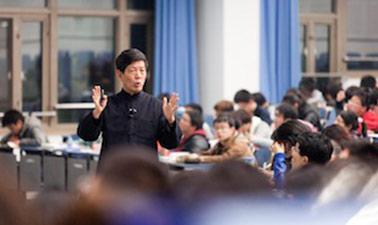
Dans bien des domaines, la Chine est déjà la première puissance économique du monde. Son développement mais aussi ses difficultés, en un mot son évolution même engage notre propre avenir. Le marché chinois transforme les circuits commerciaux et industriels, bouleverse les savoirs et les pratiques du monde. Il est donc important, sinon urgent, de connaître l’histoire de cet Etat-continent, la nature de son régime et de ses ambitions en matière de politique étrangère. Ce MOOC est le premier portant sur la géopolitique de la Chine. Il convient à tout public désireux de se former aux affaires chinoises et plus particulièrement aux personnes qui, dans leur domaine professionnel, seront amenées à travailler en rapport avec la Chine.

Mais aussi à tous ceux qui souhaitent s’initier à la culture et à l’histoire récente de la Chine. Aucun prérequis n’est nécessaire.

Plan du cours:

LA CHINE: DE L’HÉRITAGE MAOÏSTE AU STATUT DE PREMIÈRE PUISSANCE ÉCONOMIQUE MONDIALE :

  1. La naissance d'un nouveau régime (1° PARTIE)
  2. La naissance d'un nouveau régime (2° PARTIE)
  3. Deux héritages de la Guerre froide en Asie orientale : Taïwan et la Corée.
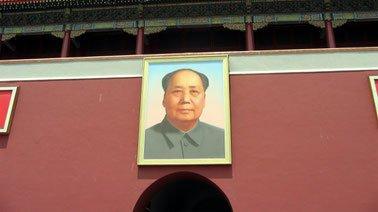
  4. Une figure du XX° siècle : Mao Zedong.
  5. Qu’est-ce que le nationalisme chinois ?

LA CHINE ET LE DÉFI ÉNERGÉTIQUE :

  1. La croissance chinoise : aspects généraux.
  2. Le premier pollueur de la planète.
  3. Des tensions internationales.
  4. Vers un nouveau paradigme économique ?
  5. Un défi social et politique.

LA CHINE OU COMMENT SÉDUIRE LE MONDE: UNE DIPLOMATIE CULTURELLE AU SERVICE DE LA PUISSANCE :

  1. Le 'Soft power' en question.
  2. Un confucianisme réinventé.
  3. Des manifestations de puissance.
  4. Une rhétorique nouvelle.
  5. Quelles réussites ?

LA CHINE: UNE CERTAINE IDÉE DE LA MULTIPOLARITÉ :

  1. L'évolution de la diplomatie Chinoise.
  2. Un nouveau discours.
  3. Une politique pro-européenne.
  4. L'Asie du Nord-Est et ses enjeux.
  5. L'Asie du Sud-Est et ses enjeux.

LA RELATION AVEC WASHINGTON: VERS UNE NOUVELLE GUERRE FROIDE ? :

  1. Une relation historique.
  2. La politique chinoise de Washington.
  3. Vers un affrontement des deux puissances ?
  4. Des théâtres de rivalités (Asie centrale, Moyen-Orient, Afrique)
  5. « Consensus de Washington » / « consensus de Pékin » : doctrines et enjeux.

DU LOCAL AU GLOBAL : LA CHINE ET L’AVENIR DU MONDE :

  1. Une hantise de l'ordre.
  2. Une puissance fragile.
  3. Comment la Chine change le monde ?
  4. Une modernité chinoise.
  5. Le creuset de nouvelles spiritualités.
Go to Class
MOOC List is learner-supported. When you buy through links on our site, we may earn an affiliate commission.

Related Courses

Chinese for Beginners (Coursera) Coursera
Peking University

Chinese for Beginners (Coursera)

Nowadays, there is an increasing number of people who are interested in Chinese culture and language. And it is useful to know about the language when coming to China for travel or business. This is an ABC Chinese course for beginners, including introduction of phonetics and daily expressions. After taking this class, learners can have a basic understanding of Chinese Mandarin and make basic conversations of daily living such as exchanging personal information, talking about daily arrangements and food, asking about price, introducing the city and the weather, telling your hobbies etc.

Sep 9th 2026
5-12 Weeks
Literati China: Examinations, Neo-Confucianism, and Later Imperial China (edX) EdX
HarvardX,Harvard University

Literati China: Examinations, Neo-Confucianism, and Later Imperial China (edX)

Explore China’s imperial period, with a focus on the Song dynasty and the role of the exam system in government. Fundamental changes in government, the economy, and broader society took place between the 8th and 11th centuries in China. The state aristocracy gave way to new literati elite: educated men who sought to enter government through competitive examinations. A new kind of Confucianism also took shape, which prized the moral autonomy of individuals. With this, the later imperial period of China’s history begins.

Self Paced
Self-Paced
Modern China’s Foundations: The Manchus and the Qing (edX) EdX
HarvardX,Harvard University

Modern China’s Foundations: The Manchus and the Qing (edX)

Learn how the Manchus conquered the Qing and established the last of the imperial dynasties. This course, part of a comprehensive series on China, looks at the Qing state in the early 1600s and the challenges that the Manchus faced as minority rulers. While living in Chinese cities and surrounded by Chinese culture — a culture that was far more sophisticated than their own — the Manchus struggled to hold onto their identity as a conquesting people.

Self Paced
Self-Paced
China’s First Empires and the Rise of Buddhism (edX) EdX
HarvardX,Harvard University

China’s First Empires and the Rise of Buddhism (edX)

Learn about the Qin and Han dynasties, and how Buddhism and ideas of self-realization influenced the medieval period. This course, the second in a collection on Chinese history and culture, addresses how the Qin dynasty conquered China and established a new system of government and how the Han dynasty built a stable, centralized empire that lasted for hundreds of years. We cover the early history of Buddhism in China and how the rising feudal aristocracy responded to the loss of empire by looking inward.

Self Paced
Self-Paced
Chinese Politics Part 1 - China and Political Science (Coursera) Coursera
The Hong Kong University of Science and Technology - HKUST

Chinese Politics Part 1 - China and Political Science (Coursera)

This course offers a conceptual framework for understanding China that highlights the intersection of politics and economics. It shows that rather than develop into a full blown market economy, state and party officials at all levels of the political system maintain significant influence in economic development. Such a “political” economy has had both positive and negative outcomes, which we will assess in detail.

Sep 14th 2026
5-12 Weeks
Doing Business in China Capstone (Coursera) Coursera
The Chinese University of Hong Kong

Doing Business in China Capstone (Coursera)

Doing Business in China Capstone enables you to apply your skills to real business challenges. You’ll use your newly earned business skills to identify, explore and evaluate a real opportunity involving products. In this capstone, you are the business consultant working for a well-established “HON / wellness” company. The CEO has given you a task. You have to bring a new overseas product into China.

Sep 14th 2026
4 Weeks
Chinese Culture and Contemporary China (Coursera) Coursera
Nanjing University

Chinese Culture and Contemporary China (Coursera)

This course of Chinese Culture and Contemporary China will explore the foundations of Chinese civilization and the dimensions of Chinese culture. It will pay particular attention to the relationship between Chinese culture and the present-day life of the Chinese people and to the different elements of the culture which are under the present social structures, belief systems, literature, arts, customs, etc. The course aims at providing students with a deeper knowledge of Chinese culture, thus enabling them to better understand China.

Sep 21st 2026
5-12 Weeks
Structuring Values in Modern China (Coursera) Coursera
The Chinese University of Hong Kong

Structuring Values in Modern China (Coursera)

This sequence of four courses will propose a multi-disciplinary approach to the study of Chinese cultural history conceived of as a succession of modes of rationality (philosophical, bureaucratic, and economic). The focus will be on the moments of paradigm shift from one mode of rationality to another. For each of these moments, cultural facts and artifacts—thought, literature, ritual—will be examined in relationship to changing social, political, and economic systems.

Sep 14th 2026
5-12 Weeks
Chinese Politics Part 2 - China and the World (Coursera) Coursera
The Hong Kong University of Science and Technology - HKUST

Chinese Politics Part 2 - China and the World (Coursera)

One of the most significant changes in the world in the past 30 years is the opening of China to the outside world and its engagement with that world. In the initial years of the opening, external forces influenced China’s economy, regional balances, bureaucracy, as well as the political authority of local leaders in the coastal areas.

Sep 14th 2026
5-12 Weeks