Chinese for Beginners (Coursera)

Offered by Peking University,
Chinese for Beginners (Coursera)

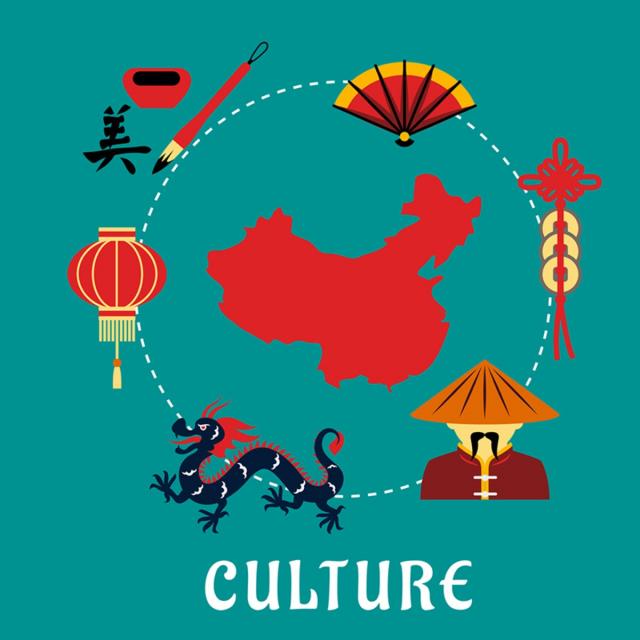
Nowadays, there is an increasing number of people who are interested in Chinese culture and language. And it is useful to know about the language when coming to China for travel or business. This is an ABC Chinese course for beginners, including introduction of phonetics and daily expressions. After taking this class, learners can have a basic understanding of Chinese Mandarin and make basic conversations of daily living such as exchanging personal information, talking about daily arrangements and food, asking about price, introducing the city and the weather, telling your hobbies etc.

Class Deals by MOOC List - Click here and see Coursera's Active Discounts, Deals, and Promo Codes.

Selected topics and situations come from real life scenarios and can be used for everyday communications. In addition to the dialogues, the selection of reading materials and practice activities will make the content as rich and varied as possible, in order to stimulate the learners’ interests. This is an elementary course on Chinese speaking. The learners don’t need to study Chinese characters, so it is easier to follow and complete this course.

Syllabus

WEEK 1
Who Are You?
When we first meet someone, we need to learn about each other. In this module, we are going to learn some ways to introduce yourself, including name, nationality, identity, and discussing your family. We are also going to study Chinese Mandarin phonetics.

WEEK 2
When Do You Go To School?
How do you plan your daily life? In this module, we are going to learn how to describe our daily schedule, including numbers, time, periods, and some corresponding actions.

WEEK 3
What Do You Like to Eat?
Food is our most important need. In this module, we are going to talk about Chinese main courses, fruits, vegetables and meat, as well as drinks. Have you seen or tried any of these Chinese dishes? Maybe you have already learned to say them in Chinese!

WEEK 4
I Like Shopping!
Shopping! Shopping! Some people love to go shopping, while others feel it is a headache. Still, shopping is an essential part of our life. In this module, we are going to learn how to express our color and size preference, how to ask about price, and how to bargain. Do you know what the most popular color is in your country? How about in China?

WEEK 5
Do You Live in a Big City?
Do you live in a big city or a small town? How do you get to work or school every day? In this module, we are going to learn how to give directions and how to speak about transportation. This module is valuable in case you need to talk about directions with a Chinese friend or you need to go somewhere when you are in China.

WEEK 6
How About the Weather?
Weather can influence our daily life and personal health. In this module, we are going to talk about temperature, seasons, and personal health. China is a very big country and the weather can be quite different across regions and seasons; we will learn to talk about all sorts of weather.

WEEK 7
What is Your Hobby?
What do you like to do in your spare time? We have so many choices nowadays and lead such colorful lives. In this module, we are going to talk about weekday pastimes, sports, TV programs, and some other activities related to the internet, reading, music, and travel!

Go to Class
MOOC List is learner-supported. When you buy through links on our site, we may earn an affiliate commission.

Related Courses

Questions, Present Progressive and Future Tenses (Coursera) Coursera
University of California, Irvine

Questions, Present Progressive and Future Tenses (Coursera)

In this course, “Questions, Present Progressive and Future Tenses,” you will learn about question words in English and how to form questions in the simple present. Then you will learn how to form the present progressive to express ideas about things that are happening right now. You will look at the differences between the simple present and present progressive. Finally, you will learn how to use “to be going to” and the present progressive to talk about the future and how to use “can” to talk about ability.

Jun 22nd 2026
4 Weeks
A Bridge to the World: Korean Language for Beginners Ⅰ (Coursera) Coursera
Sungkyunkwan University - SKKU

A Bridge to the World: Korean Language for Beginners Ⅰ (Coursera)

This course is an introductory course to Korean language that aims to cultivate basic communication skill for those that are interested in learning Korean language. The course is composed of essential expressions that are often used in everyday life, and designed to teach grammars using basic dialogues which reflect colloquial characteristics of Korean language so by end of this course, a student will be able to express him/herself on ordinary topics.

Jun 22nd 2026
5-12 Weeks
Mandarin Chinese 2: Chinese for Beginners (Coursera) Coursera
Shanghai Jiao Tong University

Mandarin Chinese 2: Chinese for Beginners (Coursera)

Mandarin Chinese 2: Chinese for beginners is a beginner's course of Mandarin Chinese in continuation of Mandarin Chinese 1: Chinese for beginners. It uses lectures, short plays, interactive exercises and cultural tips to help learners build a fundamental capability of oral Chinese in real-life situations. At the end of the 5-lesson course, the learners will reach the following proficiency: 300 words; 40 language points; handling 10 real-life situations

Jun 16th 2026
5-12 Weeks
Religious Transformation in Early China: the Period of Division (Coursera) Coursera
The Chinese University of Hong Kong

Religious Transformation in Early China: the Period of Division (Coursera)

This sequence of four courses will propose a multi-disciplinary approach to the study of Chinese cultural history conceived of as a succession of modes of rationality (philosophical, bureaucratic, and economic). The focus will be on the moments of paradigm shift from one mode of rationality to another. For each of these moments, cultural facts and artifacts—thought, literature, ritual—will be examined in relationship to changing social, political, and economic systems.

Jun 15th 2026
5-12 Weeks
Simple Past Tense (Coursera) Coursera
University of California, Irvine

Simple Past Tense (Coursera)

In this course, “Simple Past Tense,” you will learn how to form and use the simple past. You will see that there are a lot of irregular verbs in the simple past, but there are some patterns you can use to help you remember. You will learn about spelling changes when you add an “-ed” ending, as well as how to form negatives and questions in the past. You will also learn about object pronouns and some other forms of adjectives to describe and make comparisons.

Jun 22nd 2026
4 Weeks
Chinese Politics Part 1 - China and Political Science (Coursera) Coursera
The Hong Kong University of Science and Technology - HKUST

Chinese Politics Part 1 - China and Political Science (Coursera)

This course offers a conceptual framework for understanding China that highlights the intersection of politics and economics. It shows that rather than develop into a full blown market economy, state and party officials at all levels of the political system maintain significant influence in economic development. Such a “political” economy has had both positive and negative outcomes, which we will assess in detail.

Jun 22nd 2026
5-12 Weeks
Structuring Values in Modern China (Coursera) Coursera
The Chinese University of Hong Kong

Structuring Values in Modern China (Coursera)

This sequence of four courses will propose a multi-disciplinary approach to the study of Chinese cultural history conceived of as a succession of modes of rationality (philosophical, bureaucratic, and economic). The focus will be on the moments of paradigm shift from one mode of rationality to another. For each of these moments, cultural facts and artifacts—thought, literature, ritual—will be examined in relationship to changing social, political, and economic systems.

Jun 22nd 2026
5-12 Weeks
Mandarin Chinese 3: Chinese for Beginners (Coursera) Coursera
Shanghai Jiao Tong University

Mandarin Chinese 3: Chinese for Beginners (Coursera)

Mandarin Chinese 3: Chinese for beginners is a beginner's course of Mandarin Chinese in continuation of Mandarin Chinese 2: Chinese for beginners. It uses lectures, short plays, interactive exercises and cultural tips to help learners build a fundamental capability of oral Chinese in real-life situations. At the end of the 5-lesson course, the learners will reach the following proficiency: 500 words; 60 language points; handling 15 real-life situations.

Jun 15th 2026
5-12 Weeks
Adjectives and Adjective Clauses (Coursera) Coursera
University of California, Irvine

Adjectives and Adjective Clauses (Coursera)

Being able to adeptly use adjective clauses in speaking and writing is useful for upper level English learners. Adjectives and adjective clauses are very common in English, so students need to be able to understand them when they see them or hear them. Students often struggle to bring complexity to their speaking and writing and adjective clauses can be a great way to do this.

Jun 15th 2026
4 Weeks