EdX

Biological Engineering: Cellular Design Principles (edX)

Offered by Purdue University,
Biological Engineering: Cellular Design Principles (edX)

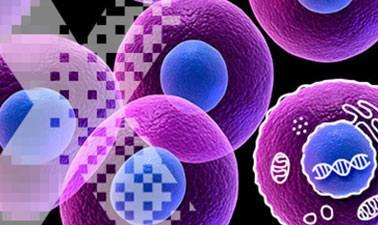
Explore established and emerging cellular design principles and learn how cells function as the basis for cellular engineering. Living cells have unique functions that can be harnessed by engineers to tackle human problems in energy, water, food, and health. Historically living cells were considered too difficult to predictably engineer because of their complexity, vulnerability, and continuous change in state. The elucidation of the design principles that underlie cell function along with increasing numbers of examples of hybrid cell based devices are slowly erasing that notion.

Class Deals by MOOC List - Click here and see EdX's Active Discounts, Deals, and Promo Codes.

In this class you will be learn about these established and emerging cellular design principles and begin to view cells as machines. This knowledge can also then be applied to non-living devices that mimic and communicate with cells. You will also be introduced to current and emerging living/non-living biohybrid devices such as biohybrid robots and neural implants.

What you'll learn

  • How fundamental engineering principles apply to living cells.
  • What engineering principles can tells us about how cells function.
  • Established and emerging, equations, models, and design curves that can be used to tune, re-engineer, or build new cells.
  • A framework for measuring and controlling cells as microdevices.
  • An introduction to emerging biohybrid devices.

Syllabus

Module 1: Introduction

  • Cells by the Numbers
  • Cell as a Machine
  • Bioinspiration: The Photoreceptor as an organic microdevice

Module 2: Cell Architecture

  • Cell & Organelle Size
  • Organelle Number
  • Biological Networks

Module 3: Gene Expression & Circuits

  • Intro to Transcription Networks
  • Simple Model of Gene Expression
  • Protein Half Lives
  • Autoregulation
  • Feedforward Loops

Module 4: Cell Dynamics

  • Basic Tools for Nonlinear Dynamics of Cells
  • Gene switches
  • Biological Oscillations

Module 5: Cellular Devices

  • Intro to Living Biohybrids
  • Cell Device Biointerface
  • Cells as Sensors
  • Cells as Actuators
  • Cell - Device Integration

Module 6: The Future

  • Synthetic Life
  • Applications of Biohybrids
  • Ethics and Society
Go to Class
MOOC List is learner-supported. When you buy through links on our site, we may earn an affiliate commission.

Related Courses

Bioinformatic Methods II (Coursera) Coursera
University of Toronto

Bioinformatic Methods II (Coursera)

Large-scale biology projects such as the sequencing of the human genome and gene expression surveys using RNA-seq, microarrays and other technologies have created a wealth of data for biologists. However, the challenge facing scientists is analyzing and even accessing these data to extract useful information pertaining to the system being studied. This course focuses on employing existing bioinformatic resources – mainly web-based programs and databases – to access the wealth of data to answer questions relevant to the average biologist, and is highly hands-on.

Jun 8th 2026
5-12 Weeks
Classical papers in molecular genetics (Coursera) Coursera
University of Geneva

Classical papers in molecular genetics (Coursera)

You have all heard about the DNA double helix and genes. Many of you know that mutations occur randomly, that the DNA sequence is read by successive groups of three bases (the codons), that many genes encode enzymes, and that gene expression can be regulated. These concepts were proposed on the basis of astute genetic experiments, as well as often on biochemical results. The original articles were these concepts appeared are however not frequently part of the normal curriculum of biologists, biochemists and medical students.

Jun 1st 2026
5-12 Weeks
Designing Electronics for Recycling in a Circular Economy (edX) EdX
Delft University of Technology,DelftX

Designing Electronics for Recycling in a Circular Economy (edX)

Discover the latest developments in Design for Recycling (DfR) of electrical and electronic equipment (EEE) and the application of recycled plastics into new products. Electronic products bring countless benefits to society, but their production and waste treatment also lead to numerous negative environmental and economic impacts. Since E-waste is the world’s fastest growing waste stream, governments are setting ambitious targets to help this industry transition towards a circular economy.

Nov 15th 2023
4 Weeks
How We See the World: Visual Function and Eye Health (edX) EdX
The Hong Kong Polytechnic University,HKPolyUx

How We See the World: Visual Function and Eye Health (edX)

Develop your understanding of vision and discover how visual functions relate to your daily life. Learn and apply techniques to help you take better care of your eyes. How do we see the world? How do we see details at different viewing distances? How do we see in three dimensions? How do we see colour? How can we avoid getting cataracts or prevent short-sightedness? This course will help you develop your understanding of vision, how visual functions relate to your daily life, and how you can better take care of your eyes.

Jan 1st 2024
5-12 Weeks
Biomedical Equipment: A Practical Approach to Healthcare Technology Management (edX) EdX
Delft University of Technology,DelftX

Biomedical Equipment: A Practical Approach to Healthcare Technology Management (edX)

Enhance your knowledge and skills in effective methods of managing the lifespan of biomedical equipment in a limited-resource environment. With limited resources increasingly prevalent, healthcare technology management is often a challenge. Through this course we offer a practical approach to healthcare management that is tailored to this particular healthcare environment. The course will help you to manage uncertainties, defects and/or the unavailability of resources and personnel that may prevent proper and effective healthcare.

Feb 15th 2024
5-12 Weeks
Manufacturing Systems II (edX) EdX
MIT,MITx

Manufacturing Systems II (edX)

Learn how to analyze manufacturing systems to optimize performance and control costs and better understand the flow of material and information. Manufacturing systems are complex systems that require analytical analysis. Managers and practitioners use a wide variety of methods to analyze and optimize the performance of manufacturing systems and control costs.

Mar 6th 2024
5-12 Weeks
Railway Engineering: An Integral Approach (edX) EdX
Delft University of Technology,DelftX

Railway Engineering: An Integral Approach (edX)

Discover the science and complexity behind the exciting world of metro, tram and railway systems. Have you ever wondered what it takes to get your train on the right platform at the scheduled time every day? Understanding the complexity behind today’s sophisticated railway systems will give you a better insight into how this safe and reliable transportation system works. We will show you the many factors which are involved and how multiple people, behind the scenes, have a daily task that enables you to get from home to work. Journey with us into the world of rail - a complex system that connects people, cities and countries.

Apr 10th 2024
5-12 Weeks
Applied Quantum Computing III: Algorithm and Software (edX) EdX
Purdue University,PurdueX

Applied Quantum Computing III: Algorithm and Software (edX)

Learn domain-specific quantum algorithms and how to run them on present-day quantum hardware. This course is part III of the series of Quantum computing courses, which covers aspects from fundamentals to present-day hardware platforms to quantum software and programming. The goal of part III is to discuss some of the key domain-specific algorithms that are developed by exploiting the fundamental quantum phenomena (e.g. entanglement)and computing models discussed in part I.

Mar 25th 2024
5-12 Weeks
Quantum Detectors (edX) EdX
Purdue University,PurdueX

Quantum Detectors (edX)

Learn about quantum sensors and devices that extract maximal information from the world around us. Classical detectors and sensors are ubiquitous around us from heat sensors in cars to light detectors in a camera cell phone. Leveraging advances in the theory of noise and measurement, an important paradigm of quantum metrology has emerged. Here, ultra-precision measurement devices collect maximal information from the world around us at the quantum limit.

Feb 12th 2024
5-12 Weeks