AutoLayout (Udacity)

Offered by Udacity,
AutoLayout (Udacity)

Using Constraint-Based Design. With this course, you will learn about AutoLayout and how to use stack views and constraints to create pixel-perfect UIs. Also, you will take a deep dive and learn about some of the most commonly misunderstood properties affecting layout like distribution, alignment, content hugging, and compression resistance.

Class Deals by MOOC List - Click here and see Udacity's Active Discounts, Deals, and Promo Codes.

Then, you will put all of this knowledge to use and start creating functional interfaces with multiple stack views and UI elements. In fact, you will recreate an interface from a very well known app. And, by the end of this course, you will be ready to create beautiful interfaces from scratch.
For many developers, AutoLayout can be a curse: a complex system with unpredictable behavior that you can't run away from.
This course will remove the veil of mystery that shrouds AutoLayout.
You will be able to create any UI for any device.
Even better, you will actually understand what's going on!

What you will learn

Welcome to AutoLayout!
Learn all the possible ways of laying out a view.
Determine how views should adapt when the available screen size changes.
Explore AutoLayout and constraints — the premiere tools for building adaptive views.

Using AutoLayout
Survey various methods for implementing AutoLayout.
Use stack views to intuitively construct interfaces without getting muddled in the details.

View Properties
Investigate the properties which control how elements are sized using AutoLayout.
Examine the nuances of compression resistance and content hugging.

StackViews 101
Build and tweak layouts while exploring all the properties of stack views.
Modify axes, spacing, alignments, and distributions to arrange contained subviews.

Positioning StackViews
Generate and configure constraints using Interface Builder and storyboards.
Analyze the interplay between stack views and different UI elements and devices.

Horizontal Layouts
Troubleshoot common problems affecting horizontal stack views and elements with similar view properties.
Compose interfaces that embed stack views within stack views.

Vertical Layouts
Use stack views to experiment with vertical layouts.
Recreate an interface from a very well known app!

Prerequisites and requirements
You will need to be familiar with UIKit and Storyboards.

Go to Class
MOOC List is learner-supported. When you buy through links on our site, we may earn an affiliate commission.

Related Courses

Using Design to Generate Innovative Business Solutions (Coursera) Coursera
Parsons School of Design, The New School

Using Design to Generate Innovative Business Solutions (Coursera)

This rigorous online course shows you how to use design to generate innovative business solutions. It starts by focusing on alternative design methodologies, including the non-negotiable essentials: design thinking methodology and jobs to be done. It then delves into strategies for choosing the right business model. This includes exploring value-creating and sustainable business models. After covering these foundational concepts, the course examines design tools that can be used to develop the business model in market by creating shared value and tips to manage the conversion funnel. The course concludes by looking at digital dynamics and providing insider tips to promote success.

Sep 28th 2026
4 Weeks
Fundamentals of NuxtJS (Coursera) Coursera
Board Infinity

Fundamentals of NuxtJS (Coursera)

Welcome to the "Fundamentals of NuxtJS" course, a comprehensive journey into the world of NuxtJS, an incredibly powerful framework for building web applications. This course is structured into two modules. Module 1 provides a strong foundation in NuxtJS and its core concepts, and Module 2 delves into advanced features, state management, SEO, and deployment. By the end of this course, you will be well-equipped to create dynamic, performant, and SEO-friendly web applications with NuxtJS.

Sep 28th 2026
2 Weeks
Human-Computer Interaction III: Ethics, Needfinding & Prototyping (edX) EdX
Georgia Institute of Technology,GTx

Human-Computer Interaction III: Ethics, Needfinding & Prototyping (edX)

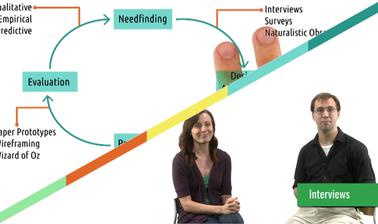
Build on your knowledge of HCI’s core principles by learning to design interfaces in the real world. Begin with the ethics of human subjects research, then learn critical methods for requirements gathering and brainstorming design alternatives. In this course, you’ll begin by learning the design life cycle. This is the process by which we investigate user needs, brainstorm potential designs, create prototypes, and evaluate those prototypes. This life cycle provides the structure for the third and fourth courses in this professional certificate.

Self Paced
Self-Paced
Knowledge-Based AI: Cognitive Systems (Udacity) Udacity
Georgia Institute of Technology,Udacity

Knowledge-Based AI: Cognitive Systems (Udacity)

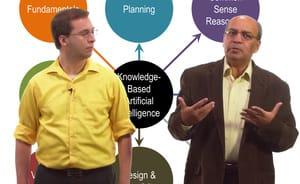
The Core of Artificial Intelligence. This is a core course in artificial intelligence. It is designed to be a challenging course, involving significant independent work, readings, assignments, and projects. It covers structured knowledge representations, as well as knowledge-based methods of problem solving, planning, decision-making, and learning.

Self Paced
Self-Paced
Data Visualization in Tableau (Udacity) Udacity
Udacity

Data Visualization in Tableau (Udacity)

Learn the fundamentals of data visualization and practice communicating with data. This course covers how to apply design principles, human perception, color theory, and effective storytelling with data. If you present data to others, aspire to be a business analyst or data scientist, or if you’d like to become more effective with visualization tools, then you can grow your skills with this course.

Self Paced
Self-Paced
Enabling Community-Based Leadership in Design: Sustainable Development of Historic Faith Buildings (FutureLearn) FutureLearn
The Open University,UNESCO UNITWIN Complex Systems Digital Campus,The Glass-house

Enabling Community-Based Leadership in Design: Sustainable Development of Historic Faith Buildings (FutureLearn)

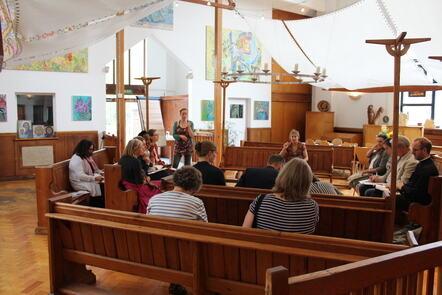
Mobilise the power of communities to re-imagine and shape their place. Learn how to enable communities to lead design initiatives in places of worship. Apart from being special places where people practise their faith, places of worship play an important role for the wider community by providing pastoral care and much-needed local services. Community-based design initiatives can enhance the value of these places as a sustainable resource for multiple communities.

Self Paced
5-12 Weeks
VLSI CAD Part II: Layout (Coursera) Coursera
University of Illinois at Urbana-Champaign

VLSI CAD Part II: Layout (Coursera)

A modern VLSI chip is a remarkably complex beast: billions of transistors, millions of logic gates deployed for computation and control, big blocks of memory, embedded blocks of pre-designed functions designed by third parties (called “intellectual property” or IP blocks). How do people manage to design these complicated chips? Answer: a sequence of computer aided design (CAD) tools takes an abstract description of the chip, and refines it step-wise to a final design.

Sep 21st 2026
5-12 Weeks
Learn CSS Grid (Coursera) Coursera
Scrimba

Learn CSS Grid (Coursera)

The CSS Grid module is a pivotal tool that streamlines website layout creation, offering simplicity in both HTML and CSS while affording greater control over a website's layout. This course equips front-end developers with essential skills to harness CSS Grid effectively, ensuring they remain at the forefront of web development trends.

Sep 28th 2026
1 Week
Ergonomics in Design (edX) EdX
The Hong Kong University of Science and Technology - HKUST,HKUSTx

Ergonomics in Design (edX)

The course is designed to provide a basic understanding of ergonomics in design through the introduction of human anatomy, anthropometry, and modeling techniques with the aim of improving safety, productivity, comfort and health of people. Ergonomics is the application of scientific information about people in order to design products and systems so that they are safe, productive, comfortable and healthy for people to use.

Self Paced
Self-Paced
Open Design (Coursera) Coursera
Duke University

Open Design (Coursera)

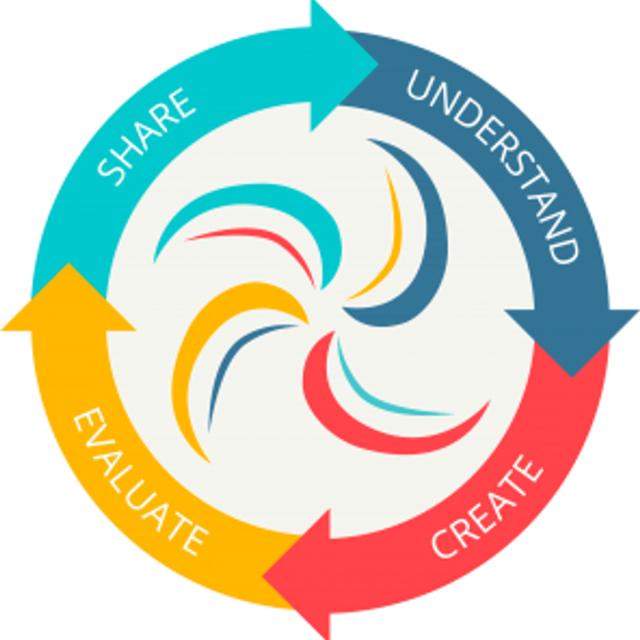
What is design? How is it a deeply human endeavor? How can we design better products, services, and experiences in our communities? If you’re interested in helping create a more equitable and accessible world, this Center for Computational Thinking module on Open Design is for you.

Oct 12th 2026
1 Week