EdX

Asylum and Refugee Law (edX)

Asylum and Refugee Law (edX)

What is asylum? What is the principle of non-refoulement? Who should be recognized and protected as a refugee? These notions are complex. Learn to understand and apply them! What is asylum? What is the principle of non-refoulement? Who should be recognized and protected as a refugee? These questions are both ancient and contemporary.

Class Deals by MOOC List - Click here and see EdX's Active Discounts, Deals, and Promo Codes.

Whether you are a decision maker, a judge, a lawyer, a human rights activist, you will have to answer these questions. The answers are complex. They require precise theoretical and practical knowledge of national, regional and international law.
The 1951 Geneva Convention on Refugees will enable you to master these questions. This Convention remains the cornerstone of international refugee protection. It is at the heart of this online course. You will analyze in detail the principle of non-refoulement and the definition of a refugee.
This definition will allow you to identify, like a fingerprint, the people who, legally, should be recognizedas beneficiaries of refugee status and international protection. Using a conceptual tool, the three-scale theory, you will analyze in a rigorous and structured manner each distinct element of the refugee definition (persecution, risk, proof) as well as, in a comprehensive approach, the definition as a whole.
By confronting theoretical analysis with practical situations, you will see that, if correctly interpreted, the Geneva Convention remains effective and still allows to this day the protection of many fugitives or refugees ( Flüchtling, réfugiés ).
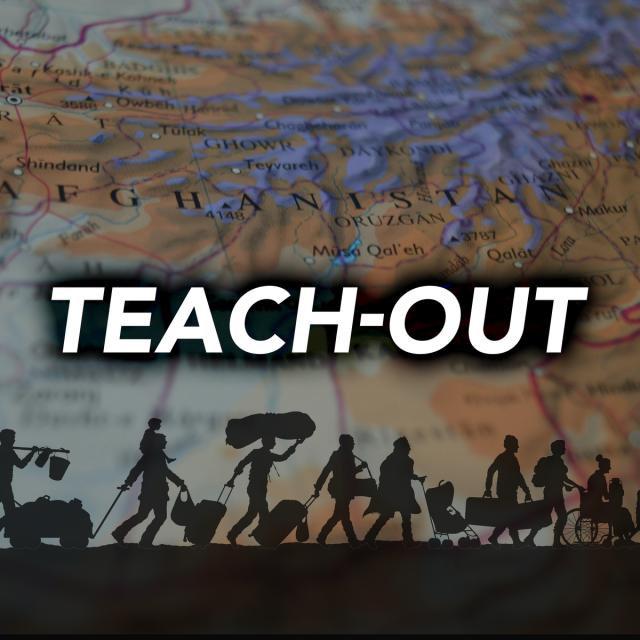
You will also follow the refugee’s journey—like the maze that the image above also represents—to measure the need for a solid knowledge of the law and the procedures.
Beyond law, you will understand the value of an interdisciplinary approach, in particular when measuring the credibility of an asylum seeker’s narrative.
You will examine the importance of regional, subsidiary or complementary protection.
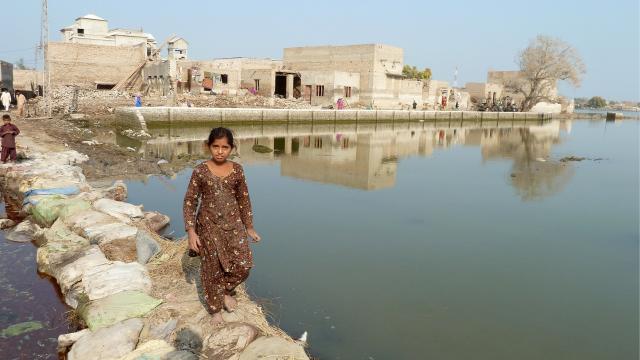
Finally, you will look at future challenges, such as the issue of climate refugees.
In this course, Asylum and Refugee Law, you will learn whether or not migrants can be returned to another country, whether or not they should be included in or excluded from the refugee definition, and whether or not to challenge the decision on someone’s refugee status. You will do all of this by developing a rigorous legal reasoning.

What you'll learn
By the end of this course, you will be able to

  • formulate rigorous legal reasoning on the right to asylum and international protection of refugees.
  • define and apply the concepts of asylum and refugee status.
  • analyze case law decisions of international, regional and national courts and tribunals relating to asylum and refugee law.
  • criticize or justify the reasoning of an asylum authority (administrative or judicial) in order to develop arguments in a decision or appeal.
  • question and imagine the future challenges in the field of asylum.

Prerequisites
Having completed an undergraduate degree program in Law (Bachelor’s degree, license, LL.B.) or having completed an undergraduate degree program in a field other than Law and/or having practical experience in human rights (having been in regular contact with migrants, having worked in asylum rights organizations or collaborated with refugee aid associations, etc.).
Go to Class
MOOC List is learner-supported. When you buy through links on our site, we may earn an affiliate commission.

Related Courses

International migrations: a global issue (Coursera) Coursera
Sciences Po

International migrations: a global issue (Coursera)

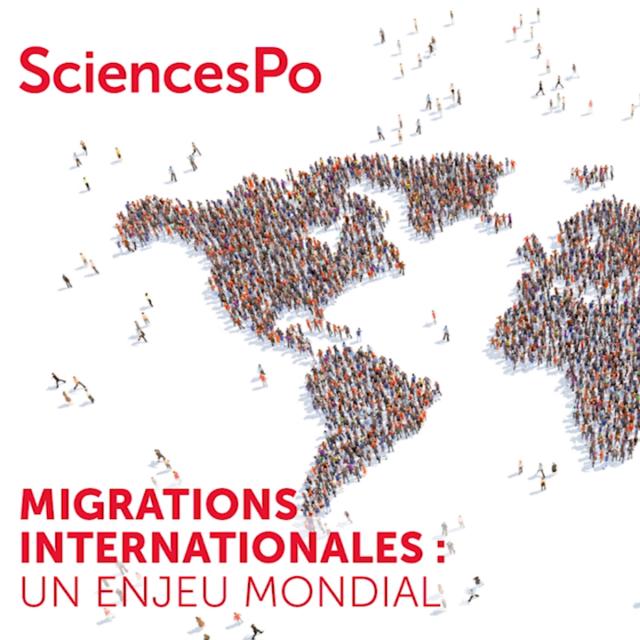
The world is moving, but not all opinions and governments are willing to accept this poorly understood reality. The issue affects both states and the planet, in a process of globalization and of regionalization of migrations, and raises new questions for international relations, now including the South. This course aims at improving knowledge of the subject, addressing the key issues raised by international migration, and assessing the trends of tomorrow.

Jun 1st 2026
5-12 Weeks
Russian Invasion of Ukraine Teach-Out (Coursera) Coursera
University of Michigan

Russian Invasion of Ukraine Teach-Out (Coursera)

The armed conflict in Ukraine first started in the beginning of 2014, when Russia invaded and annexed the Ukrainian region of Crimea. Over the past eight years, there has been ongoing conflict between Ukraine and Russia, with regular shelling and skirmishes occurring along Russian and Ukrainian borders in the eastern part of the country. On February 24, 2022, Russia launched a full-scale military invasion of Ukraine, plunging the entire country into war and sending shockwaves across the world.

Jul 25th 2022
1 Week
Climate change and migration: predictions, politics and policy (Climate Outreach) Other Providers
The Climate and Migration Coalition

Climate change and migration: predictions, politics and policy (Climate Outreach)

How will climate change reshape migration? And what are governments planning to do about it? This online course examines these questions in depth. Over the space of 10 months, this course examines the major issues around climate-linked migration and displacement. Climate change is set to play a key role in patterns of human settlement and migration in the future. Altered patterns of drought, storms and sea level rise are already creating new patterns of migration.

Self Paced
Self-Paced
Working Supportively With Refugees: Principles, Skills and Perspectives (FutureLearn) FutureLearn
University of Glasgow

Working Supportively With Refugees: Principles, Skills and Perspectives (FutureLearn)

Learn how the principals of psychological well-being, communication and interpretation can benefit your work with refugees. Explore interdisciplinary approaches to working with refugees. Refugees are a diverse group, speaking many languages and of varied religions and ethnicities. This course acknowledges that skills requirements are changing rapidly and offers training for those working in this area.

Available now
3 Weeks
International migrations :a global issue (FUN) FUN
Sciences Po

International migrations :a global issue (FUN)

The world is moving, but not all opinions and governments are willing to accept this poorly understood reality. The issue affects both states and the planet, in a process of globalization and of regionalization of migrations, and raises new questions for international relations, now including the South. This course aims at improving knowledge of the subject, addressing the key issues raised by international migration, and assessing the trends of tomorrow.

No sessions available
5-12 Weeks
Remote food security monitoring (mVAM) Other Providers
Leiden University,mVAM

Remote food security monitoring (mVAM)

Collecting primary data on food security in can be challenging, time consuming and costly ‒ particularly in areas with limited humanitarian access. Remote data collection is a flexible and efficient way to collect food security information and it allows for frequent food security monitoring in unstable areas without putting the enumerators at risk.

Self Paced
Self-Paced