EdX

Visualizing Postwar Tokyo, Part 1 (edX)

Visualizing Postwar Tokyo, Part 1 (edX)

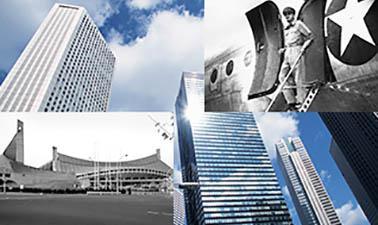
Analyze the history of change and development in postwar Tokyo from different perspectives using archived photographs, films, and TV programs. Tokyo emerged out of the ruins of war to become a large city of 10 million people in only a quarter of a century. During this process of change, the capital of a military empire that once invaded East Asia experienced occupation by the U.S. armed forces, hosted the Olympic Games, and transformed into a consumer hub where young people could enjoy economic “wealth.”

Class Deals by MOOC List - Click here and see EdX's Active Discounts, Deals, and Promo Codes.

It is important to know that this process was recorded in countless photographs, documentary films, TV programs, and so on. We will retrieve many of these archived pictures and videos and analyze what happened in postwar Tokyo from different perspectives. In Part 1, you will look at the changes that occurred in postwar Tokyo over a quarter of a century from four different perspectives: 1) occupation and Americanism; 2) imperial gaze and royal wedding; 3) The Olympic city; and 4) economic-cultural clash in Shinjuku. This examination of urban history will provide you with the insights necessary when considering changes in other large cities in Asia, such as Seoul, Beijing, and Bangkok, at the end of the twentieth century.

This course is part of the Visualizing Japan XSeries Program.

What you'll learn:

  • Noteworthy factors which promoted the development and change of Tokyo in the postwar period
  • The impact of the U.S. occupation on the people and city of Tokyo
  • The change of “gazing” relationship between the emperor and people in Japan
  • The impact of Tokyo Olympic Games on the landscape of Tokyo
  • How Shinjuku achieved its development in the 1960s and the factors which led to its economic-cultural clash

Go to Class
MOOC List is learner-supported. When you buy through links on our site, we may earn an affiliate commission.

Related Courses

Terrorism and Counterterrorism (edX) EdX
Georgetown University,GeorgetownX

Terrorism and Counterterrorism (edX)

What is the danger of terrorism, and how can the world respond effectively? Terrorism has gone from a persistent yet marginal security concern to one of the most important security problems of our day. There are few countries that do not suffer from some form of terrorism. Though many attempts at terrorism fail, some groups wage lengthy and bloody campaigns and, in exceptional cases, kill hundreds or even thousands in pursuit of their ends.

Self Paced
Self-Paced
European Paintings: From Leonardo to Rembrandt to Goya (edX) EdX
Universidad Carlos III de Madrid - UC3M,UC3Mx

European Paintings: From Leonardo to Rembrandt to Goya (edX)

Uncover the meaning behind the art of the great painters from 1400 to 1800. Learn about the inspirational work of the leading European painters from approximately 1400 to 1800, and explore the issues expressed through the art of painting. Included in this broad time frame are the works of Leonardo da Vinci, Caravaggio, Velázquez, Rembrandt, Vermeer and Goya.

Self Paced
Self-Paced
Academic and Business Writing (edX) EdX
University of California, Berkeley,BerkeleyX

Academic and Business Writing (edX)

An introduction to academic and business writing for English Language Learners, focusing on grammar, vocabulary, structure, editing, and publication. College Writing 2.2x providesan introduction to academic and business writing for English Language Learners. In this course, students focus on understanding the demands of different styles of writing, andwork to improve grammatical correctness, vocabulary development, and revision and editing skills.

Self Paced
Self-Paced
Cosmopolitan Tang: Aristocratic Culture in China (edX) EdX
HarvardX,Harvard University

Cosmopolitan Tang: Aristocratic Culture in China (edX)

Explore the reunification of China under the Tang with a focus on aristocratic culture — from poetry to calligraphy to literature. By the Tang period, China was divided into northern and southern dynasties with different rulers and political systems. The north was conquered by relatively unsophisticated barbarians, but in the south, the aristocratic families established a refined appreciation of writing and literature.

Self Paced
Self-Paced
The Civil War and Reconstruction - 1850-1861: A House Divided (edX) EdX
Columbia University,ColumbiaX

The Civil War and Reconstruction - 1850-1861: A House Divided (edX)

Discover how the issue of slavery came to dominate American politics, and how political leaders struggled and failed to resolve the growing crisis in the nation. A House Divided: The Road to Civil War, 1850-1861 begins by examining how generations of historians have explained the crisis of the Union. After discussing the institution of slavery and its central role in the southern and national economies, it turns to an account of the political and social history of the 1850s.

Self Paced
Self-Paced
Invasions, Rebellions, and the Fall of Imperial China (edX) EdX
HarvardX,Harvard University

Invasions, Rebellions, and the Fall of Imperial China (edX)

An overview of modern Chinese history, including the fall of the Qing and the end of imperial China. In the 18th century, the Qing Dynasty is at its height; it is the wealthiest, most powerful, most civilized state on earth. And yet the 19th century brought enormous challenges for the Qing and for the place we call China. By the 20th century, a 2,000-year imperial tradition is gone. What happened?

Self Paced
Self-Paced
Chinese History From Warring States to the Tang Dynasty | 资治通鉴 (edX) EdX
Tsinghua University,TsinghuaX

Chinese History From Warring States to the Tang Dynasty | 资治通鉴 (edX)

Guides you through the Chinese masterpiece _Zizhi Tongjian, _an unprecedented work of governance and philosophical thinking spanning from the Warring States Period to the Tang Dynasty. Through the teacher's guided reading, students can go deep into the interior of this classic text, gain an overview of thousands of years of history, and improve their literacy in Chinese studies.

Self Paced
Self-Paced
Planetary Boundaries (edX) EdX
SDGAcademyX,SDG Academy

Planetary Boundaries (edX)

Can our planet continue to support the current scope of human activity? A thriving global society relies on the stability of the Earth and its resilience across oceans, forests, waterways, biodiversity, the atmosphere and more. So how do we shape sustainability at a global scale? The boundaries set by the planet’s natural resources, the resilience of those resources, and the human activities that impact sustainability all come into play.

Self Paced
Self-Paced