AR in marketing using Meta Spark (Coursera)

Offered by Meta,
AR in marketing using Meta Spark (Coursera)

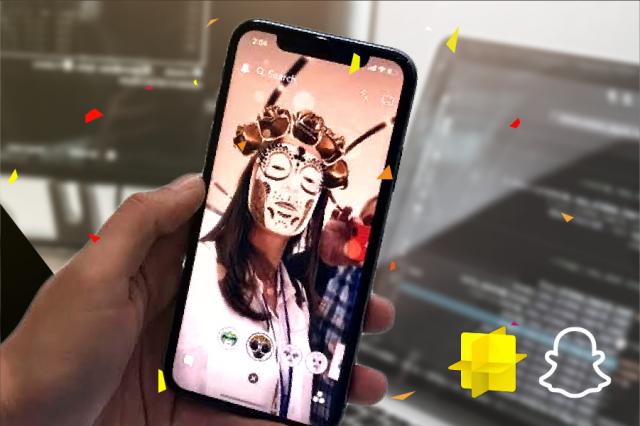
This course prepares you for a career using AR in marketing. You will learn how AR is used for marketing purposes as well as processes, guidelines, and best practices for creating AR effects. While this course focuses on creating AR effects using Meta Spark, the skills you will build apply to many other similar tools.

Class Deals by MOOC List - Click here and see Coursera's Active Discounts, Deals, and Promo Codes.

By the end of this course, you will be able to:

  • List the capabilities and limitations of Meta Spark.
  • Install, set-up, and configure your work environment.
  • Explain the different elements of the Meta Spark Studio and Meta Spark Hub interfaces.
  • Optimize and test Meta Spark effects.
  • Identify best practices for designing, developing, and testing in Meta Spark.
  • Push content to Instagram using Meta Spark Hub.
  • Identify Agile and Scrum best practices for Meta Spark development.
  • Use Meta Spark scripting to create travel posters.

To be successful in this course, experience with object oriented programming and basic web development is needed. JavaScript is a plus but not required. We recommend completing the previous courses in the program so you can build on the knowledge and skills from those courses here.
Course 2 of 7 in the Meta AR Developer Professional Certificate.

Syllabus

WEEK 1
Meta Spark Quick Start
This module will introduce you to the basics of AR, as well as introduce you to Meta Spark, a tool you will use to create, save, test, and publish AR projects that you create.

WEEK 2
Meta Spark fundamentals
Now that you have learned about the basics of AR and AR in marketing, it's time for a closer look. In this module you'll learn about 2D target trackers (where you can attach text or assets) and Meta Spark effects you can use to bring your projects to life.

WEEK 3
Meta Spark pro
Now that you've become more comfortable using Meta Spark, it's time to practice implementing some of the more advanced features, such as design patterns, scripting, user input, audio, pickers, sliders, custom rendering, debugging, and optimization.

WEEK 4
Game creation in Meta Spark
Now that you've learned all about creating effects in Meta Spark, it's time to put your skills to the test by creating and end-of-course project. You'll use the tools and technique you discovered in the course to create a series of a series of AR posters that incorporate 2D object trackers and interactions. We're calling it the scavenger hunt.


Go to Class
MOOC List is learner-supported. When you buy through links on our site, we may earn an affiliate commission.

Related Courses

Code Yourself! An Introduction to Programming (Coursera) Coursera
University of Edinburgh,Universidad ORT Uruguay

Code Yourself! An Introduction to Programming (Coursera)

Have you ever wished you knew how to program, but had no idea where to start from? This course will teach you how to program in Scratch, an easy to use visual programming language. More importantly, it will introduce you to the fundamental principles of computing and it will help you think like a software engineer.

Jun 8th 2026
5-12 Weeks
Ordered Data Structures (Coursera) Coursera
University of Illinois at Urbana-Champaign

Ordered Data Structures (Coursera)

In this course, you will learn new data structures for efficiently storing and retrieving data that is structured in an ordered sequence. Such data includes an alphabetical list of names, a family tree, a calendar of events or an inventory organized by part numbers. The specific data structures covered by this course include arrays, linked lists, queues, stacks, trees, binary trees, AVL trees, B-trees and heaps. This course also shows, through algorithm complexity analysis, how these structures enable the fastest algorithms to search and sort data.

Jun 10th 2026
4 Weeks
Digital Design (edX) EdX
HKUSTx,HKU School of Professional and Continuing Education

Digital Design (edX)

The course is an introduction to digital design technology. It allows you to understand the basics of digital design and helps you develop skills from computer aided design to animation covering topics such as rigging, key framing, rendering and more. Digital Design is about designing in digital space so that the created contents can be displayed and seen on a digital device. With the availability of high computing power, designers are able to quickly create designs in digital space prior to actual deployment.

Self Paced
Self-Paced
Unreal Engine Interactive 3D: Blueprints, Animation, Audio, & Environments (edX) EdX
Rochester Institute of Technology,RITx

Unreal Engine Interactive 3D: Blueprints, Animation, Audio, & Environments (edX)

Expand your interactive Unreal Engine 3D skills with Blueprints, Landscapes, Audio and AI. In this course, you’ll build on your knowledge from UNRL 101 by learning visual scripting using Blueprints. This node-based system based on C++ enables powerful programming without the syntax typically involved in coding. You will gain basic coding skills to use multiple tools for accelerating work and building immersive interactive functionality.

Self Paced
Self-Paced
MOOC on Visual Literacies: Exploring educational practice and technologies (ViliProject) Other Providers
Lancaster University

MOOC on Visual Literacies: Exploring educational practice and technologies (ViliProject)

Welcome to this MOOC on visual literacies where we will be exploring the educational practices and technologies associated with visual communication and visual thinking. In this course you will find out about the transformative power of photos, mind maps, comics, infographics and data visualization; how educators use video and animation and why it works; game-based learning, augmented reality, virtual and mixed reality; and synchronous video communication and holography.

No sessions available
5-12 Weeks
AR VR The Promise of Sci-Fi (OpenLearning) OpenLearning
Sunway University

AR VR The Promise of Sci-Fi (OpenLearning)

This course explores how the emerging forms of media and the development in the digital field opens possibilities for exploration of virtual reality and augmented reality that carries potential benefits applicable to various industries portrayed through user experience cases that you will discover throughout this course.

Self Paced
Self-Paced
Unordered Data Structures (Coursera) Coursera
University of Illinois at Urbana-Champaign

Unordered Data Structures (Coursera)

The Unordered Data Structures course covers the data structures and algorithms needed to implement hash tables, disjoint sets and graphs. These fundamental data structures are useful for unordered data. For example, a hash table provides immediate access to data indexed by an arbitrary key value, that could be a number (such as a memory address for cached memory), a URL (such as for a web cache) or a dictionary.

Jun 10th 2026
4 Weeks
Getting started with Augmented Reality (Coursera) Coursera
Institut Mines-Telecom

Getting started with Augmented Reality (Coursera)

This course will teach you the basics of developing mobile applications using Mixed and Augmented Reality (MAR) technologies. Through hands-on projects, you’ll learn practical techniques to rapidly and easily prototype three different applications for Android smartphones and tablets – even with no previous coding experience. If you’re a creative entrepreneur, this is your ideal introduction to today’s trends in the products and technologies of the emerging augmented reality market.

No sessions available
5-12 Weeks
The Arduino Platform and C Programming (Coursera) Coursera
University of California, Irvine

The Arduino Platform and C Programming (Coursera)

The Arduino is an open-source computer hardware/software platform for building digital devices and interactive objects that can sense and control the physical world around them. In this class you will learn how the Arduino platform works in terms of the physical board and libraries and the IDE (integrated development environment). You will also learn about shields, which are smaller boards that plug into the main Arduino board to perform other functions such as sensing light, heat, GPS tracking, or providing a user interface display. The course will also cover programming the Arduino using C code and accessing the pins on the board via the software to control external devices.

Jun 8th 2026
4 Weeks
Mobile VR App Development with Unity (Coursera) Coursera
Unity

Mobile VR App Development with Unity (Coursera)

Virtual and Augmented Reality are poised to revolutionize how we interact with computers, with the world and with each other, and Unity is at the forefront of this technology; an estimated 90% of Samsung Gear VR games and 53% of Oculus Rift (games at launch) were Made With Unity. And according to labor market analytics company Burning Glass, "there’s nothing virtual about the jobs in this field. They’re here and now and very real." In this course, you'll learn how to design, develop, troubleshoot, and publish your own mobile VR applications in Unity for Google Daydream, Gear VR, or Oculus Go devices.

Jun 5th 2023
4 Weeks