World War 1: Lessons and Legacy of the Great War (FutureLearn)

World War 1: Lessons and Legacy of the Great War (FutureLearn)

Learn how the Allies defeat the Germans in World War 1, how the memory arose that the war was futile, and why this view is untrue. What is your understanding of World War I? Brave men led to their deaths by stupid officers? A war of trenches, mud and barbed wire in which there was no victor? In this short, free online course, we offer you the opportunity to uncover both the mechanics and the memory of the Great War.

Class Deals by MOOC List - Click here and see FutureLearn's Active Discounts, Deals, and Promo Codes.

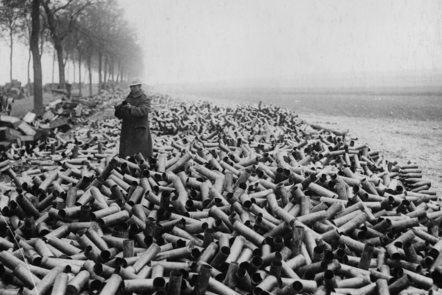
Focusing on the Western Front, the most important and bloody theatre of the war, we will examine how the Allied armies experienced a ‘learning curve’. We will see how they integrated new training, techniques and technologies, to end the stalemate of trench warfare, defeat the German invader and liberate Belgium and northern France from four hard years of military occupation.
The course compares and contrasts the reality of the First World War - a costly and wasteful conflict, but one that ended in a decisive victory over German aggression - with our memory of it today, a war that was both senseless and ineffective. Throughout, we will focus on the experiences of soldiers in the British, French, German and American armies, as these formed the majority of soldiers on the Western Front. This includes soldiers from the British and French empires, including Australian, Canadian, Indian, New Zealand, Algerian, Moroccan and West African soldiers.
You will learn with John Connor, one of Australia’s leading military historians, and a team of international historians. They will draw on the latest historical research to offer new insights and engage with old myths, helping you understand a conflict that, despite occurring a century ago, still resonates with people today.
The course is presented in three parts:
Part 1: An overview of the Great War. We concentrate on the conflict on the Western Front, and explore the development of an unprecedented type of combat, trench warfare.
Part 2: The ‘learning curve’. In this section we compare how the British, French and German armies attempted to end the stalemate of trench warfare by developing new technology, training and tactics.
Part 3: Remembering the First World War. We explore how the social and political landscape has shaped and changed the memory of the War over the last century, and how art, poetry and novels have contributed to that understanding.

Go to Class
MOOC List is learner-supported. When you buy through links on our site, we may earn an affiliate commission.

Related Courses

World War 1: Paris 1919 - A New World Order? (FutureLearn) FutureLearn
University of Glasgow

World War 1: Paris 1919 - A New World Order? (FutureLearn)

This course reassesses the legacy of the Paris Peace Conference (1919) and how it sought to create a new world order. The Paris Peace Conference of 1919 ended a Great War, but it also designed the post-war future. In 1919, world leaders assembled in Paris redrew the map of the world, partitioned and created countries, and ushered in a new era of international relations. The naivety of the peace-makers of 1919 has been justly criticised. However, in setting up a permanent ‘world organisation’, the League of Nations, they changed the management of world affairs forever…

No sessions available
3 Weeks
From World War to White Heat: the RAF in the Cold War (FutureLearn) FutureLearn
Royal Holloway, University of London

From World War to White Heat: the RAF in the Cold War (FutureLearn)

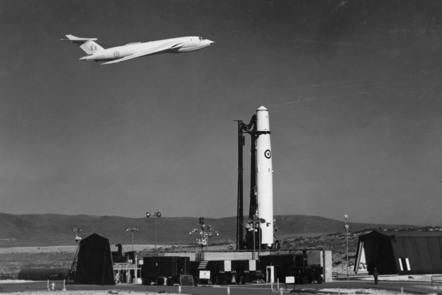
Explore the role that the Royal Air Force played in the Cold War through the collections of the RAF Museums at Hendon and Cosford. This free online course is a collaboration between the Royal Air Force (RAF) Museums and the Department of History at Royal Holloway, University of London. It will introduce you to some of the major turning points in the history of Britain in the post-1945 era.

Self Paced
5-12 Weeks
Paradoxes of War (Coursera) Coursera
Princeton University

Paradoxes of War (Coursera)

The Paradoxes of War teaches us to understand that war is not only a normal part of human existence, but is arguably one of the most important factors in making us who we are. Through this course, I hope that you will come to appreciate that war is both a natural expression of common human emotions and interactions and a constitutive part of how we cohere as groups. That is, war is paradoxically an expression of our basest animal nature and the exemplar of our most vaunted and valued civilized virtues.

Sep 21st 2026
13-24 Weeks
Stalin and Stalinism in Russian History (Coursera) Coursera
Higher School of Economics - HSE University

Stalin and Stalinism in Russian History (Coursera)

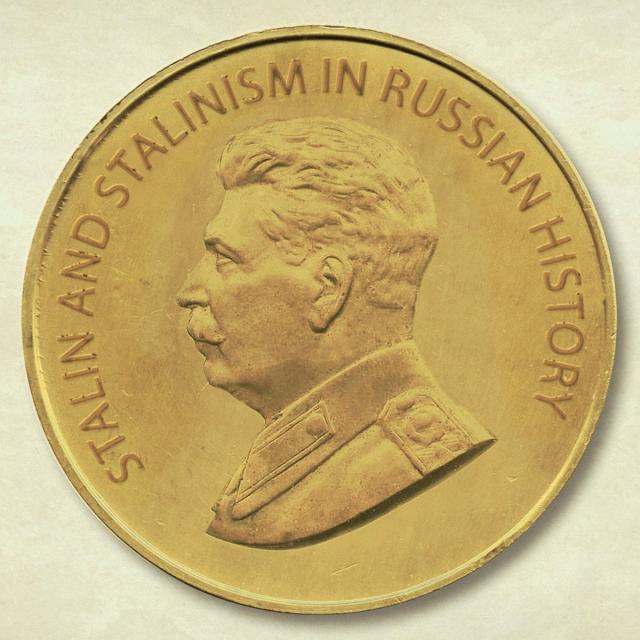
The course presents the life and deeds of Joseph Stalin, the leader of the Soviet Union from 1924 till 1953. It analyses the reasons for his actions and their results, as well as the causes of his popularity in Russia today. It offers an analysis of the phenomenon of Stalinism and of its significance for Russia and beyond. In the late 1920s – early 1930s Stalin directed the massive and rapid industrialisation of the country and the forced collectivisation of its agriculture. The industrialisation was based on forced labour, and collectivisation on repression, but both helped to create the material base for the Soviet defence industry.

Jul 18th 2022
5-12 Weeks
Global Media, War, and Technology (edX) EdX
University of Queensland,UQx

Global Media, War, and Technology (edX)

Explore the intersection of information technology, violent conflict, and resistance. The experience of war has changed fundamentally – not only for those fighting and reporting, but also for those on the home front. High-tech nations wage wars from a distance using satellite-guided weaponry while non-state military actors, terrorist organizations, and citizen journalists have increasingly added new voices and visual perspectives to the conversation about conflict.

Self Paced
Self-Paced
Health Care in Danger: The Rights and Responsibilities of Health-Care Personnel Working in Armed Conflict and Other Emergencies (ICRC) Other Providers
International Committee of the Red Cross

Health Care in Danger: The Rights and Responsibilities of Health-Care Personnel Working in Armed Conflict and Other Emergencies (ICRC)

The rights and responsibilities e-learning module is a web based educational tool designed to provide health care workers with an in depth explanation of their rights and responsibilities during armed conflicts and other emergencies. Developed by the International Committee of the Red Cross, it includes 7 chapters addressing specific issues or themes which health-care workers may face during crises in order to prepare them to respond effectively and ensure that they can provide the necessary care to their patients.

Self Paced
1 Week
War and American Society (saylor.org) Saylor Academy
Saylor.org

War and American Society (saylor.org)

This course will focus on the wars and military conflicts that have shaped the social, political, and economic development of the United States from the colonial era through the present. You will learn how these conflicts have led to significant changes in America social and political life during this 300-year period.

Legacy Course
Self-Paced
Hadrian's Wall: Life on the Roman Frontier (FutureLearn) FutureLearn
Newcastle University

Hadrian's Wall: Life on the Roman Frontier (FutureLearn)

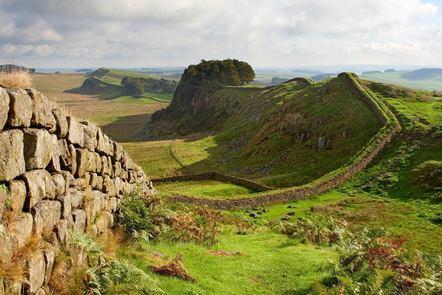
Explore the archaeology of the most heavily fortified frontier in the Roman Empire, its people and their lives. Hadrian’s Wall stretches over 73 miles (117 km), from coast to coast in what is now Northern England. The Wall, complemented by a sophisticated system of outposts and coastal watch stations, offers a remarkable glimpse of ancient society. In addition to housing one of the largest concentrations of Roman soldiers anywhere in the Empire’s provinces, Hadrian’s frontier system was home to an incredibly cosmopolitan array of civilians. This six week course offers a comprehensive introduction to Hadrian’s Wall and its people and raises fascinating issues concerning colonisation, cultural transformation, immigration, integration and imperialism.

Self Paced
5-12 Weeks
Archaeology: from Dig to Lab and Beyond (FutureLearn) FutureLearn
University of Reading

Archaeology: from Dig to Lab and Beyond (FutureLearn)

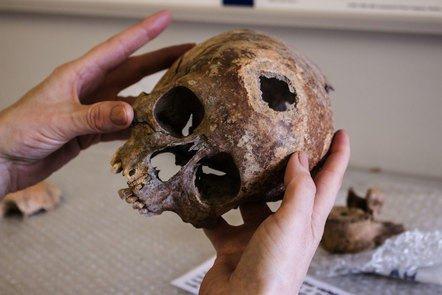
Get an introduction to studying archaeology, exploring exciting discoveries in the Vale of Pewsey, near to Stonehenge and Avebury. Chart the progress of an archaeological excavation from dig to lab and beyond. We’ll show you around our field school at the Vale of Pewsey, a relatively untouched site compared to its famous neighbour, Stonehenge.

Self Paced
2 Weeks
World War 1: Aviation Comes of Age (FutureLearn) FutureLearn
University of Birmingham

World War 1: Aviation Comes of Age (FutureLearn)

Investigate how the white heat of innovation in World War 1 shaped the history of human flight. Investigate how the early days of aviation gripped the imagination of the general public, galvanised industry and excited far-sighted members of the military, with this free online course from the University of Birmingham’s Centre for War Studies.

No sessions available
3 Weeks
An Introduction to Japanese Subcultures (FutureLearn) FutureLearn
Keio University

An Introduction to Japanese Subcultures (FutureLearn)

Explore Japanese subcultures and learn about their history from the 1970s to today. Subcultures have existed for a long time: the greasers of 1950s America, the mods and rockers of the 1960s and 70s in England, the grunge of the 1980s and 90s, to name a few. Each subculture sits within a broader ‘parent’ culture and can often give us an insight into cultural fears and hopes, especially in the youth of the population. On this course you will get an introduction to Japanese subcultures that have developed since the 1970s.

Self Paced
4 Weeks