EdX

The Great War and Modern Philosophy (edX)

The Great War and Modern Philosophy (edX)

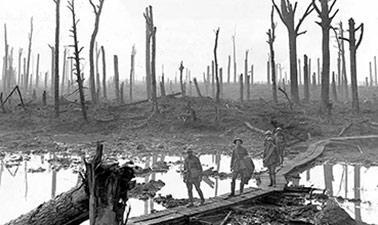
Learn how philosophers responded to the First World War and how the war changed philosophical reflection. The First World War, also known as the Great War, was the original catastrophe of the 20th-century. This course investigates the complex ways in which the Great War mobilized philosophical reflection during the war and the varied ways in which philosophical thought responded to the war.

Class Deals by MOOC List - Click here and see EdX's Active Discounts, Deals, and Promo Codes.

Students in this course will be introduced to different philosophical reactions to the Great War through discussion and analysis of texts, documents, images, artworks, film, and music. The relation between philosophy and poetry will also be explored. In this course, students will gain historical knowledge, conceptual understanding, and literacy for a clearer grasp of the complex ways in which philosophy and the Great War intersected.

The course is divided into four thematic sections:

  • An Absolute War
  • The Clash of Civilizations
  • Memento Mori
  • The Hope of Peace

Across each of these thematic sections, we will explore a panoramic view of different philosophical traditions and movements in England, France, and Germany during the war.
Students have the option to participate in forum discussions in the following languages: English, French, German, Italian, Dutch, and Chinese.
What you'll learn:

  • Basic knowledge of important philosophical reactions to the First World War
  • Conceptual understanding of philosophical and literary texts
  • Historical understanding of the war and its cultural impact
  • A clearer grasp of the complex ways in which philosophy and the Great War intersected
Go to Class
MOOC List is learner-supported. When you buy through links on our site, we may earn an affiliate commission.

Related Courses

World War 1: Aviation Comes of Age (FutureLearn) FutureLearn
University of Birmingham

World War 1: Aviation Comes of Age (FutureLearn)

Investigate how the white heat of innovation in World War 1 shaped the history of human flight. Investigate how the early days of aviation gripped the imagination of the general public, galvanised industry and excited far-sighted members of the military, with this free online course from the University of Birmingham’s Centre for War Studies.

No sessions available
3 Weeks
World War 1: Paris 1919 - A New World Order? (FutureLearn) FutureLearn
University of Glasgow

World War 1: Paris 1919 - A New World Order? (FutureLearn)

This course reassesses the legacy of the Paris Peace Conference (1919) and how it sought to create a new world order. The Paris Peace Conference of 1919 ended a Great War, but it also designed the post-war future. In 1919, world leaders assembled in Paris redrew the map of the world, partitioned and created countries, and ushered in a new era of international relations. The naivety of the peace-makers of 1919 has been justly criticised. However, in setting up a permanent ‘world organisation’, the League of Nations, they changed the management of world affairs forever…

No sessions available
3 Weeks
Introducing Objectivism (ARI) ARI Campus
The Ayn Rand Institute

Introducing Objectivism (ARI)

In 1962, Ayn Rand was invited to write a weekly column for the Los Angeles Times. Her first column was a brief introduction to her philosophy, Objectivism. In this short course, based on a recording of Rand reading her column, you will hear her summarize her positions on the nature of reality, the efficacy of human reason, the nature of man, and the ideal political system.

Self Paced
Self-Paced
Tangible Things: Discovering History Through Artworks, Artifacts, Scientific Specimens, and the Stuff Around You (edX) EdX
HarvardX,Harvard University

Tangible Things: Discovering History Through Artworks, Artifacts, Scientific Specimens, and the Stuff Around You (edX)

Gain an understanding of history, museum studies, and curation by looking at, organizing, and interpreting art, artifacts, scientific curiosities, and the stuff of everyday life. Have you ever wondered about how museum, library, and other kinds of historical or scientific collections all come together? Or how and why curators, historians, archivists, and preservationists do what they do?

Self Paced
Self-Paced
Terrorism and Counterterrorism (edX) EdX
Georgetown University,GeorgetownX

Terrorism and Counterterrorism (edX)

What is the danger of terrorism, and how can the world respond effectively? Terrorism has gone from a persistent yet marginal security concern to one of the most important security problems of our day. There are few countries that do not suffer from some form of terrorism. Though many attempts at terrorism fail, some groups wage lengthy and bloody campaigns and, in exceptional cases, kill hundreds or even thousands in pursuit of their ends.

Self Paced
Self-Paced
Chinese History From Warring States to the Tang Dynasty | 资治通鉴 (edX) EdX
Tsinghua University,TsinghuaX

Chinese History From Warring States to the Tang Dynasty | 资治通鉴 (edX)

Guides you through the Chinese masterpiece _Zizhi Tongjian, _an unprecedented work of governance and philosophical thinking spanning from the Warring States Period to the Tang Dynasty. Through the teacher's guided reading, students can go deep into the interior of this classic text, gain an overview of thousands of years of history, and improve their literacy in Chinese studies.

Self Paced
Self-Paced
English for Doing Business in Asia - Speaking (edX) EdX
The Hong Kong University of Science and Technology - HKUST,HKUSTx

English for Doing Business in Asia - Speaking (edX)

Introducing strategies for developing your spoken English communication skills in the context of doing business in Asia. The use of English for doing business in multinational settings is a fact of life for many business people. As Asian economies expand and become more involved in the global economy, a lingua franca – a language used to communicate among groups of people who do not share a mother tongue – is needed to exchange information.

Self Paced
Self-Paced
European Paintings: From Leonardo to Rembrandt to Goya (edX) EdX
Universidad Carlos III de Madrid - UC3M,UC3Mx

European Paintings: From Leonardo to Rembrandt to Goya (edX)

Uncover the meaning behind the art of the great painters from 1400 to 1800. Learn about the inspirational work of the leading European painters from approximately 1400 to 1800, and explore the issues expressed through the art of painting. Included in this broad time frame are the works of Leonardo da Vinci, Caravaggio, Velázquez, Rembrandt, Vermeer and Goya.

Self Paced
Self-Paced
Visualizing Postwar Tokyo, Part 1 (edX) EdX
The University of Tokyo,UTokyoX

Visualizing Postwar Tokyo, Part 1 (edX)

Analyze the history of change and development in postwar Tokyo from different perspectives using archived photographs, films, and TV programs. Tokyo emerged out of the ruins of war to become a large city of 10 million people in only a quarter of a century. During this process of change, the capital of a military empire that once invaded East Asia experienced occupation by the U.S. armed forces, hosted the Olympic Games, and transformed into a consumer hub where young people could enjoy economic “wealth.”

Self Paced
Self-Paced
Academic and Business Writing (edX) EdX
University of California, Berkeley,BerkeleyX

Academic and Business Writing (edX)

An introduction to academic and business writing for English Language Learners, focusing on grammar, vocabulary, structure, editing, and publication. College Writing 2.2x providesan introduction to academic and business writing for English Language Learners. In this course, students focus on understanding the demands of different styles of writing, andwork to improve grammatical correctness, vocabulary development, and revision and editing skills.

Self Paced
Self-Paced