Introducing Objectivism (ARI)

Introducing Objectivism (ARI)

In 1962, Ayn Rand was invited to write a weekly column for the Los Angeles Times. Her first column was a brief introduction to her philosophy, Objectivism. In this short course, based on a recording of Rand reading her column, you will hear her summarize her positions on the nature of reality, the efficacy of human reason, the nature of man, and the ideal political system.

Here are some of the questions this course addresses:

  • What are the basic tenets of Objectivism?
  • What is the nature of reason?
  • What is man’s moral purpose in life?
  • Why is capitalism the ideal politico-economic system for man?
  • What is destroying capitalism?

Lesson Outline:

  1. OBJECTIVISM "ON ONE FOOT"
  2. REALITY, REASON, SELF-INTEREST, CAPITALISM
  3. ALTRUISM VS. CAPITALISM

To get the most from this course, it is recommended that you first complete the short Philosophy: Who Needs It course.

Suggested Readings: Atlas Shrugged.

Go to Class
MOOC List is learner-supported. When you buy through links on our site, we may earn an affiliate commission.
Related Courses

Philosophy of Science (Coursera) Coursera
University of Pennsylvania

Philosophy of Science (Coursera)

For the last four centuries, scientists have aimed to provide us with an understanding of the world around us. By all appearances, science has made substantial progress during this time. But is this progress real or illusory? And if it is real, how has this progress been made? This four-week course will consider these important questions.

Oct 5th 2026
4 Weeks
The Einstein Revolution (edX) EdX
HarvardX,Harvard University

The Einstein Revolution (edX)

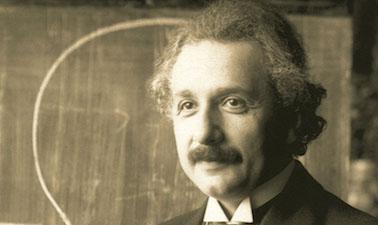
Traces Albert Einstein’s engagement with relativity, quantum mechanics, Nazism, nuclear weapons, philosophy, the arts, and technology. Albert Einstein has become the icon of modern science. Following his scientific, cultural, philosophical, and political trajectory, this course aims to track the changing role of physics in the 20th and 21st centuries.

Self Paced
Self-Paced
Relativism (Coursera) Coursera
University of California, Irvine

Relativism (Coursera)

Relativism is an ancient philosophical doctrine which has recurred time and again in the history of philosophy. It has also transcended the boundaries of that discipline, for it has shaped much of the methodology in anthropology and sociology, as well as in critical theory and literary studies. While often advocated for its supposed tolerance of differences, relativism has profound consequences for how we think of reality, for the possibility of knowledge, both in the factual and in the moral domain, and may engender the practice of double standard.

Oct 12th 2026
4 Weeks
The History of Medicine: Philosophy, Science, and Psychology (Coursera) Coursera
University of California, Santa Cruz

The History of Medicine: Philosophy, Science, and Psychology (Coursera)

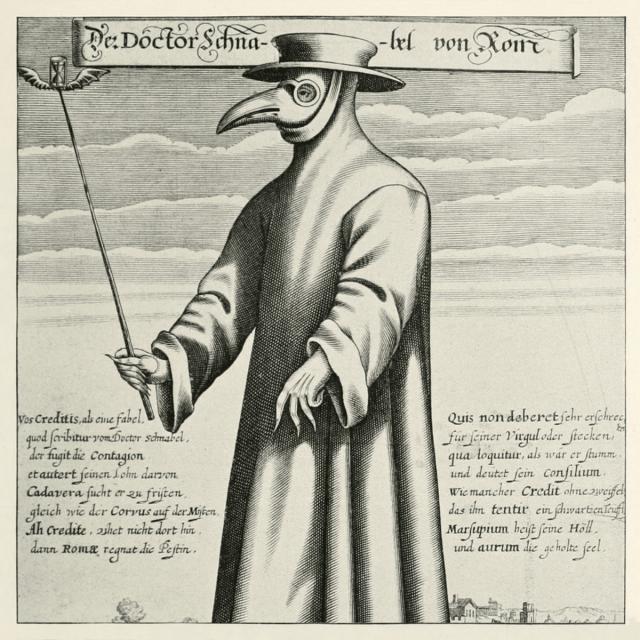
"History of Medicine" provides an accessible historical and interdisciplinary perspective on medicine, focused primarily upon therapy and practice, to achieve better understanding of the scope, practice, and limits of medicine. Medicine is defined as the treatment of disease. Human attempts to understand and treat disease will be seen as evolving from the spiritual and mystical practices of the distant past, to the rational approach of the Classical World, and finally to the scientific thinking of the Renaissance and beyond.

Sep 28th 2026
5-12 Weeks
Ancient Philosophy: Aristotle and His Successors (Coursera) Coursera
University of Pennsylvania

Ancient Philosophy: Aristotle and His Successors (Coursera)

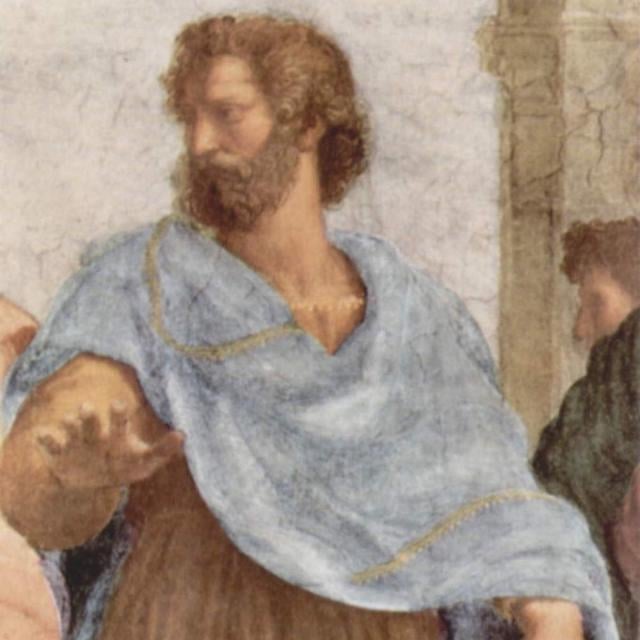
What is philosophy? How does it differ from science, religion, and other modes of human discourse? This course traces the origins of philosophy in the Western tradition in the thinkers of Ancient Greece. We begin with the Presocratic natural philosophers who were active in Ionia in the 6th century BCE and are also credited with being the first scientists. Thales, Anaximander, and Anaximines made bold proposals about the ultimate constituents of reality, while Heraclitus insisted that there is an underlying order to the changing world.

Sep 21st 2026
5-12 Weeks
Introduction to Korean Philosophy and Culture (Coursera) Coursera
Sungkyunkwan University - SKKU

Introduction to Korean Philosophy and Culture (Coursera)

This course will give you the cultural and historical background to begin your journey into Korean philosophy, and there is no prerequisite knowledge on philosophy required. Anybody who either has an interest in Korean culture, maybe through K-Dramas or K-pop, or an interest in philosophy from a cross-cultural perspective, are all welcome.

Sep 28th 2026
4 Weeks
Science & Religion 101 (Coursera) Coursera
University of Alberta

Science & Religion 101 (Coursera)

This course examines the nature of both science and religion and attempts to explore the possible relationships between them. The primary purpose is to dispel the popular myth that science and religion are entrenched in a never-ending conflict. As a result, this course argues that if the limits of both science and religion are respected, then their relationship can be complementary.

Sep 28th 2026
5-12 Weeks
Philosophy, Science and Religion: Religion and Science (Coursera) Coursera
University of Edinburgh

Philosophy, Science and Religion: Religion and Science (Coursera)

Philosophy, Science and Religion mark three of the most fundamental modes of thinking about the world and our place in it. Are these modes incompatible? Put another way: is the intellectually responsible thing to do to ‘pick sides’ and identify with one of these approaches at the exclusion of others? Or, are they complementary or mutually supportive? As is typical of questions of such magnitude, the devil is in the details. For example, it is important to work out what is really distinctive about each of these ways of inquiring about the world. In order to gain some clarity here, we’ll be investigating what some of the current leading thinkers in philosophy, science and religion are actually doing.

Oct 6th 2026
5-12 Weeks
Philosophy, Science and Religion: Science and Philosophy (Coursera) Coursera
University of Edinburgh

Philosophy, Science and Religion: Science and Philosophy (Coursera)

Philosophy, Science and Religion mark three of the most fundamental modes of thinking about the world and our place in it. Are these modes incompatible? Put another way: is the intellectually responsible thing to do to ‘pick sides’ and identify with one of these approaches at the exclusion of others? Or, are they complementary or mutually supportive? As is typical of questions of such magnitude, the devil is in the details. For example, it is important to work out what is really distinctive about each of these ways of inquiring about the world. In order to gain some clarity here, we’ll be investigating what some of the current leading thinkers in philosophy, science and religion are actually doing.

Oct 5th 2026
5-12 Weeks