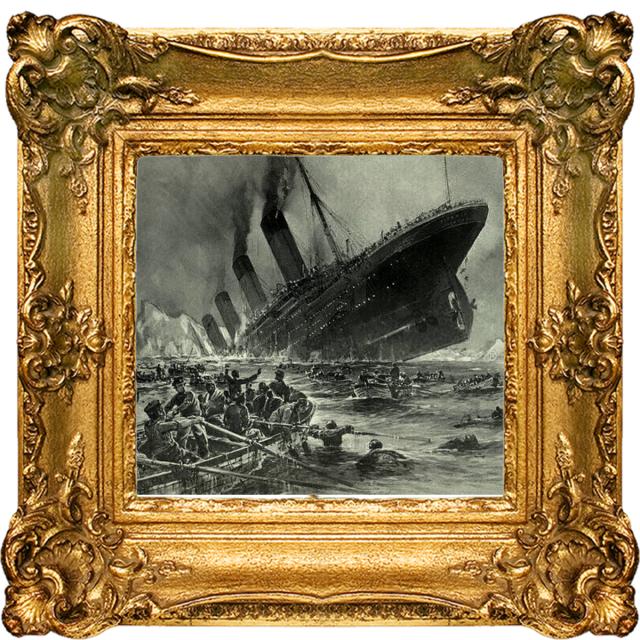
Humanidades digitales (Coursera)

Humanidades digitales (Coursera)

¿Te has planteado para qué sirven las humanidades en el siglo XXI? ¿Cómo el advenimiento de lo Digital ha cambiado nuestra forma de acercarnos a las Humanidades? ¿Y al revés? ¿De qué forma las Humanidades influencian sobre los diferentes aspectos de la Tecnología? Te ofrecemos el primer curso online que da respuesta a estas preguntas. Una visión de las Humanidades Digitales desde la filosofía, la historia, la arqueología, el arte,… y desde las ciencias computacionales y la visión por ordenador.

Class Deals by MOOC List - Click here and see Coursera's Active Discounts, Deals, and Promo Codes.

El curso ofrece una aproximación interdisciplinar a las Humanidades y el Patrimonio Digital, y a los métodos y herramientas utilizados (Bases de datos, Open Data, Big Data, Realidad Virtual, Redes Sociales, image recognition,…). También nos aporta una reflexión sobre los aspectos legales y éticos de la tecnología y sus implicaciones en la transformación digital, la innovación social, la política y la cultura.
¿Para qué sirve este curso? El curso pretende ser una introducción a las Humanidades y el Patrimonio Digital. Con él tendrás una visión amplia y transversal de los diferentes aspectos implicados en los diferentes ámbitos. Un curso que te ayudará en tu camino a la transformación digital y a la implementación de la tecnología digital en las Humanidades.
Si eres una persona con una formación humanista, ingeniería o informática, o simplemente te interesa la relación de la tecnología con las humanidades, este curso es para ti. Está pensado para poder ser completado por cualquier persona con interés, puesto que las presentaciones son amenas y alternativas, eso sí, sin perder nunca el rigor académico.
Un curso impartido por especialistas de la Xarxa d’Humanitats Digitals (Red de Humanidades Digitales) de la Universidad Autònoma de Barcelona.

Syllabus

WEEK 1
bienvenida/presentación
¿Qué son las Humanidades Digitales (HD)?
En esta semana nos adentraremos en la revolución del ámbito de las humanidades mediante el análisis de la Sociedad de la Información del siglo XXI.

WEEK 2
Métodos Y Herramientas
En este módulo analizaremos las aplicaciones computacionales en diferentes áreas humanísticas y las nociones básicas relativas al software, metodologías y recursos electrónicos de este nuevo entorno cultural.

WEEK 3
Digitalizando el SaberLas diversas disciplinas son analizadas bajo las perspectivas de su “digitalización”. Desde la incorporación de nuevas formas digitales a las humanidades clásicas hasta las nuevas y genuinas formas de producción humanística desde los entornos digitales.

WEEK 4
La Transformación Digital
Durante el cuarto módulo veremos como las humanidades se han transformado en digitales y nos ayudan a transformar la sociedad.
Go to Class
MOOC List is learner-supported. When you buy through links on our site, we may earn an affiliate commission.

Related Courses

Ancient Philosophy: Plato & His Predecessors (Coursera) Coursera
University of Pennsylvania

Ancient Philosophy: Plato & His Predecessors (Coursera)

What is philosophy? How does it differ from science, religion, and other modes of human discourse? This course traces the origins of philosophy in the Western tradition in the thinkers of Ancient Greece. We begin with the Presocratic natural philosophers who were active in Ionia in the 6th century BCE and are also credited with being the first scientists.

Aug 17th 2026
4 Weeks
Philosophy, Science and Religion: Science and Philosophy (Coursera) Coursera
University of Edinburgh

Philosophy, Science and Religion: Science and Philosophy (Coursera)

Philosophy, Science and Religion mark three of the most fundamental modes of thinking about the world and our place in it. Are these modes incompatible? Put another way: is the intellectually responsible thing to do to ‘pick sides’ and identify with one of these approaches at the exclusion of others? Or, are they complementary or mutually supportive? As is typical of questions of such magnitude, the devil is in the details. For example, it is important to work out what is really distinctive about each of these ways of inquiring about the world. In order to gain some clarity here, we’ll be investigating what some of the current leading thinkers in philosophy, science and religion are actually doing.

Aug 3rd 2026
5-12 Weeks
Reimagining Blackness and Architecture (Coursera) Coursera
The Museum of Modern Art

Reimagining Blackness and Architecture (Coursera)

Architecture structures our daily lives. It shapes our homes, streets, neighborhoods, cities and more. But who gets to create and occupy these spaces? In the United States, a long history of anti-Black racism has created spatial inequalities that are built into the physical environment and erased the stories of Black architects and communities. Reimagining Blackness and Architecture explores the relationship between architecture and Blackness as an identity and a lived experience.

Aug 10th 2026
5-12 Weeks
De-Mystifying Mindfulness (Coursera) Coursera
Leiden University

De-Mystifying Mindfulness (Coursera)

Interest in meditation, mindfulness, and contemplation has grown exponentially in recent years. Rather than being seen as mystical practices from ancient Buddhism or esoteric philosophy, they are increasingly seen as technologies rooted in evidence from psychology and neuroscience. Mindfulness has become the basis for numerous therapeutic interventions, both as a treatment in healthcare and as a means of enhancing well-being and happiness. For millions around the world, mindfulness has become a life-style choice, enhancing and enriching everyday experience. Mindfulness is big business.

Aug 10th 2026
5-12 Weeks
The Place of Music in 21st Century Education (Coursera) Coursera
The University of Sydney

The Place of Music in 21st Century Education (Coursera)

What do children need from education now, and in the future? How is technology best used in teaching and learning? How can innovative approaches to education be reconciled with established, traditional ones? What does student-centred learning really mean? This five module course is not just for classroom or ensemble music educators. It’s suitable for anyone interested in creativity-infused education, in contemporary education issues, and in the integration and use of digital technology.

Aug 3rd 2026
5-12 Weeks
Intellectual Humility: Theory (Coursera) Coursera
University of Edinburgh

Intellectual Humility: Theory (Coursera)

Faced with difficult questions people often tend to dismiss and marginalize dissent. Political and moral disagreements can be incredibly polarizing, and sometimes even dangerous. And whether it’s Christian fundamentalism, Islamic extremism, or militant atheism, religious dialogue remains tinted by arrogance, dogma, and ignorance. The world needs more people who are sensitive to reasons both for and against their beliefs, and are willing to consider the possibility that their political, religious and moral beliefs might be mistaken. The world needs more intellectual humility.

Aug 3rd 2026
3 Weeks
Søren Kierkegaard - Subjectivity, Irony and the Crisis of Modernity (Coursera) Coursera
University of Copenhagen

Søren Kierkegaard - Subjectivity, Irony and the Crisis of Modernity (Coursera)

In this course created by former associate professor at the Søren Kierkegaard Research Centre, Jon Stewart, we will explore how Kierkegaard deals with the problems associated with relativism, the lack of meaning and the undermining of religious faith that are typical of modern life. His penetrating analyses are still highly relevant today and have been seen as insightful for the leading figures of Existentialism, Post-Structuralism and Post-Modernism.

Aug 17th 2026
5-12 Weeks
New Technologies for Business Leaders (Coursera) Coursera
Rutgers University

New Technologies for Business Leaders (Coursera)

This introductory course is developed for high-level business people (and those on their way) who want a broad understanding of new Information Technologies and understand their potential for business functions (e.g. marketing, supply change management, finance). This is not a course for people looking for guidance on how to become a deep technical expert or implement these technologies.

Aug 3rd 2026
5-12 Weeks
Perspectives in Digital Transformation: Agribusiness (Coursera) Coursera
Inter-American Development Bank - IDB

Perspectives in Digital Transformation: Agribusiness (Coursera)

In this course, you will be learn how to apply the best practices that have been tested by global companies to make the most of the potentialities of digital transformation and its application to your business. Discover what the level of digital maturity is for your organization by identifying current trends in digital transformation, the use of technologies, and the impact on sustainability in the agribusiness sector in Latin America.

Aug 17th 2026
3 Weeks
Web3 and Blockchain Fundamentals (Coursera) Coursera
INSEAD

Web3 and Blockchain Fundamentals (Coursera)

There is a lot of hype around Web3 and blockchain. As with any disruptive technology, there are many competing sources of information. But if we look beyond the hype and mania—not to mention the fear, uncertainty, and doubt—we see something profound happening. We are witnessing one of the largest transformations of wealth in human history—from paper-based analog assets to digital ones. Blockchain represents the first native digital medium for value, and is foundational to the next generation of the Internet—also known as Web3.

Aug 17th 2026
1 Week
Art and the Digital Transformation (Coursera) Coursera
Copenhagen Business School

Art and the Digital Transformation (Coursera)

More than two decades into the new millennium, it is difficult to envision a future in which digital technologies do not play a significant role. Digital technologies frequently make a lot of promises. However, in recent years, we have seen an increasing number of artists address fundamental issues of the Digital Transformation, such as surveillance, lack of representation, and digital illiteracy. Artists have demonstrated that, while digital technologies have the potential to support processes leading to greater equality, they are frequently viewed as perpetuating and even exacerbating inequalities.

Aug 10th 2026
5-12 Weeks
Designing and Implementing Your Coaching Strategy (Coursera) Coursera
University of California, Davis

Designing and Implementing Your Coaching Strategy (Coursera)

In order to be an effective manager in increasingly fast-paced and complex organizational environments, coaching skills to develop and get the best work out of employees has become essential. Throughout the Coaching Skills for Managers specialization, we’ve discussed many topics for improving coaching conversations with our employees. It is now time to put all of that theory and discussion into practice as you solidify your coaching philosophy, develop your coaching practice and agendas, and demonstrate mastery at handling everyday coaching conversations!

Aug 24th 2026
3 Weeks