Alfabetização Midiática, Informacional e Diálogo Intercultural - UNESCO e UNICAMP (Coursera)

Alfabetização Midiática, Informacional e Diálogo Intercultural - UNESCO e UNICAMP (Coursera)

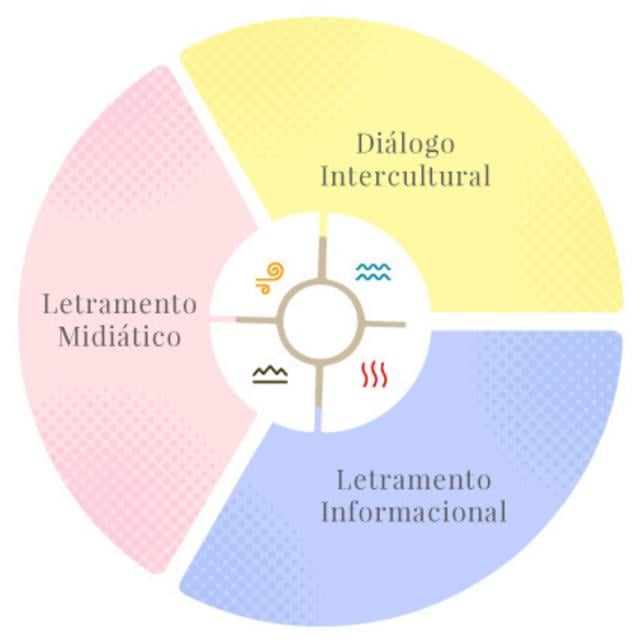
Este curso quer pensar junto com você sobre um fenômeno recente no Brasil, que é a presença de uma grande quantidade de informação via mundo digital. Vamos mostrar diferentes caminhos do que podemos fazer com essa quantidade incrível de midias e como participar da construção de conteúdo digital de maneira sóbria e segura.

Class Deals by MOOC List - Click here and see Coursera's Active Discounts, Deals, and Promo Codes.

Além disso, nós fomos buscar conselhos de várias lideranças comunitárias, e você terá acesso a suas percepções e análises nos videos de cada semana do curso. Querer saber o que pensa quem é diferente de nós é sempre um bom início de investigação.
Há uma tradição de pensar a filosofia contemporânea no Brasil como um modo de pensar a nossa realidade. Os filósofos são aqueles que pensam sobre o mundo, sobre o que acontece no mundo, e que nos atualizam com reflexões sobre a nossa vida e as nossas relações

Syllabus

WEEK 1
Alfabetização midiática e informacional: uma introdução
Bem vindo ao curso de Alfabetização Midiática, informacional e Diálogo Intercultural! Neste módulo você terá disponível uma introdução de recursos e informações que te levarão à uma maior capacidade de compreender porque os meios de comunicação e outros provedores de informações são importantes para o desenvolvimento e as sociedades democráticas, aprender sobre o que os meios de comunicação e outros provedores de informações devem fazer para apoiar o desenvolvimento e a democracia, reconhecer a necessidade de informação, aprender como melhor localizar e acessar informações necessárias e muitos outros aprendizados que a Alfabetização Midiática e Informacional e o Diálogo Intercultural pode lhe proporcionar em termos de conhecimento.
WEEK 2
Alfabetização em Mídia, Informação e Diálogo Intercultural

WEEK 3
Alfabetização midiática e informacional: avaliando e usando informações e conteúdo midiático

WEEK 4
Alfabetização midiática e informacional: Usando pesquisa e análise para produzir sua própria informação e conteúdo de mídia

WEEK 5
Liberdade de Expressão, Liberdade de Informação, Liberdade de Imprensa

WEEK 6
Representações de Gênero na mídia, nos Livros, na Internet e na História

WEEK 7
Ética da mídia e da informação em relação às necessidades dos grandes negócios, política e desenvolvimento

WEEK 8
Entendendo e Avaliando o Mundo da Publicidade

WEEK 9
Desafios da Internet e Oportunidades para Crianças e Jovens

WEEK 10
Envolvendo-se com mídia e usando nova tecnologia e Informação para Ação Social

Go to Class
MOOC List is learner-supported. When you buy through links on our site, we may earn an affiliate commission.

Related Courses

Philosophy, Science and Religion: Religion and Science (Coursera) Coursera
University of Edinburgh

Philosophy, Science and Religion: Religion and Science (Coursera)

Philosophy, Science and Religion mark three of the most fundamental modes of thinking about the world and our place in it. Are these modes incompatible? Put another way: is the intellectually responsible thing to do to ‘pick sides’ and identify with one of these approaches at the exclusion of others? Or, are they complementary or mutually supportive? As is typical of questions of such magnitude, the devil is in the details. For example, it is important to work out what is really distinctive about each of these ways of inquiring about the world. In order to gain some clarity here, we’ll be investigating what some of the current leading thinkers in philosophy, science and religion are actually doing.

Aug 11th 2026
5-12 Weeks
Ethical Issues in Data Science (Coursera) Coursera
University of Colorado Boulder

Ethical Issues in Data Science (Coursera)

Computing applications involving large amounts of data – the domain of data science – impact the lives of most people in the U.S. and the world. These impacts include recommendations made to us by internet-based systems, information that is available about us online, techniques that are used for security and surveillance, data that is used in health care, and many more. In many cases, they are affected by techniques in artificial intelligence and machine learning.

Aug 3rd 2026
5-12 Weeks
After the Arab Spring – Democratic Aspirations and State Failure (Coursera) Coursera
University of Copenhagen

After the Arab Spring – Democratic Aspirations and State Failure (Coursera)

Learn why the hope and excitement of the Arab Spring is gone, why so many Arab states are falling apart, why the youth are so frustrated, why there are so many refugees, and what can be done about it. The so-called Arab Spring appeared to end decades of exceptionalism and bring the Arab world back into the mainstream of global developments. The rebellions promised the return of politics and the reassertion of popular sovereignty against their corrupt and geriatric leaders. Much hope and flowery language greeted the young men and women who deposed their leaders and tried to build new, better societies.

Aug 3rd 2026
5-12 Weeks
De-Mystifying Mindfulness (Coursera) Coursera
Leiden University

De-Mystifying Mindfulness (Coursera)

Interest in meditation, mindfulness, and contemplation has grown exponentially in recent years. Rather than being seen as mystical practices from ancient Buddhism or esoteric philosophy, they are increasingly seen as technologies rooted in evidence from psychology and neuroscience. Mindfulness has become the basis for numerous therapeutic interventions, both as a treatment in healthcare and as a means of enhancing well-being and happiness. For millions around the world, mindfulness has become a life-style choice, enhancing and enriching everyday experience. Mindfulness is big business.

Aug 10th 2026
5-12 Weeks
Philosophy and the Sciences: Introduction to the Philosophy of Cognitive Sciences (Coursera) Coursera
University of Edinburgh

Philosophy and the Sciences: Introduction to the Philosophy of Cognitive Sciences (Coursera)

What is our role in the universe as human agents capable of knowledge? What makes us intelligent cognitive agents seemingly endowed with consciousness? This is the second part of the course 'Philosophy and the Sciences', dedicated to Philosophy of the Cognitive Sciences. Scientific research across the cognitive sciences has raised pressing questions for philosophers. The goal of this course is to introduce you to some of the main areas and topics at the key juncture between philosophy and the cognitive sciences. Each week we will introduce you to some of these important questions at the forefront of scientific research. We will explain the science behind each topic in a simple, non-technical way, while also addressing the philosophical and conceptual questions arising from it.

Jul 27th 2026
4 Weeks
Data, Security, and Privacy (Coursera) Coursera
University of California, Irvine

Data, Security, and Privacy (Coursera)

This course provides hands-on experience with technology-based productivity tools, as well as foundational knowledge and understanding of system design and development. The course is designed to integrate concepts of hardware, software, and the Internet. This course also provides an overview of data security, data privacy, and ways to increase productivity and efficiency. Students will also investigate technology career paths and some of the various certifications available in the industry.

Aug 3rd 2026
3 Weeks
Philosophy of Science (Coursera) Coursera
University of Pennsylvania

Philosophy of Science (Coursera)

For the last four centuries, scientists have aimed to provide us with an understanding of the world around us. By all appearances, science has made substantial progress during this time. But is this progress real or illusory? And if it is real, how has this progress been made? This four-week course will consider these important questions.

Aug 10th 2026
4 Weeks
Setting Expectations & Assessing Performance Issues (Coursera) Coursera
University of California, Davis

Setting Expectations & Assessing Performance Issues (Coursera)

If you don’t know where you are going, any road will take you there. One of the most important roles of a manager is to ensure everyone knows the destination. The most effective managers set expectations and assess their employees’ performance against those expectations, and take a coaching approach to helping them get to the destination. That’s exactly what you’ll learn to do in this course! You will explore how to collaboratively develop expectations with those you lead. When you encounter expectations that are not being met, you’ll learn how to use "Coaching Algebra" to determine the underlying issues that are impeding performance, and how to respond as a manger-coach.

Jul 27th 2026
4 Weeks
Introduction to Korean Philosophy and Culture (Coursera) Coursera
Sungkyunkwan University - SKKU

Introduction to Korean Philosophy and Culture (Coursera)

This course will give you the cultural and historical background to begin your journey into Korean philosophy, and there is no prerequisite knowledge on philosophy required. Anybody who either has an interest in Korean culture, maybe through K-Dramas or K-pop, or an interest in philosophy from a cross-cultural perspective, are all welcome.

Aug 3rd 2026
4 Weeks
Skepticism (Coursera) Coursera
University of California, Irvine

Skepticism (Coursera)

Skepticism is about doubt, and doubt is everywhere in the world around us today. There are doubts about whether man-made climate change is real, whether vaccinations are harmful, whether we can trust our politicians or our media, and so on. When is such skepticism warranted, and when does it stray into unreasonable territory? How widespread can such skepticism get while still being coherent? How might a radical skepticism have pernicious social consequences, such as by leading to relativism (and just what is relativism, and what is problematic about it)?

Aug 10th 2026
4 Weeks
Science & Religion 101 (Coursera) Coursera
University of Alberta

Science & Religion 101 (Coursera)

This course examines the nature of both science and religion and attempts to explore the possible relationships between them. The primary purpose is to dispel the popular myth that science and religion are entrenched in a never-ending conflict. As a result, this course argues that if the limits of both science and religion are respected, then their relationship can be complementary.

Aug 3rd 2026
5-12 Weeks