Web Technologies (openHPI)

Web Technologies (openHPI)

WWW, the world wide web or shortly the web - really nothing more than an information service on the Internet – has changed our world by creating a whole new digital world that is closely intertwined with our real world, making reality what was previously unimaginable: communication across the world in seconds, watching movies on a smartphone, playing games or looking at photos with remote partners in distant continents, shopping or banking from your couch … In our online course on web technologies you will learn how it all works.

We start off by introducing the underlying technologies of the web: URI, HTTP, HTML, CSS and XML. If this sounds cryptic, rest assured that you will soon become familiar with what it’s all about. We will then focus on web services and web programming technologies along with their practical application. And we will look at how search engines – our fast and reliable signposts in the digital world – actually work to find contents and services on the web. The course concludes with a look at cloud computing and how it is changing the way we will access computing power in the future.
Here’s what participants are saying about this course:
Ralf: “The concept is great and methodically and didactically well thought out. We all noticed that further development is continually going on here - indispensable in dealing with this topic today. The support and guidance from the help desk and forum were also outstanding. Thank you.”
Kerstin: “I have to honestly say that I am impressed by what you’ve accomplished here. The course was totally professional and the tasks were set up so that it was possible to learn a lot. It was important for me to get an overview of the technologies and relationships between them. The class was taught really well and it was fun too.”
Claudia; “I enjoyed this course so much. It gave me a chance to expand my horizons in web technologies a great deal. I really liked the practical homework exercises, especially the calculation task in Week 5. I’m already looking forward to the next course. Keep up the good work!”

Go to Class
MOOC List is learner-supported. When you buy through links on our site, we may earn an affiliate commission.

Related Courses

Writing Java Application Code (Coursera) Coursera
LearnQuest

Writing Java Application Code (Coursera)

This is the third course in a Specialization titled Java as a Second Language. This course presents instruction to IT professionals for developing Java applications. The material targets professional that are familiar with application programming, but do not have strong Java skills. The type of Java applications focus on: Console based Java applications, Java windows applications, and Java web and mobile applications. This course presents material on developing real applications, and includes hands-on application development labs. Learners will gain strong Java application development skills.

Nov 9th 2026
4 Weeks
Web Technologies - Edition 2023 (openHPI) OpenHPI
Hasso-Plattner-Institut

Web Technologies - Edition 2023 (openHPI)

WWW, the world wide web or shortly the web - really nothing more than an information service on the Internet – has changed our world by creating a whole new digital world that is closely intertwined with our real world, making reality what was previously unimaginable: communication across the world in seconds, watching movies on a smartphone, playing games or looking at photos with remote partners in distant continents, shopping or banking from your couch … In our MOOC on web technologies you will learn how it all works.

Oct 25th 2023
5-12 Weeks
Knowledge Engineering with Semantic Web Technologies (openHPI) OpenHPI
Hasso-Plattner-Institut

Knowledge Engineering with Semantic Web Technologies (openHPI)

The knowledge contained in the World Wide Web is available in interlinked documents written in natural language. To make use of this knowledge, technologies such as natural language processing, information retrieval, data and knowledge mining must be applied. Semantic Web technologies follow an alternative approach by complementing web documents with explicit semantics based on formal knowledge representations, such as e.g. ontologies. In this course, you will learn the fundamentals of Semantic Web technologies and how they are applied for knowledge representation in the World Wide Web. You will learn how to represent knowledge with ontologies and how to access and benefit from semantic data on the Web. Furthermore, you will also learn how to make use of Linked Data and the Web of Data, currently the most popular applications based on Semantic Web technologies.

Self Paced
Self-Paced
Justice and Equity in Technology Policy (Coursera) Coursera
University of Michigan

Justice and Equity in Technology Policy (Coursera)

More than ever, technology is shaping, and being shaped by, public policy. This has an enormous impact, particularly for marginalized communities. The artificial intelligence and computer algorithms increasingly driving government and industry decisions—from the allocation of social services to hiring—are reflecting and reinforcing social biases towards women, people of color, and disabled people, among others. Global climate change is having a disproportionately negative impact on low- and middle-income countries, and on historically disadvantaged communities of color in the United States. Communities are increasingly concerned they are not benefiting from government research funding, and that the regulation of emerging technologies is inadequate.

Nov 9th 2026
5-12 Weeks
Science and Technology in the Silla Cultural Heritage (Coursera) Coursera
Pohang University of Science and Technology - POSTECH

Science and Technology in the Silla Cultural Heritage (Coursera)

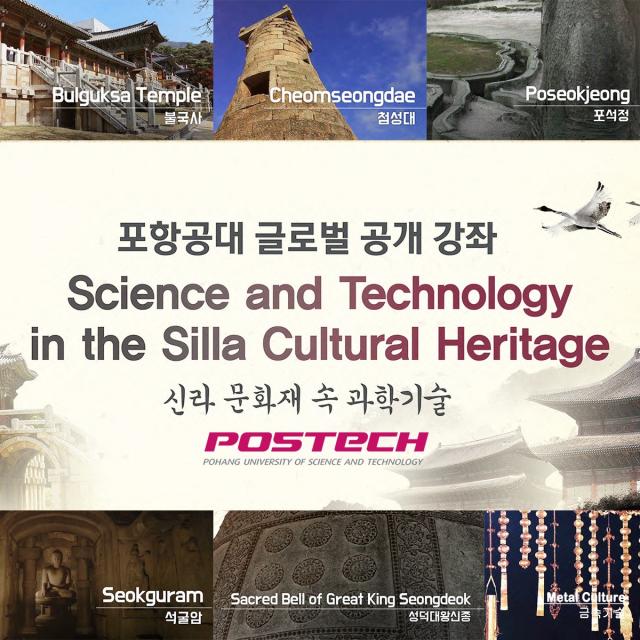
Science and Technology in the Silla Heritage. The course explores the scientific and technological aspects of the cultural heritage of Silla, an ancient dynasty in Korea, and its relationship with other ancient civilizations in the world. The lecture series will cover major cultural heritage of Silla: Bulguksa, Seokguram, Cheomseongdae, Poseokjeong, the Sacred Bell of Great King Seongdeok, and metallurgy.

Nov 16th 2026
5-12 Weeks
Web Application Development: Basic Concepts (Coursera) Coursera
University of New Mexico

Web Application Development: Basic Concepts (Coursera)

This is the first course in a Coursera Specialization track involving Web Application Architectures. This course will give you the basic background, terminology and fundamental concepts that you need to understand in order to build modern full stack web applications. A full stack web developer is familiar with each "layer" of the software technologies involved in a web application, including data modeling and database technologies, the web server environment and middleware components, network protocols, the user interface and basic visual design and user interaction concepts.

Nov 9th 2026
5-12 Weeks
Ubiquitous Learning and Instructional Technologies (Coursera) Coursera
University of Illinois at Urbana-Champaign

Ubiquitous Learning and Instructional Technologies (Coursera)

This course will analyze currently available technologies for learning. Areas addressed include: learning management systems, intelligent tutors, computer adaptive testing, gamification, simulations, learning in and through social media and peer interaction, universal design for learning, differentiated instruction systems, big data and learning analytics, attention monitoring, and affect-aware systems.

Nov 23rd 2026
4 Weeks
Digital Media and Strategic Planning in Technology Markets (Coursera) Coursera
University of Colorado Boulder

Digital Media and Strategic Planning in Technology Markets (Coursera)

An old phrase in business is "Build it and they will come". If heard at all today it will be ironically, as entrepreneurs too often make things that nobody really wants. Cryptocurrency became a trillion-dollar industry without anyone being able to name a clear use for it beyond illicit transactions. In this second course we take-up the research outputs perviously generated and apply to them strategic planning to include the most effective analytical tools and stress tests to challenge and improve business models.

Nov 9th 2026
5-12 Weeks
Two Speed IT: How Companies Can Surf the Digital Wave, a BCG Perspective (Coursera) Coursera
CentraleSupélec

Two Speed IT: How Companies Can Surf the Digital Wave, a BCG Perspective (Coursera)

Transform or disappear, the Darwinism of IT: In order to adapt to a digital world, a two-speed IT is needed. Despite the importance of IT in today’s digital world, Chief Information Officers (CIOs) often struggle to get their voices heard by executive committees. Faced with this challenge, IT departments are being forced to reinvent themselves to adapt their companies to the fast paced evolution of technology. The Boston Consulting Group has developed a business approach that allows IT to shed off its appearance of a heavy cost center and to adopt a new, more realistic persona as a quality service provider, partnering with users and the management.

Nov 16th 2026
5-12 Weeks