EdX

Viruses & How to Beat Them: Cells, Immunity, Vaccines (edX)

Viruses & How to Beat Them: Cells, Immunity, Vaccines (edX)

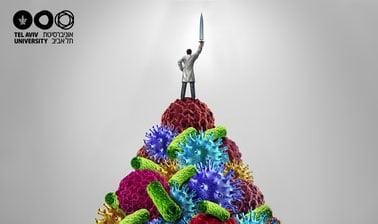
Learn how our immune system fights viral disease and make better vaccination decisions with a clearer understanding of Cells, Viruses, and Immunity. Have you ever wondered what viruses actually are? Have you been curious about the ways they invade our bodies, attack our cells and make us sick? Come and learn what viruses are made of and understand the mechanisms of how they hijack and take over our cells.

Class Deals by MOOC List - Click here and see EdX's Active Discounts, Deals, and Promo Codes.

There is no need for a background in science – just bring your curious mind!
Our bodies are made of cells, which are amazing molecular machines. So long as everything is in working order, we feel great. But surprisingly, these unbelievably tiny parasites made of Protein and Genes – viruses – can take over and cause serious damage to our bodies.

Step by step, this course will teach you how the cells of our bodies work to keep us healthy. We will then explore the vast kingdom of viruses; especially those that have caused epidemics like the flu, AIDS and Ebola. Finally, we will systematically review our immune system, how it identifies "the enemies," and how it takes them out.
The lectures have been carefully planned to clearly describe basic Cell Biology, Virology, and Immunology in terms that everyone can understand, without compromising scientific correctness. You'll participate in a detailed exploration of the structures in our cells and how they function. You'll learn how viruses replicate and the way our immune system protects us from disease, as well as how scientists investigate these topics. You'll view laboratory demonstrations that illustrate how cells and viruses are grown and studied. Throughout the course, you will meet leading experts and scientists - some of whom have received the Nobel Prize in recognition of their discoveries and contributions to Chemistry and Medicine.
Together we will gain a clearer understanding of how science has been applied to produce effective diagnostic tests, better medicines, and protective vaccines. You'll gain fascinating and comprehensible knowledge that is also practical. It is our goal to arm you with sufficient credible and practical understanding of how vaccines work so that you can make better vaccine-relevant decisions for you and your family.

What you'll learn

  • The makeup of cell structures (organelles) and their functions;
  • What happens to our body when it is infected by viruses;
  • How our Immune System operates to protect us;
  • The pros and cons of vaccination.
Go to Class
MOOC List is learner-supported. When you buy through links on our site, we may earn an affiliate commission.

Related Courses

Introduction to Systems Biology (Coursera) Coursera
Icahn School of Medicine at Mount Sinai

Introduction to Systems Biology (Coursera)

This course will introduce the student to contemporary Systems Biology focused on mammalian cells, their constituents and their functions. Biology is moving from molecular to modular. As our knowledge of our genome and gene expression deepens and we develop lists of molecules (proteins, lipids, ions) involved in cellular processes, we need to understand how these molecules interact with each other to form modules that act as discrete functional systems.

May 18th 2026
5-12 Weeks
Ebola: Essential knowledge for health professionals (Coursera) Coursera
University of Amsterdam,Universiteit Utrecht

Ebola: Essential knowledge for health professionals (Coursera)

March 2014 marked the starting point of the largest outbreak of Ebola virus disease in history. Although the disease seems to be on a decrease, we are not there yet and new outbreaks will surely emerge. New efforts to combat the outbreak are necessary. This is why we developed this online course about Ebola, targeted at health professionals across the world. In this course you will cover the fundamental knowledge any health professional should have with expected or confirmed cases or a general interest in the Ebola disease.

Jun 1st 2026
5-12 Weeks
What Are Viruses And How Do We Work With Them? (Coursera) Coursera
Imperial College London

What Are Viruses And How Do We Work With Them? (Coursera)

This course describes the basic nature if viruses and basic concepts of how they replicate. It looks at traditional methods for propagating and assaying viruses as well as methods to identify and follow them in individuals and populations. It will also look at how we can use molecular genetics to learn how viruses work in molecular detail.

Jun 1st 2026
5-12 Weeks
Improving Immunity Based on Traditional Eastern Exercises (Coursera) Coursera
Shanghai Jiao Tong University

Improving Immunity Based on Traditional Eastern Exercises (Coursera)

Exercise is medicine. Regular and moderate exercise can effectively strengthen immune system so as to reduce the risk of virus infection and also improve or assist in the treatment of dysthymic disorders like anxiety and depression. This course provides suggestions for the general public about how to actively respond to the outbreak of novel coronavirus. It also explains: how the immune system reacts when viruses invade into the body; why exercises can enhance immunity and what is the mechanism; what the difference is between western sports and traditional eastern exercises.

Jun 1st 2026
5-12 Weeks
What Do Viruses Do And How Do We Control Them (Coursera) Coursera
Imperial College London

What Do Viruses Do And How Do We Control Them (Coursera)

This course describes how viruses interact with their hosts to infect, replicate, spread and cause disease. It looks at what controls the specificity of viruses for different host species and for different tissues within a host, also how this can lead to outbreaks and pandemics. It seeks to show how virus evolution is driven by the pressures to replicate and spread. Finally, it looks at how we can find antivirals and use them to control infections, distinguishing therapeutic approaches to prophylaxis by vaccination.

Jun 1st 2026
5-12 Weeks
Immunology: Immune System and Infectious Diseases (Coursera) Coursera
Imperial College London

Immunology: Immune System and Infectious Diseases (Coursera)

The constant struggle between pathogens and the human immune system has been posing a significant threat to our health for thousands of years. Infectious diseases remain the leading cause of death worldwide. These are typically caused by bacteria (intra- and extracellular), viruses, fungi, parasites (worms/helminths) and prions. Under normal circumstance, the immune response orchestrates a robust protection against these pathogens using both molecular and cellular mechanisms. This usually leads to direct or indirect inactivation of the infectious agent, so the disease symptoms may not appear.

Jun 1st 2026
5-12 Weeks
Antivaccination and Vaccine Hesitancy (edX) EdX
University of Queensland,UQx

Antivaccination and Vaccine Hesitancy (edX)

Join us on AVAXX101 to increase your understanding of vaccine hesitancy, and get equipped to respond to antivaccination claims. In 2019 the World Health Organization listed vaccine hesitancy as one of the top ten threats to global health. Vaccine hesitancy is the reluctance or refusal to vaccinate. Even though vaccines are available to many people, doubts about their safety and effectiveness jeopardises important progress made in tackling vaccine-preventable diseases.

Self Paced
Self-Paced
Fundamentals of Immunology: T Cells and Signaling (Coursera) Coursera
Rice University

Fundamentals of Immunology: T Cells and Signaling (Coursera)

Course 2 of a three course specialization called Fundamentals of Immunology. Each course in the specialization presents material that builds on the previous course's material. This is the second half of the journey through the defenses your body uses to keep you healthy. In the first part we learned about innate immunity and B cell function. The second part covers T cell function and coordination of the immune response.

Jun 1st 2026
5-12 Weeks
COVID-19: What You Need to Know (CME Eligible) (Coursera) Coursera
Osmosis

COVID-19: What You Need to Know (CME Eligible) (Coursera)

COVID-19 is a global pandemic that has already resulted in hundreds of thousands of infections and thousands of deaths, with many more anticipated. This course is a go-to resource that will be regularly updated with all of the current information put forth by the CDC, WHO, and other leading agencies and covers the basics, personal protective equipment, diagnostics, and other material.

May 24th 2026
1 Week