Foundations of Public Health Practice: Health Protection (Coursera)

Foundations of Public Health Practice: Health Protection (Coursera)

The Health Protection course is the fourth instalment of the wider Foundations of Public Health Practice specialisation from Imperial College London's Global Master of Public Health (MPH). The scope and content of this course has been developed from the ground up by a combined team of academics and practitioners drawing on decades of real-world public health experience as well as deep academic knowledge. Through short video lectures, practitioner interviews and a wide range of interactive activities, learners will be immersed in the world of public health practice.

Class Deals by MOOC List - Click here and see Coursera's Active Discounts, Deals, and Promo Codes.

Designed for those new to the discipline, over three modules (intended for three weeks of learning), learners will become familiar with the scope, principles and nuances of health protection in the context of public health practice. Beginning with the basics of Water, Sanitation and Health (WASH) based interventions, the course will introduce learners to the science and principles of practical microbiology, before examining vaccines, incident management and the threat posed by a wide range of manmade and natural environmental threats. By the end of this course, learners will be familiar and conversant with core health protection principles and approaches, and confident in discussing health protection issues when they move into practice.
Course 4 of 4 in the Foundations of Public Health Practice Specialization.

Syllabus

WEEK 1
Module One: Water, sanitation and infectious diseases
This fourth course, "Health Protection", part of the wider Foundations of Public Health Practice specialisation, is designed to introduce learners to the area of operational and strategic health protection. This first module, entitled "Water, sanitation and infectious diseases" introduces learners to WASH-based initiatives before, in the second lesson, bringing learners up to speed on basic microbiology and the science that underpins communicable disease control.

WEEK 2
Module Two: Vaccines and management of communicable disease
This fourth course, "Health Protection", part of the wider Foundations of Public Health Practice specialisation, is designed to introduce learners to the area of operational and strategic health protection. This second module, entitled "Vaccines and communicable disease control" will cover the science and practice of vaccines. In the first lesson learners are introduced to the evidence-base and impact that vaccines have had on morbidity globally. Some of the main global players are also introduced before discussion of the ethical implications of mandatory vaccination (building on learning from the first course of this specialisation "The Public Health Approach"). Bringing all of the learning on this course together, the second lesson introduces communicable disease control and the management of health protection incidents.

WEEK 3
Module Three: Environmental hazards and strategic health protection threats
This fourth course, "Health Protection", part of the wider Foundations of Public Health Practice specialisation, is designed to introduce learners to the area of operational and strategic health protection. This third module, entitled "Environmental hazards and strategic health protection threats" examines the non-communicable disease elements of health protection - with an introduction to CBRN and exploration of the public health approach in the context of major incidents and health emergencies. In the first lesson learners are introduced to the emerging public health topic of air quality: with specific exploration of the collision of circumstances leading to London's Ultra Low Emission Zone. The second lesson moves into CBRN with a case study of the Fukushima Daiichi radiological incident of 2011.
Go to Class
MOOC List is learner-supported. When you buy through links on our site, we may earn an affiliate commission.

Related Courses

Water Supply and Sanitation Policy in Developing Countries Part 2: Developing Effective Interventions (Coursera) Coursera
University of Manchester

Water Supply and Sanitation Policy in Developing Countries Part 2: Developing Effective Interventions (Coursera)

Water Supply and Sanitation Policy in Developing Countries Part 2 is our second MOOC in a two-part sequence, and looks at ‘Developing Effective Interventions’. Here we invite you to develop analytical skills and deep understanding about a complex, controversial policy problem – one with no simple, easy answers. About half a billion people on our planet still lack access to improved water supplies and about two billion do not have improved sanitation services, leading to an unknown but very large number of avoidable deaths each year from water-related diseases. Millions of dollars are spent on avoidable health care expenditures, and people – mostly women – spend many billions of hours carrying water from sources outside the home.

Jun 8th 2026
5-12 Weeks
Easing the burden of obesity, diabetes and cardiovascular disease (Coursera) Coursera
The University of Sydney

Easing the burden of obesity, diabetes and cardiovascular disease (Coursera)

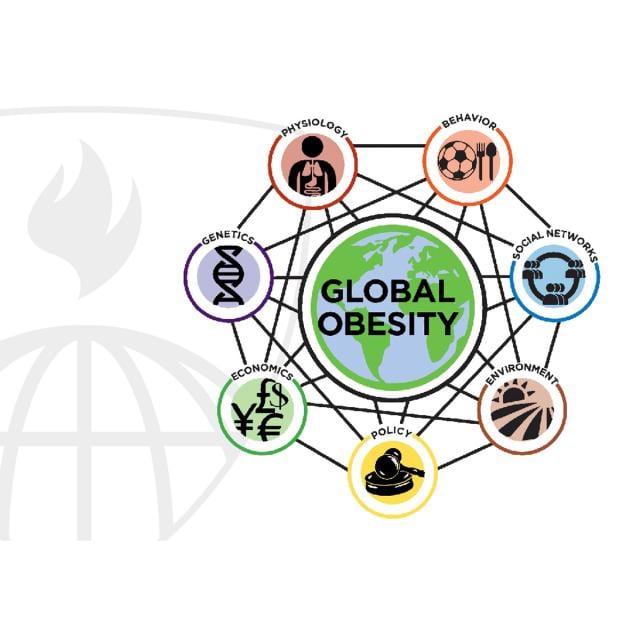
This course is multidisciplinary in nature, and aims to equip the global audience of interested lay people, people with chronic disease, public health researchers, health clinicians, students, administrators, and researchers to reflect on the overall impact of the burden of chronic disease. It shows how all chronic diseases (obesity, diabetes, cardiovascular disease, chronic obstructive pulmonary disease, and cancer) are related by a set of common causes, and that such diseases should be tackled, not individually, but as part of a complex system, with interrelated contributing factors. These factors are genetic, environmental, psychological, economic, social, developmental, and media related.

Jun 8th 2026
5-12 Weeks
Leading Healthcare Quality and Safety (Coursera) Coursera
George Washington University

Leading Healthcare Quality and Safety (Coursera)

Ensuring patient safety and healthcare quality is critical and should be a key focus of everyone in healthcare practice. This course provides healthcare practitioners and others with an introduction to the knowledge and skills needed to lead patient safety and quality improvement initiatives at the micro and macro levels. Participants will explore the foundations of health care quality and the science underlying patient safety and quality improvement, design and select effective health care measures, analyze patient safety problems and processes using tools such as human factors analysis, apply systematic approaches including the Plan-Do-Study-Act (PDSA) model to address quality improvement challenges, and learn strategies to lead a culture of change

Jun 8th 2026
5-12 Weeks
The New Nordic Diet - from Gastronomy to Health (Coursera) Coursera
University of Copenhagen

The New Nordic Diet - from Gastronomy to Health (Coursera)

The New Nordic Diet is a new food culture developed in 2009-13 with key emphasis on gastronomy, health, and environment. Major research in its effect on acceptability, behaviour and learning skills, and disease prevention have been conducted by the OPUS centre at the University of Copenhagen and the people behind the award-winning restaurant Noma in Copenhagen. This course will give the participants the opportunity to experience a healthy and palatable new food and eating concept diet “The New Nordic Diet” and an understanding of how food and diets can affect mental and physical health and ensure the foundation for a healthier life style for future generations with a regional based diet and food culture.

Jun 8th 2026
5-12 Weeks
An Introduction to Global Health (Coursera) Coursera
University of Copenhagen

An Introduction to Global Health (Coursera)

This course will provide you with an overview of the most important health challenges facing the world today. You will gain insight into how challenges have changed over time, we will discuss the likely determinants of such changes and examine future projections. Successful international strategies and programs promoting human health will be highlighted and global health governance structures will be mapped and the role of the key actors explored.

Jun 8th 2026
5-12 Weeks
Public Involvement in Research (Coursera) Coursera
Imperial College London

Public Involvement in Research (Coursera)

This course focuses on participatory approaches in research, known as 'public involvement' in the UK. You'll specifically, consider why citizens and patients would be involved in research and explore participatory approaches across and within the research cycle in more detail, diving into questions such as: What kinds of participation can be undertaken at each of the 7 stages of the cycle? How can you utilise participation in research? What examples of using participatory approaches exist in research?

Jun 10th 2026
4 Weeks
Sit Less, Get Active (Coursera) Coursera
University of Edinburgh

Sit Less, Get Active (Coursera)

Physical inactivity and sedentariness are “silent killers”. Do you feel like you spend too much time sitting? Do you feel like you would like to be more active? Are you unsure about how to incorporate physical activity into your daily life? We are here to help. Join us on a journey to learn about how to sit less and become more active. Use this FREE course to learn how to monitor your own activity and set physical activity goals.

Jun 14th 2026
3 Weeks
HI-FIVE: Health Informatics For Innovation, Value & Enrichment (Social/Peer Perspective) (Coursera) Coursera
Columbia University

HI-FIVE: Health Informatics For Innovation, Value & Enrichment (Social/Peer Perspective) (Coursera)

HI-FIVE (Health Informatics For Innovation, Value & Enrichment) Training is an approximately 10-hour online course designed by Columbia University in 2016, with sponsorship from the Office of the National Coordinator for Health Information Technology (ONC). The training is role-based and uses case scenarios. Our nation’s healthcare system is changing at a rapid pace. Transformative health care delivery programs depend heavily on health information technology to improve and coordinate care, maintain patient registries, support patient engagement, develop and sustain data infrastructure necessary for multi-payer value-based payment, and enable analytical capacities to inform decision making and streamline reporting.

Jun 8th 2026
4 Weeks
Positive Psychology Specialization Project: Design Your Life for Well-hebeing (Coursera) Coursera
University of Pennsylvania

Positive Psychology Specialization Project: Design Your Life for Well-hebeing (Coursera)

You are encouraged to take the first four courses of the Foundations of Positive Psychology Specialization before starting this course and completing the Specialization Project. This course, taught by Dr. Martin E.P. Seligman brings all the key concepts from the first four courses to practice as you develop and test a new positive intervention for an audience of your choice.

Jun 8th 2026
4 Weeks
HI-FIVE: Health Informatics For Innovation, Value & Enrichment (Clinical Perspective) (Coursera) Coursera
Columbia University

HI-FIVE: Health Informatics For Innovation, Value & Enrichment (Clinical Perspective) (Coursera)

HI-FIVE (Health Informatics For Innovation, Value & Enrichment) Training is a 12-hour online course designed by Columbia University in 2016, with sponsorship from the Office of the National Coordinator for Health Information Technology (ONC). The training is role-based and uses case scenarios. Also, it has additional, optional modules on other topics of interest or relevance. Although we suggest to complete the course within a month's timeframe, the course is self-paced and so you can start and finish the course at anytime during a month's time period. No additional hardware or software are required for this course.

Jun 8th 2026
4 Weeks
Introduction to Sustainability (Coursera) Coursera
University of Illinois at Urbana-Champaign

Introduction to Sustainability (Coursera)

This course introduces the academic approach of Sustainability and explores how today’s human societies can endure in the face of global change, ecosystem degradation and resource limitations. The course focuses on key knowledge areas of sustainability theory and practice, including population, ecosystems, global change, energy, agriculture, water, environmental economics and policy, ethics, and cultural history.

Jun 8th 2026
5-12 Weeks