Understanding Climate Change using Satellite Data (FutureLearn)

Offered by University of Twente,
Understanding Climate Change using Satellite Data (FutureLearn)

Explore cutting-edge technology and learn how to analyse satellite climate data to help measure and mitigate climate change. Explore the tools that can help with climate change solutions. To accurately study climate change, assess its risks, and mitigate the impact, we need systematic observations of the climate.

Class Deals by MOOC List - Click here and see FutureLearn's Active Discounts, Deals, and Promo Codes.

There are 54 essential variables used to measure climate change. These essential climate variables (ECVs) are crucial in helping to provide evidence for climate change and implement adaptation methods.
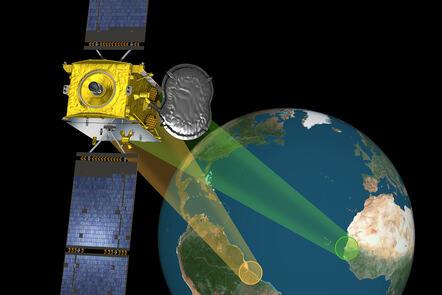
On this three-week course, you’ll explore the state-of-the-art technology used in the Climate Change Initiative programme (CCI) of the European Space Agency, and how satellite data is used to measure climate change.
Through interactive exercises, you’ll be trained to understand climate change and analyse satellite climate data using the CATE (Climate Analysis Toolbox) of the Climate Change Initiative Programme.
With these tools, you’ll find essential climate variables that are indicators of the state and change of the climate and a specific process in the atmosphere-Earth system.
Understand the components of the climate system
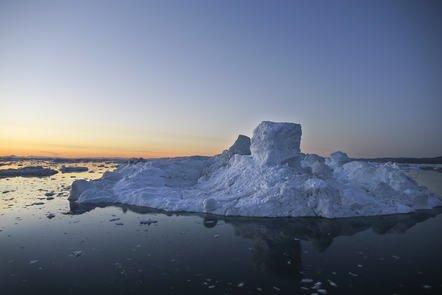
You’ll explore many components of the climate system: the water, energy and carbon cycles, cryosphere and land.
This will help you understand the physical processes of climate change from different perspectives.
With this knowledge, you’ll learn how to create and communicate maps, times series, and trends of essential climate variables. You’ll also be able to evaluate the results and provide judgments of the significance of the analysis.
Learn from the experts at the University of Twente
You’ll be guided through articles and videos by world-class scientists on this course led by the specialists at the ITC faculty at the University of Twente.
With a 70-year track record in knowledge transfer in the field of Earth observation, ITC was awarded by the European Space Agency to create this interactive online course.

Syllabus

Week 1: Introduction
Week 2: How land interacts with the climate
Week 3: Cryosphere

Learning on this course
You can take this self-guided course and learn at your own pace. On every step of the course you can meet other learners, share your ideas and join in with active discussions in the comments.

What will you achieve?
By the end of the course, you‘ll be able to...

  • Understand the physical processes of the climate systems.
  • Explore the CCI toolbox and find essential climate variables (ECVs) that are indicators of the state and change of the climate.
  • Create and communicate maps, time series and trends of ECVs using the CCI Toolbox.
  • Evaluate the results and provide judgments of the significance of the analysis.

Who is the course for?
This course is designed for anyone studying, researching, or interested in climate change and satellite climate data.

What software or tools do you need?
You will need to have access to a computer to access the websites used in this course.
Go to Class
MOOC List is learner-supported. When you buy through links on our site, we may earn an affiliate commission.

Related Courses

The Great Sustainability Transition: Global Challenges, Local Actions (FutureLearn) FutureLearn
Leiden University

The Great Sustainability Transition: Global Challenges, Local Actions (FutureLearn)

Discover how global environmental crises are connected, their impacts, and how to take action in your local community. Learn from experts in environmental science at Leiden University. We are living in an era of unprecedented environmental change. As a result, we are experiencing biodiversity loss, climate change, and overuse of freshwater resources, to name just a few. All of these affect fundamental ecosystem processes, causing change on a local and global scale. On this four-week course from Leiden University, you’ll learn how these huge environmental crises are interconnected and how they impact our planet.

Jan 16th 2023
4 Weeks
Innovation in Arable Farming: Technologies for Sustainable Farming Systems (FutureLearn) FutureLearn
University of Reading,EIT Food,EIT

Innovation in Arable Farming: Technologies for Sustainable Farming Systems (FutureLearn)

Explore how innovative, digital technologies can help achieve sustainable intensification of arable farming systems. Consider ways arable farmers in the EU can use agri-tech to benefit business. On this course, you’ll explore evidence-based information that outlines the benefits and challenges of adopting new technologies within the EU, and have the chance to read case study examples of some of these applications.

Jan 2nd 2023
3 Weeks
Climate Change and Resilience in Food Systems (FutureLearn) FutureLearn
University of Leeds,Africap

Climate Change and Resilience in Food Systems (FutureLearn)

Learn new research-led strategies designed to mitigate the effects of climate change on agriculture and food systems. Learn about the effects of climate change and how to build resilience in agriculture and food systems. Even small climate changes can have large-scale consequences in agriculture and food systems with devastating effects for the people and their economies. On this course, you will learn strategies designed to mitigate the impact of climate change, develop resilient food systems and create sustainable development in local communities.

Self Paced
2 Weeks
Climate Solutions: India (FutureLearn) FutureLearn
University of Edinburgh,Climate Solutions,Edinburgh Climate Change Institute(ECCI)

Climate Solutions: India (FutureLearn)

Explore the effects of climate change and how to address the biggest challenge to our civilisation in the 21st century. Tackle the climate emergency in India. Climate Change is one of the greatest threats we face. The impacts of climate change are already being felt around the world, affecting both natural and human systems, and these impacts are expected to become greater in years to come.

Self Paced
5-12 Weeks
Teaching Climate Change (FutureLearn) FutureLearn
National STEM Learning Centre,ESERO-UK,ESERO Ireland

Teaching Climate Change (FutureLearn)

Learn how to teach climate change to students aged 11-14 years old and engage them with the ESA Climate Detectives project. Teach the causes of climate change, and how we can mitigate global warming. On this course, you’ll learn how to successfully teach climate change to secondary school students aged 11-14 years old. You’ll learn about the key facts behind the climate crisis, before going on to develop practical learning activities for your pupils.

May 9th 2022
3 Weeks
Climate and Energy: An Interdisciplinary Perspective (FutureLearn) FutureLearn
University of Glasgow,CIVIS

Climate and Energy: An Interdisciplinary Perspective (FutureLearn)

Explore climate change issues from an interdisciplinary perspective to find innovative solutions for a better future. Gain interdisciplinary skills for climate change solutions. On this four-week course, you’ll join educators from ten universities on a virtual field trip to a remote Swedish island to gain perspectives on climate and energy from a multitude of disciplines.

Self Paced
4 Weeks
How to Measure, Reduce, and Offset your Company’s Carbon Footprint (FutureLearn) FutureLearn
BIMA,MSQ

How to Measure, Reduce, and Offset your Company’s Carbon Footprint (FutureLearn)

Help tackle climate change with this guide to carbon footprint measurement, offsetting, and reduction strategies for your company. Explore the different carbon footprint modelling tools No matter how many green practices you have in place, companies still produce at least some carbon in their operations.

Sep 6th 2021
5-12 Weeks
Environmental Justice (FutureLearn) FutureLearn
University of East Anglia

Environmental Justice (FutureLearn)

Understand how climate change, biodiversity loss and deforestation affect people, exploring justice in environment management. The world faces challenging environmental problems. They are challenging because different people typically contribute differently to environmental change, and because its effects will be felt differently by different people in different places.

Oct 11th 2021
5-12 Weeks
Bushfires: Response, Relief and Resilience (FutureLearn) FutureLearn
The University of Newcastle, Australia

Bushfires: Response, Relief and Resilience (FutureLearn)

Discover strategies in preparing for, responding to and recovering from bushfire natural disasters from the world's leading minds. This course is significant for individuals and the public interested in gaining knowledge about reducing their vulnerability to bushfires, effective coping strategies in the aftermath of a bushfire event and building resilience in the face of future disasters.

Aug 24th 2020
3 Weeks