Tratando los síntomas urinarios por HPB (Coursera)

Tratando los síntomas urinarios por HPB (Coursera)

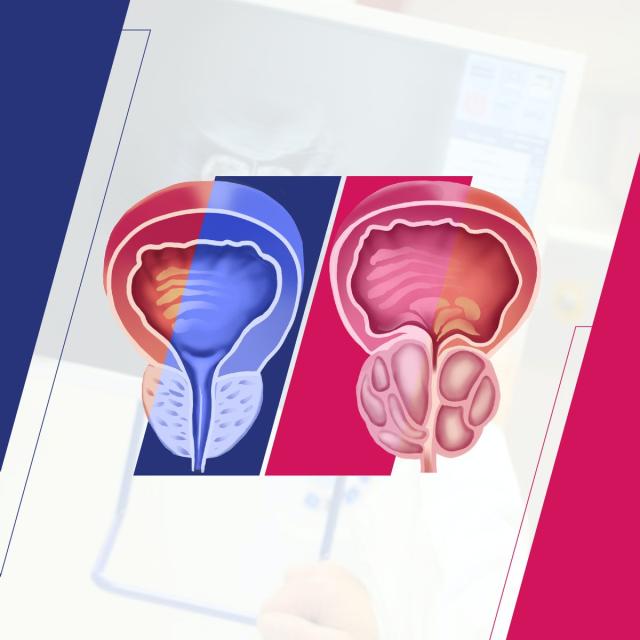
El curso Tratando los síntomas urinarios por Hiperplasia Prostática Benigna (HPB) es un curso completamente integral en donde se abordarán todos los aspectos necesarios para entender la frecuencia de los síntomas en nuestra sociedad, la necesidad que tienen los pacientes para buscar ayuda en una patología que afecta mucho la calidad de vida.

Class Deals by MOOC List - Click here and see Coursera's Active Discounts, Deals, and Promo Codes.

El curso ofrece al estudiante de una manera sencilla el conocimiento necesario sobre el impacto de los síntomas del tracto urinario bajo en los hombres, cómo se producen, la forma de hacer una aproximación diagnóstica certera y por ende realizar un tratamiento oportuno y adecuado de los mismos, evitando las complicaciones que se pueden derivar de no hacerlo. El curso se divide en cuatro módulos, en donde abarcaremos todos los aspectos que consideramos importantes en el conocimiento de esta condición, desde datos epidemiológicos a nivel mundial y local, hasta métodos diagnósticos y tratamiento tanto conservador como quirúrgico.

What You Will Learn

  • Identificar qué factores de riesgo se encuentran asociados al crecimiento prostático benigno.
  • Reconocer los estudios más útiles para el diagnóstico de los síntomas de crecimiento prostático.
  • Determinar el tratamiento ideal de acuerdo al perfil clínico de cada paciente, los mecanismos de acción y efectos secundarios.

Syllabus

WEEK 1
Introducción
Módulo 1: Aspectos generales y epidemiología
Bienvenido al primer módulo del curso “Tratando los síntomas urinarios por crecimiento prostático benigno”. El curso está dividido en cuatro módulos. Este primero es introductorio, con el fin de generar las bases necesarias para avanzar en la comprensión de los módulos siguientes. En este módulo veremos algunos aspectos generales como definiciones y datos que nos permitirá tener una compresión de la importancia de esta enfermedad. Para terminar, ahondaremos en aquellas características o circunstancias asociadas con la probabilidad de desarrollar esta condición, conocido como factor de riesgo.

WEEK 2
Módulo 2: Etiología y fisiopatología
Bienvenido al segundo módulo del curso “Tratando los síntomas por crecimiento prostático benigno”. En este módulo presentaremos las bases para entender el acto miccional en el ser humano, adicionalmente veremos por qué ocurren los síntomas por crecimiento prostático y cómo afectan el acto miccional. Tendremos tres lecciones en las que abordaremos las bases fisiológicas que nos permiten entender cómo funciona el tracto urinario en condiciones normales, así como poder entender todos aquellos cambios a nivel de la dinámica de la evacuación de la orina asociados al crecimiento prostático, pero también a eventos concomitantes como el envejecimiento en el ser humano y la aparición de comorbilidades. Te invitamos a consultar todos los recursos para entender cómo ocurre este proceso.

WEEK 3
Módulo 3: Diagnóstico
Bienvenido al tercer módulo del curso “Tratando los síntomas por crecimiento prostático benigno”, en donde veremos los métodos diagnósticos para síntomas del tracto urinario inferior relacionados con crecimiento prostático. Abarcaremos desde ayudas diagnósticas no invasivas hasta métodos avanzados, reconociendo los estudios más útiles, sus indicaciones y su interpretación en el contexto de los síntomas que el paciente manifiesta. Al finalizar el estudio de este módulo habrás mejorado tu capacidad de hacer una aproximación diagnóstica basada en la mejor evidencia disponible. Que lo disfruten.

WEEK 4
Módulo 4: Tratamiento
Bienvenido al cuarto y último módulo del curso “Tratando los síntomas por crecimiento prostático benigno”. En este módulo conocerás todas las alternativas de tratamiento que existen, desde medidas conservadoras que son importantes no solo para la mejoría de estos síntomas sino para la salud en general, pasando por tratamientos farmacológicos distintos con indicaciones específicas, terapias de mínima invasión con resultados a corto plazo muy prometedores, hasta tratamientos quirúrgicos definitivos, así como los posibles efectos adversos de cada una de estas modalidades. Es decir, involucra todo lo que usted necesita saber para eventualmente hacer una recomendación a sus pacientes.

Go to Class
MOOC List is learner-supported. When you buy through links on our site, we may earn an affiliate commission.

Related Courses

Psychology of Popularity (Coursera) Coursera
University of North Carolina

Psychology of Popularity (Coursera)

The level of popularity you experienced in childhood and adolescence is still affecting you today in ways that you may not even realize. Learn about how psychologists study popularity and how these same concepts can be used in adulthood to be more successful at work, become better parents, and have a happier life.

Aug 17th 2026
5-12 Weeks
Preventing Chronic Pain: A Human Systems Approach (Coursera) Coursera
University of Minnesota

Preventing Chronic Pain: A Human Systems Approach (Coursera)

Chronic pain is at epidemic levels and has become the highest-cost condition in health care. This course uses both creative and experiential learning to better understand chronic pain conditions and how they can be prevented through self-management in our cognitive, behavioral, physical, emotional, spiritual, social, and environmental realms.

Aug 17th 2026
5-12 Weeks
Training and Learning Programs for Volunteer Community Health Workers (Coursera) Coursera
Johns Hopkins University

Training and Learning Programs for Volunteer Community Health Workers (Coursera)

Volunteer community health workers (CHWs) are a major strategy for increasing access to and coverage of basic health interventions. Our village health worker training course reviews the process of training and continuing education of CHWs as an important component of involving communities in their own health service delivery. Participants will be guided through the steps of planning training and continuing education activities for village volunteers. The course draws on real-life examples from community-directed onchocerciasis control, village health worker programs, community case management efforts, peer educators programs and patent medicine vendor training programs, to name a few.

Aug 17th 2026
5-12 Weeks
Epidemics (Coursera) Coursera
University of Hong Kong

Epidemics (Coursera)

“If history is our guide, we can assume that the battle between the intellect and will of the human species and the extraordinary adaptability of microbes will be never-ending.” Despite all the remarkable technological breakthroughs that we have made over the past few decades, the threat from infectious diseases has significantly accelerated. In this course, we will learn why this is the case by looking at the fundamental scientific principles underlying epidemics and the public health actions behind their prevention and control in the 21st century.

Aug 17th 2026
5-12 Weeks
How Music Can Change Your Life (Coursera) Coursera
University of Melbourne

How Music Can Change Your Life (Coursera)

Did you ever wonder how music works? This course provides free video, audio and journal resources that explain six basic principles about how music can influence individual and community health and wellbeing. From biology and neuroscience, to psychotherapy and politics, the ways we engage with music can make all the difference. Music has always played an integral role in the lives of individuals and communities all around the globe.

Aug 17th 2026
5-12 Weeks
Childbirth: A Global Perspective (Coursera) Coursera
Emory University

Childbirth: A Global Perspective (Coursera)

This course will review challenges for maternal and newborn health in the developing world, where a great many women and babies are suffering from complications during pregnancy, childbirth, and the days following birth. Themes covered include the epidemiology of maternal and newborn mortality and morbidity, relevant issues for the global health workforce, community-based interventions to improve maternal and newborn health and survival, and sociocultural dynamics surrounding birth.

Aug 24th 2026
5-12 Weeks
Curanderismo: Global & Cultural Influences of Traditional Healing (Coursera) Coursera
University of New Mexico

Curanderismo: Global & Cultural Influences of Traditional Healing (Coursera)

As the last of four courses on Curanderismo, the art of Hispanic/Latino traditional medicine, this course focuses specifically on traditional healing using different techniques of many countries around the world. As an educational and cultural platform, this course will share a number of traditional global perspectives.

Aug 17th 2026
5-12 Weeks
Population Health: Fundamentals of Population Health Management (Coursera) Coursera
Leiden University

Population Health: Fundamentals of Population Health Management (Coursera)

What are the principles of Population Health Management as a pro-active management approach to improve health and to tackle health disparities? In this course we will discuss the basic principles of Population Health Management that will help you as (future) health care professional or policymaker to analyse current healthcare challenges and to design possible solutions using the Population Health Management Approach.

Aug 17th 2026
4 Weeks
Population Health: Syndemics (Coursera) Coursera
Leiden University

Population Health: Syndemics (Coursera)

Do you wish to contribute to breaking cycles of ill-health in disadvantaged populations? And explore co-occurrence of diseases, such as substance abuse, infectious and chronic disease, and the relation with social factors (disparities)? Are you disappointed in the poor effectiveness of interventions for combined social and medical problems? Then this syndemics course might provide you with some answers.

Aug 17th 2026
4 Weeks
Feeding the World (Coursera) Coursera
University of Pennsylvania

Feeding the World (Coursera)

This course will explore the concepts driving current food production science (population growth, urbanization, emerging affluence, resource constraints, and underlying biological limits) with the main focus on livestock production. Each of the major food animal species (dairy, swine, beef, and poultry) will be covered in terms of their universal life cycles, constraints to production and emerging societal issues.

Aug 17th 2026
5-12 Weeks
Evidence-based Toxicology (Coursera) Coursera
Johns Hopkins University

Evidence-based Toxicology (Coursera)

Welcome to the Evidence-based Toxicology (EBT) course. In medicine and healthcare, evidence-based medicine has revolutionized the way that information is evaluated transparently and objectively. Over the past ten years, a movement in North America and Europe has attempted to translate this revolution to the field of toxicology.

Aug 17th 2026
5-12 Weeks