EdX

Topology in Condensed Matter: Tying Quantum Knots (edX)

Topology in Condensed Matter: Tying Quantum Knots (edX)

Get a simple and hands-on overview of topological insulators, Majoranas, and other topological phenomena. The idea behind topological systems is simple: if there exists a quantity, which cannot change in an insulating system where all the particles are localized, then the system must become conducting and obtain propagating particles when the quantity (called a "topological invariant") finally changes.

Class Deals by MOOC List - Click here and see EdX's Active Discounts, Deals, and Promo Codes.

The practical applications of this principle are quite profound, and already within the last eight years they have lead to prediction and discovery of a vast range of new materials with exotic properties that were considered to be impossible before.

What will you gain from this course?

  • Learn about the variety of subtopics in topological materials, their relation to each other and to the general principles.
  • Learn to follow active research on topology, and critically understand it on your own.
  • Acquire skills required to engage in research on your own, and to minimize confusion that often arises even among experienced researchers.
What is the focus of this course?

  • Applications of topology in condensed matter based on bulk-edge correspondence.
  • Special attention to the most active research topics in topological condensed matter: theory of topological insulators and Majorana fermions, topological classification of "grand ten” symmetry classes, and topological quantum computation
  • Extensions of topology to further areas of condensed matter, such as photonic and mechanical systems, topological quantum walks, topology in fractionalized systems, driven or dissipative systems.

What tools does this course use?

  • Simple thought experiments that rely on considerations of symmetry or continuity under adiabatic deformations
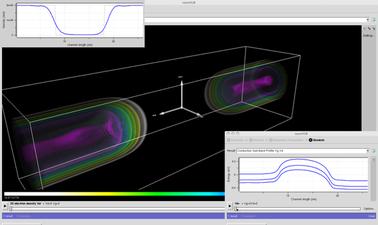
  • Computer simulations similar to those used in actual research will give a more detailed and visual understanding of the involved concepts
  • Dissecting research papers that teaches you to simply understand the idea even in the rather involved ones.

What you'll learn

  • Understand the variety of subtopics in topological materials, their relation to each other and to the general principles.
  • Follow active research on topology, and critically understand it on your own.
  • Acquire skills required to engage in research on your own, and to minimize confusion that often arises even among experienced researchers.
Go to Class
MOOC List is learner-supported. When you buy through links on our site, we may earn an affiliate commission.

Related Courses

The Basics of Transport Phenomena (edX) EdX
Delft University of Technology,DelftX

The Basics of Transport Phenomena (edX)

Learn the basic framework to work on a broad spectrum of engineering problems concerning transfer of heat, mass and momentum. Learn through examples of everyday processes at home, in the lab and in industry. Have you ever wondered why ventilation helps to cool down your hot chocolate? Do you know why a surfing suit keeps you warm? Why iron feels cold, while wood feels warm at room temperature? Or how air is transferred into aqueous liquids in a water treatment plant? How can we sterilize milk with the least amount of energy? How does medicine spread in our tissue? Or how do we design a new cooling tower of a power plant? All these are phenomena that involve heat transfer, mass transfer or fluid flow.

Self Paced
Self-Paced
Pre-University Physics (edX) EdX
Delft University of Technology,DelftX

Pre-University Physics (edX)

Prepare for your technical studies by reviewing the fundamentals of physics. Become familiar with the way physics and physics-related topics are taught at university level. Physics is the foundation of many important science and engineering disciplines. Understanding its basics is fundamental for advanced studies. In this course, you will have the chance to review the fundamentals either for your own interest, or to ensure you have a smooth start in the first year of your Bachelor’s degree.

Self Paced
Self-Paced
Quantum Detectors (edX) EdX
Purdue University,PurdueX

Quantum Detectors (edX)

Learn about quantum sensors and devices that extract maximal information from the world around us. Classical detectors and sensors are ubiquitous around us from heat sensors in cars to light detectors in a camera cell phone. Leveraging advances in the theory of noise and measurement, an important paradigm of quantum metrology has emerged. Here, ultra-precision measurement devices collect maximal information from the world around us at the quantum limit.

Feb 12th 2024
5-12 Weeks
Advanced Transport Phenomena (edX) EdX
Delft University of Technology,DelftX

Advanced Transport Phenomena (edX)

Learn how to tackle complex mass and heat transfer problems and apply the results in your own environment. How can you reduce the energy loss of your home? What is the underlying science of energy loss in pipes? Which heat and mass transfer problems do we have to tackle to make consumer products? In this engineering course, you will learn about the engineering principles that play an important role in all of these and more phenomena. You will learn about microbalances, radiation, convection, diffusion and more and their applications in everyday life.

Self Paced
Self-Paced
Science & Cooking: From Haute Cuisine to Soft Matter Science (chemistry) (edX) EdX
HarvardX,Harvard University

Science & Cooking: From Haute Cuisine to Soft Matter Science (chemistry) (edX)

Top chefs and Harvard researchers explore how everyday cooking and haute cuisine can illuminate basic principles in chemistry, physics, and engineering. Learn about food molecules and how chemical reactions can affect food texture and flavor. During each module of this course, chefs reveal the secrets behind some of their most famous culinary creations — often right in their own restaurants. Inspired by such cooking mastery, the Harvard team will then explain the science behind the recipe.

Self Paced
Self-Paced
Introduction to Quantum Computing for Everyone (edX) EdX
University of Chicago,UChicagoX

Introduction to Quantum Computing for Everyone (edX)

This first course in quantum computing is for novices and requires learners to have only basic algebra. It covers the future impacts of quantum computing, provides intuitive introductions of quantum physics phenomenon, and progresses from single operations to a complete algorithm. Quantum computing is coming closer to reality, with 80+ bit machines in active use. This course provides an intuitive introduction to the impacts, underlying phenomenon, and programming principles that underlie quantum computing.

Self Paced
Self-Paced
Introduction to Quantum Transport (edX) EdX
Purdue University,PurdueX

Introduction to Quantum Transport (edX)

This course introduces the non-equilibrium Green’s function (NEGF) method widely used to describe quantum effects in nanoscale devices, along with its applications to spintronic devices. This course introduces the Schrödinger equation, using the tight-binding method to discuss the concept of bandstructure and E(k) relations, followed by an introduction to the NEGF method with simple illustrative examples. Concept of spinors is introduced along with the application of the NEGF method to spintronic devices.

Feb 12th 2024
5-12 Weeks
Advanced statistical physics (edX) EdX
École Polytechnique Fédérale de Lausanne,EPFLx

Advanced statistical physics (edX)

We explore statistical physics in both classical and open quantum systems. Additionally, we will cover probabilistic data analysis that is extremely useful in many applications. This course covers non-equilibrium statistical processes and the treatment of fluctuation dissipation relations by Einstein, Boltzmann and Kubo. Moreover, the fundamentals of Markov processes, stochastic differential and Fokker Planck equations, mesoscopic master equation, etc will be treated in detail. Prior knowledge of statistical physics is highly recommended but not required.

Self Paced
Self-Paced
Cosmic Rays, Dark Matter, and the Mysteries of the Universe (edX) EdX
Waseda University,WasedaX

Cosmic Rays, Dark Matter, and the Mysteries of the Universe (edX)

Join us on a unique exploration of one of the universe’s deepest mysteries: cosmic rays. In the Universe, high-energy cosmic rays are violently propagating in space. While we know these cosmic rays come from outside of the solar system, exactly how and where they originate is a mystery. Professor Shoji Torii from Waseda University and many researchers from around the world, believe that understanding about their origin will help resolve the mysteries of the Universe, such as, supernova remnants, dark matter, and even the Universe’s evolution.

Self Paced
Self-Paced