Thoracic Oncology (Coursera)

Thoracic Oncology (Coursera)

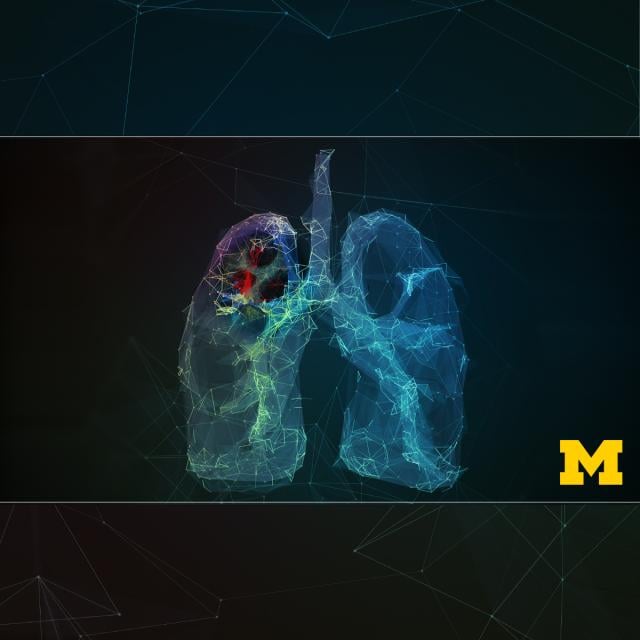
Thoracic malignancies are major, global health problems. Lung cancer is the most common cancer and cause of cancer death in the world, with more than 1.5 million deaths per year. More Americans will die from lung cancer each year (approximately 159,480) than from colon, breast, pancreatic, and prostate cancer combined (approximately 158,630), the next most common causes of cancer death. Esophageal cancer is the 6th most common cause of cancer deaths worldwide, and the 4th most common cause in developing nations.

Class Deals by MOOC List - Click here and see Coursera's Active Discounts, Deals, and Promo Codes.

This course will provide a comprehensive, multidisciplinary introduction to state of the art approaches in the care of patients with thoracic malignancies, including various types of lung cancers and esophageal cancers. Didactic material will cover epidemiology, screening and diagnosis, staging, imaging, radiation therapy, systemic therapy, surgery, psychiatry, and patient support topics.
This is an on-demand course with integrated learning units that are focused on specific topics. Each unit contains several video lectures with interactive questions and is followed by a short quiz.

Syllabus

Week 1: Lung Cancer Overview
Week 2: Non-Small Cell Lung Cancer: Differential Diagnosis and Diagnostic Work-up
Week 3: Non-Small Cell Lung Cancer: Staging
Week 4: Non-Small Cell Lung Cancer and Tracheal Cancer: Therapeutics
Week 5: Small Cell Lung Cancer
Week 6: Esophageal Cancer
Week 7: Patient Support Issues

Go to Class
MOOC List is learner-supported. When you buy through links on our site, we may earn an affiliate commission.

Related Courses

Health Across the Gender Spectrum (Coursera) Coursera
Stanford University

Health Across the Gender Spectrum (Coursera)

This course offers an intimate, story-based introduction to the experiences of six transgender children and their families. Through illustrated stories and short teaching videos, learners will gain a better understanding of gender identity and the gender spectrum. Stanford physicians, K-12 educators, and transgender faculty members offer practical tips for parents, teachers, healthcare providers and anyone who wants to help create a more gender-expansive environment - one in which all people can live authentically. As a global community of unique individuals, we can begin to build a world that is ready to nurture and love each and every child.

Aug 31st 2026
3 Weeks
TECH MeD: Transdisciplinary Education for Critical Hacks of Medical Devices (Coursera) Coursera
University of Florida

TECH MeD: Transdisciplinary Education for Critical Hacks of Medical Devices (Coursera)

This course seeks to create an informed public, aware of the technical, medical, legal, and ethical issues associated with implantable medical devices. The course features conversations with experts from a variety of relevant fields to discuss the present and future technological, ethical, legal, and social challenges associated with implantable medical devices.

Aug 31st 2026
5-12 Weeks
HI-FIVE: Health Informatics For Innovation, Value & Enrichment (Social/Peer Perspective) (Coursera) Coursera
Columbia University

HI-FIVE: Health Informatics For Innovation, Value & Enrichment (Social/Peer Perspective) (Coursera)

HI-FIVE (Health Informatics For Innovation, Value & Enrichment) Training is an approximately 10-hour online course designed by Columbia University in 2016, with sponsorship from the Office of the National Coordinator for Health Information Technology (ONC). The training is role-based and uses case scenarios. Our nation’s healthcare system is changing at a rapid pace. Transformative health care delivery programs depend heavily on health information technology to improve and coordinate care, maintain patient registries, support patient engagement, develop and sustain data infrastructure necessary for multi-payer value-based payment, and enable analytical capacities to inform decision making and streamline reporting.

Aug 31st 2026
4 Weeks
Toxicology 21: Scientific Applications (Coursera) Coursera
Johns Hopkins University

Toxicology 21: Scientific Applications (Coursera)

This course familiarizes students with the novel concepts being used to revamp regulatory toxicology in response to a breakthrough National Research Council Report “Toxicity Testing in the 21st Century: A Vision and a Strategy.” We present the latest developments in the field of toxicology—the shift from animal testing toward human relevant, high content, high-throughput integrative testing strategies. Active programs from EPA, NIH, and the global scientific community illustrate the dynamics of safety sciences.

Aug 31st 2026
5-12 Weeks
Engineering Health: Introduction to Yoga and Physiology (Coursera) Coursera
New York University Tandon School of Engineering

Engineering Health: Introduction to Yoga and Physiology (Coursera)

This course gives you access to an exploration of physiological systems from the perspective of overall health and wellness. In particular, a focus on yoga, meditation and mindfulness as a therapeutic intervention in chronic illness and long term treatment. This course is intended for yoga practitioners and teachers, as well as college students and medical practitioners looking for a deeper understanding of the physiological benefits of yoga.

Aug 31st 2026
5-12 Weeks
Living with Dementia: Impact on Individuals, Caregivers, Communities and Societies (Coursera) Coursera
Johns Hopkins University

Living with Dementia: Impact on Individuals, Caregivers, Communities and Societies (Coursera)

Health professionals and students, family caregivers, friends of and affected individuals, and others interested in learning about dementia and quality care will benefit from completing the course. Led by Drs. Nancy Hodgson and Laura Gitlin, participants will acquire foundational knowledge in the care of persons with Alzheimer’s Disease and other neurocognitive disorders.

Aug 31st 2026
5-12 Weeks
Take the Lead on Healthcare Quality Improvement (Coursera) Coursera
Case Western Reserve University

Take the Lead on Healthcare Quality Improvement (Coursera)

In this course you will learn about the importance of quality in healthcare and how you can contribute by implementing a quality improvement (QI) project to improve processes of care and patient outcomes. You will learn about powerful tools to add to your QI ‘toolbox’ during short lectures and reflective exercises. You will apply these tools to the implementation of a QI project in your own practice setting or an area of personal improvement. At the completion of the course, you will have a storyboard that captures your QI project success to share with others.

Aug 31st 2026
5-12 Weeks
HI-FIVE: Health Informatics For Innovation, Value & Enrichment (Administrative/IT Perspective) (Coursera) Coursera
Columbia University

HI-FIVE: Health Informatics For Innovation, Value & Enrichment (Administrative/IT Perspective) (Coursera)

HI-FIVE (Health Informatics For Innovation, Value & Enrichment) Training is an approximately 10-hour online course designed by Columbia University in 2016, with sponsorship from the Office of the National Coordinator for Health Information Technology (ONC). The training is role-based and uses case scenarios. No additional hardware or software are required for this course. Our nation’s healthcare system is changing at a rapid pace.

Aug 31st 2026
4 Weeks
Understanding Clinical Research: Behind the Statistics (Coursera) Coursera
University of Cape Town

Understanding Clinical Research: Behind the Statistics (Coursera)

If you’ve ever skipped over`the results section of a medical paper because terms like “confidence interval” or “p-value” go over your head, then you’re in the right place. You may be a clinical practitioner reading research articles to keep up-to-date with developments in your field or a medical student wondering how to approach your own research. Greater confidence in understanding statistical analysis and the results can benefit both working professionals and those undertaking research themselves.

Aug 31st 2026
5-12 Weeks
Public Health in Humanitarian Crises 2 (Coursera) Coursera
Johns Hopkins University

Public Health in Humanitarian Crises 2 (Coursera)

This course, Public Health in Humanitarian Crises 2, addresses public health issues of people affected by disasters, both natural or conflict-related. It discusses the many changes that occur in people’s lives when they are uprooted by a disaster, including many important topics related to humanitarian crises, such as when there is an epidemic a public health emergency; what do we mean with the humanitarian development nexus; what are the basics of disaster epidemiology and surveillance; humanitarian principles; and other very relevant topics. We will explore what humanitarian interventions could look like if we want to mitigate the effects of disasters.

Aug 31st 2026
5-12 Weeks
Population Health: Predictive Analytics (Coursera) Coursera
Leiden University

Population Health: Predictive Analytics (Coursera)

Predictive analytics has a longstanding tradition in medicine. Developing better prediction models is a critical step in the pursuit of improved health care: we need these tools to guide our decision-making on preventive measures, and individualized treatments. In order to effectively use and develop these models, we must understand them better. In this course, you will learn how to make accurate prediction tools, and how to assess their validity. First, we will discuss the role of predictive analytics for prevention, diagnosis, and effectiveness. Then, we look at key concepts such as study design, sample size and overfitting.

Aug 31st 2026
4 Weeks
Genomics: Decoding the Universal Language of Life (Coursera) Coursera
University of Illinois at Urbana-Champaign

Genomics: Decoding the Universal Language of Life (Coursera)

What is a genome? A genome contains all of the information that a cell needs to develop, function, and reproduce itself, and all the information needed for those cells to come together to form a person, plant, or animal. Genomes contain an organism’s complete set of genes, and also the even tinier genetic structures that help regulate when and how those genes are used. The ability to regrow a torn ligament, the clues that might predict the onset of mental illness, the nutritional potential of crops, and even the history of life itself, are all encoded in genomes. By taking this course, you will discover how scientists are deciphering the language of genomes to learn how to develop sustainable food and fuel supplies, improve disease treatment and prevention, and protect our environment.

Aug 31st 2026
5-12 Weeks