Sustainable building design for tropical climates: integrating design of buildings and technology systems (POK)

Offered by Politecnico di Milano,
Sustainable building design for tropical climates: integrating design of buildings and technology systems (POK)

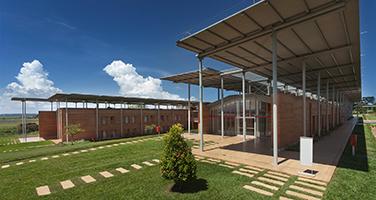
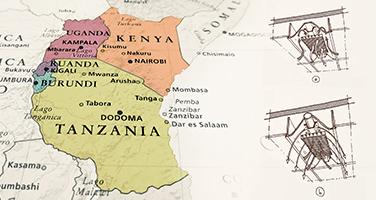
The course provides the main information about technological systems and tools for designing climate responsive buildings in East African Community (EAC) and other tropical countries with similar climates.

One of the primary tasks of building’s designers is to create a built environment that is able to improve human wellbeing and productivity, at the same time maintaining an adequate level of operational efficiency and an effective use of natural resources. In that regards, the HVAC system (Heating, ventilation and air conditioning) is one of the most important elements in designing a “sustainable” building in EAC countries.

A conventional design approach is, by itself, not sufficient to achieve good performance because a building should be conceived as a system, capable of providing different types of services with the minimum impact. In fact, the incorrect design of a building from the architectural point of view (envelope, orientation, lay-out of the internal space, etc.) can result, for example, in an oversized HVAC system which can be energy intensive to operate and costly and difficult to maintain. Sustainable building design in EAC countries implies integrated design, which means that architects and mechanical engineers must interact, just as both have to interact with the energy expert. There is no possibility of interaction if the designer does not have some basic knowledge of the technologies that are used with great expertise by mechanical engineers.
In that respects, the aim of the course is to provide the main information about technological systems and tools for designing climate responsive buildings in EAC and other tropical countries with similar climates.
Go to Class
MOOC List is learner-supported. When you buy through links on our site, we may earn an affiliate commission.

Related Courses

Management of Urban Infrastructures – part 1 (Coursera) Coursera
École Polytechnique Fédérale de Lausanne

Management of Urban Infrastructures – part 1 (Coursera)

Sustainability, Resilience and Efficiency are fundamental considerations for city managers in managing urban infrastructures. Today, more than 3.9 billion people, making up more than 54% of the global population, live in cities. Urbanization is expected to continue in the coming years, raising the urban population to 6.0 billion by 2045. This dramatic increase in urban populations will inevitably increase the demand for energy, mobility (transportation), water, and other urban services in every city around the world. Without functional governance and management structures that ensure efficient, resilient and sustainable performance in cities, the current urbanization growth might become a catastrophic risk threatening the quality of life of the humanity.

Oct 12th 2026
5-12 Weeks
The strange paradox of the world energy question (POK) Polimi OPEN KNOWLEDGE
Politecnico di Milano

The strange paradox of the world energy question (POK)

A multidimensional and systemic thinking about the world energy challenge. A continuous flow of energy crosses our whole life. The food we eat, the car we drive, lights that illuminate our cities or the radio that plays our favorite songs, are all manifestations of energy. Our biological life can be explained in terms of energy and even our emotions and feelings to a certain extent.

Available
4 Weeks
Sustainable building design in Africa (POK) Polimi OPEN KNOWLEDGE
Politecnico di Milano

Sustainable building design in Africa (POK)

The course provides the main information about technological systems and tools for designing climate responsive buildings in Africa. The building sector is a major CO2 emitter, second only to the industry sector, accounting for 27% of global emissions, deriving both by the fossil fuel burnt for building operations viz. space heating, hot water production and cooking and by the one burnt for producing the electricity consumed. Moreover, almost 40% of the raw materials and energy produced worldwide are used in the building sector.

Available
5-12 Weeks
Ressources minérales et transition (Coursera) Coursera
Institut Mines-Telecom

Ressources minérales et transition (Coursera)

Ce MOOC sur les ressources minérales et les transitions invite à se questionner sur la soutenabilité de nos choix technologiques. Les transitions énergétiques et numériques sont en effet confrontées aux enjeux d'approvisionnement des ressources minérales et aux impacts que leur cycle de vie génère sur l’environnement et la société.

Oct 12th 2026
4 Weeks
Sustainable Food Production Through Livestock Health Management (Coursera) Coursera
University of Illinois at Urbana-Champaign

Sustainable Food Production Through Livestock Health Management (Coursera)

Learn about the impact of infectious disease on sustainable animal-based food production by understanding the science of growth, immunity, and infection and by learning the problem-solving skills needed to advance animal health and food production through optimal management practices. In this course we will explore the effect of infectious disease on sustainable animal-based food production. The content and learning outcomes of this new course will be designed to be relevant across different food production sectors (i.e., beef, dairy, poultry, and pigs).

Oct 5th 2026
5-12 Weeks
Sustainability through Soccer: Systems-Thinking in Action (Coursera) Coursera
University of Virginia

Sustainability through Soccer: Systems-Thinking in Action (Coursera)

This course takes learners on a journey through a progression of systems-thinking and sustainability concepts. Using the beautiful game of soccer as an analogy, we'll work together to illuminate real-world interdependencies (such as between climate change and human rights), building the chain of concepts in a fun, accessible way. Soccer nerds and newbies alike will be entertained and, ultimately, rewarded with the epiphanies that come from seeing in systems more clearly.

Oct 12th 2026
4 Weeks
Sustainable Vikings: Sustainability & Corporate Social Responsibility in Scandinavia (Coursera) Coursera
Copenhagen Business School

Sustainable Vikings: Sustainability & Corporate Social Responsibility in Scandinavia (Coursera)

This course gives you immediate access to the world leading sustainability and corporate social responsibility (CSR) practices. Scandinavian firms dominate the major sustainability and CSR performance indicators including the Dow Jones Sustainability Index (DJSI). In this course we explore the concepts of sustainability and CSR and focus attention on how Scandinavian firms, like Novo Nordisk, have achieved superior sustainability and CSR performances.

Oct 12th 2026
5-12 Weeks
Measuring the impact of the Energy Transition (POK) Polimi OPEN KNOWLEDGE
Politecnico di Milano

Measuring the impact of the Energy Transition (POK)

The Industrial Ecology approach for assessing the Sustainability of the Energy Transition. The aim of this MOOC is to provide a holistic but quantitative and multi-dimensional perspective on the energy transition underway today. Especially when dealing with cross sectoral linkages and circular economy, the instruments made available by the Industrial Ecology can represent a great support to researchers and practitioners and can be used to better inform policy makers.

Available
3 Weeks
Electric Vehicle Operation and Diagnosis (Coursera) Coursera
Starweaver

Electric Vehicle Operation and Diagnosis (Coursera)

"Electric Vehicle Operation and Diagnosis" is a course tailored to meet the increasing demand for professionals skilled in troubleshooting electric vehicles (EVs). Participants will gain a solid understanding of EV fundamentals, system operations, and diagnostic techniques. The course emphasizes environmental benefits and sustainable practices in transportation.

Oct 12th 2026
4 Weeks
The Effect of Fires on People, Property and the Environment (Coursera) Coursera
University of Maryland, College Park

The Effect of Fires on People, Property and the Environment (Coursera)

Fires impact people, property and the environment in all countries around the world. In some cases, the resulting losses are extraordinary, causing hundreds of deaths, widespread damage to property and contents and significant impacts on the environment. More often, fires may cause a single casualty or affect a single home, though the effects are still highly significant to those affected and collectively are substantial. This course will provide an overview of the challenges posed by fire as well as the fire safety solutions that are available to meet those challenges.

Oct 12th 2026
5-12 Weeks