Being Smart about Cycling Futures (Coursera)

Being Smart about Cycling Futures (Coursera)

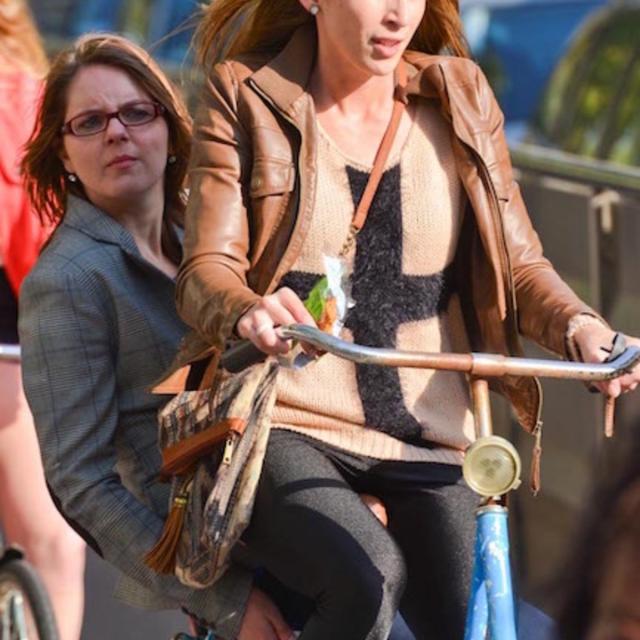
What is the future of cycling in our cities that struggle to transition to more sustainable and inclusive forms of mobility? What is the role of innovation in ensuring that cycling becomes easier, safer and more accessible for different groups of people? What are Great Bikes and what are Great Cycling Cities?

Class Deals by MOOC List - Click here and see Coursera's Active Discounts, Deals, and Promo Codes.

In this course we tackle these questions, but we do so without providing recipes, one-size-fits-all solutions or rankings of innovations. Instead, this course helps you to develop your own approach to cycling futures and innovation. It teaches you to ask critical questions about various aspects of cycling practice and its place in mobility systems, about cycling innovation and the way in which various stakeholders imagine cycling futures.
This unique course is grounded in the results of the Smart Cycling Futures project (2016-2020), conducted in the Netherlands but through readings and assignments it engages with the wider world.

What You Will Learn

  • Critically consider multiple perspectives on the future of cycling
  • Develop a deeper understanding of cycling practice's relation to infrastructure, its diverse users, and the wider mobility system
  • Situate cycling (innovations) in the context of inequalities and across different countries
  • Explore the limits of our society's collective mobility imagination and how to overcome them

Syllabus

Week 1: Imagining Cycling Futures
What will the future of cycling be like? This module introduces you to one of the main ideas of the course: that cycling futures are multiple are contested. You will be introduced to velotopias- visions of urban future in which cycling is the key mode of transportation- and to cycling innovations. You'll learn about the Smart Cycling Futures research project and the paradoxes encountered in researching innovations. You will notice that scholars and innovators have different ideas on how cycling should become a more important part of our lives. The different futures that we envision prioritize different values and different ideas about cities, mobility and human interaction.

Week 2: The Bike as Part of Mobility Futures
In this module you will learn about how cycling and cycling innovations are part of a larger mobility system. First, should the goal of innovations always be to get people to shift to cycling from other modes? And, do innovations forget about the people who are already cycling? How does the practice of cycling fit with other modes? This module will also introduce you to the bike-train system, which has become highly developed in the Netherlands.

Week 3: Reinventing the Bicycle
How do innovations change the experience of cycling, its meaning, and how it is governed? This week will introduce you to new technologies and smart innovations, including both bicycles themselves and also bike infrastructure, accessories, and mobile applications. You will learn to recognize how innovations are shaped by the context in which they are developed. You'll understand how innovations can shape futures of cycling, and recognize moments where we may be choosing one future over another. We will also zoom into specifically to the subject of e-bikes, through an academic paper and a conversation with bike component manufacturer enviolo.

Week 4: Reinventing Cycling Spaces
This module will look at cycling infrastructure, or: how are we reinventing the spaces where cycling occurs in our cities? You will reflect on what "ideal" cycling infrastructure is and recognize that different types of users, with different needs, share our cycle paths and streets. We will zoom in to the concept of cycling highways - a contested phenomenon- from the perspective of practitioners. We will hear about how smart innovations may influence how different kinds of future cycling spaces function from infrastructure company BAM. Finally, we will focus on how cycling practitioners work, exploring an agile way of working in the context of Amsterdam.

Week 5: Cycling Futures for All?
This module is about the social context of cycling. Who cycles now, and who will in the future? Is cycling less accessible for some than for others? We will hit the tip of the iceberg on what can be done to make cycling more accessible for all. You will see how certain social groups can be excluded or negatively impacted by cycling policies or infrastructure projects, and you will see how this issue is often context dependent. We also ask you to bring your own perspective on this complex issue, and learn from your peers.

Week 6: Final Assignment
In this final module, you will go through an exercise in which you imagine diverging cycling futures yourself. You will then read about the positive imagined utopian futures of your peers. To wrap up the course, you will write an essay that reflects on the limits of our society's collective mobility imagination and how to overcome them.

Go to Class
MOOC List is learner-supported. When you buy through links on our site, we may earn an affiliate commission.

Related Courses

Introduction to Faecal Sludge Management (Coursera) Coursera
École Polytechnique Fédérale de Lausanne

Introduction to Faecal Sludge Management (Coursera)

Do you want learn how to apply concepts of sustainable faecal sludge management (FSM) on a city-wide scale? This course starts with an overview of what faecal sludge is and an introduces you to the engineering fundamentals and required information for the design and selection of technologies. Sanitation solutions are prone to failure if an integrated planning approach that includes stakeholder involvement and the development of appropriate institutional, management and financial arrangements is not implemented.

Oct 5th 2026
5-12 Weeks
Sustainable Tourism – promoting environmental public health (Coursera) Coursera
University of Copenhagen

Sustainable Tourism – promoting environmental public health (Coursera)

The MOOC introduces learners to key environmental health and natural resources management challenges associated with the rapid growth in international tourist arrivals into low-income countries. Since infrastructural and regulatory capacities in such countries are often limited they are more exposed to the negative implications of such development. The MOOC will present experiences and potential avenues to develop a more sustainable form of tourism.

Sep 28th 2026
3 Weeks
Circular Economy - Sustainable Materials Management (Coursera) Coursera
Lund University,Delft University of Technology,EIT RawMaterials,VITO,Geological Survey of Denmark and Greenland - GEUS,National Technical University of Athens - NTUA,Ghent University

Circular Economy - Sustainable Materials Management (Coursera)

This course looks at where important materials in products we use every day come from and how these materials can be used more efficiently, longer, and in closed loops. This is the aim of the Circular Economy, but it doesn’t happen on its own. It is the result of choices and strategies by suppliers, designers, businesses, policymakers and all of us as consumers.

Oct 5th 2026
5-12 Weeks
Silicon Thin Film Solar Cells (Coursera) Coursera
École Polytechnique

Silicon Thin Film Solar Cells (Coursera)

This course consists of a general presentation of solar cells based on silicon thin films. It is the third MOOC of the photovoltaic series of Ecole polytechnique on Coursera. The general aspects of the photovoltaic field are treated in "Photovoltaic Solar Energy". And the detailed description of the crystalline silicon solar cells can be found in "Physics of Silicon Solar Cells".

Oct 5th 2026
3 Weeks
Sustainable Food Production Through Livestock Health Management (Coursera) Coursera
University of Illinois at Urbana-Champaign

Sustainable Food Production Through Livestock Health Management (Coursera)

Learn about the impact of infectious disease on sustainable animal-based food production by understanding the science of growth, immunity, and infection and by learning the problem-solving skills needed to advance animal health and food production through optimal management practices. In this course we will explore the effect of infectious disease on sustainable animal-based food production. The content and learning outcomes of this new course will be designed to be relevant across different food production sectors (i.e., beef, dairy, poultry, and pigs).

Oct 5th 2026
5-12 Weeks
Sustainable Food Systems (Coursera) Coursera
University of Illinois at Urbana-Champaign

Sustainable Food Systems (Coursera)

Throughout this course, you will delve into the intricate details of the food production system through a system-thinking lens. You will examine the grand challenges faced by the food, fiber, and natural resource industries, and their repercussions on people, the planet, and profit. By the end of this course, you will have a clear understanding of the concept of systems thinking, be able to explain the three key pillars of sustainability and link these pillars to social, environmental, and economic systems.

Oct 5th 2026
5-12 Weeks
Wind resources for renewable energies (Coursera) Coursera
École Polytechnique

Wind resources for renewable energies (Coursera)

The main goal of this course is to get the necessary knowledge on atmospheric and fluid dynamics in order to quantify the wind resource of a local or regional area. We’ll learn about basic meteorology, the specific dynamics of turbulent boundary layers and some standard techniques to estimate wind resources regardless of the type of turbine used or the level of efficiency achieved.

Oct 5th 2026
4 Weeks
Oil & Gas Industry Operations and Markets (Coursera) Coursera
Duke University

Oil & Gas Industry Operations and Markets (Coursera)

The oil and gas industry has an enormous impact on all aspects of daily life. Individuals, corporations, and national governments make financial and policy decisions based on the cost, use, and availability of these two natural resources. This two-week course looks at the two most fundamental aspects of the oil and gas industry, its operations and markets, each of which is addressed as a separate module in the course.

Sep 30th 2026
2 Weeks
Ecosystem Services: a Method for Sustainable Development (Coursera) Coursera
University of Geneva

Ecosystem Services: a Method for Sustainable Development (Coursera)

Ecosystem services are a way of thinking about – and evaluating – the goods and services provided by nature that contribute to the well-being of humans. This MOOC will cover scientific (technical), economic, and socio-political dimensions of the concept through a mix of theory, case-studies, interviews with specialists and a serious-game.

Oct 5th 2026
5-12 Weeks
Renewable Energy: Fundamentals and Job Opportunities (Coursera) Coursera
University at Buffalo

Renewable Energy: Fundamentals and Job Opportunities (Coursera)

This course prepares you to recognize the complexities and nuances of different renewable energy solutions, as well as relevant career opportunities (both technical occupations and roles not typically associated with clean energy). Learners are immersed in discussions about green energy technologies, the impact of sustainability on society, energy consumption in the United States and conservation. Topics include: tenets of green building design and construction, solar energy conversion through photovoltaic cells, wind turbine site selection and design, and nanotechnology applications in clean energy.

Oct 5th 2026
5-12 Weeks
Climate Change and Water in Mountains: A Global Concern (Coursera) Coursera
University of Geneva

Climate Change and Water in Mountains: A Global Concern (Coursera)

What is climate change? How are mountain regions affected by the evolution of water resources and their uses? What kind of risks need to be considered? Mountains are recognized as particularly sensitive physical environments where intense and rapid changes have in the past, and may increasingly in the future, place pressure on their resource base.

Oct 5th 2026
5-12 Weeks